

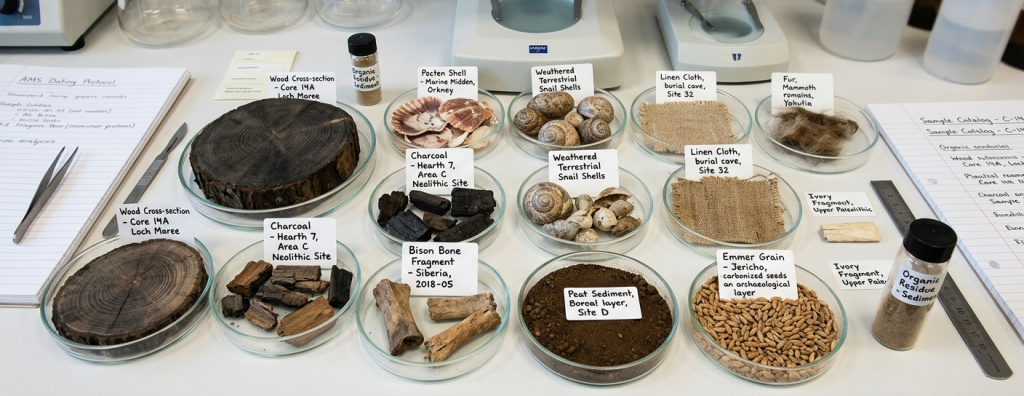
The drop-down panels below contain a wealth of information about each specific sample type. Here you can find guidance on sample selection, procedures for sample submission, information regarding the protocols used to prepare and analyze your samples and information about the costs of these services.
Bone/Antler
Summary of required quantities and prices:
Graphite Mode (highest precision <2‰)
-
Quantity of bone or antler required = 480 to 1200mg
-
Minimum quantity of bone or antler required = 240mg
-
UA internal price for collagen extraction & analysis = $215
-
External price for collagen extraction & analysis = $301
-
UA internal price for collagen extraction, ultrafiltration & analysis = $240
-
External price for collagen extraction, ultrafiltration & analysis = $336
Gas Mode (smaller quantities, lower price, lower precision <10‰)
-
Quantity of bone or antler required = 160 to 400mg
-
Minimum quantity of bone or antler required = 80mg
-
UA internal price for collagen extraction & analysis = $130
-
External price for collagen extraction & analysis = $182
-
UA internal price for collagen extraction, ultrafiltration & analysis = $155
-
External price for collagen extraction, ultrafiltration & analysis = $217
Collagen is used to radiocarbon date bones and antlers because it is an organic protein that reliably incorporates carbon from an animal’s diet while the animal is alive. As the primary structural component of bone and antler, collagen is often better preserved than other organic fractions and can be chemically isolated to remove contaminants. Measuring the remaining radioactive carbon‑14 in purified collagen therefore provides a date that closely reflects the time of the organism’s death, rather than later environmental carbon that may have entered the mineral portion of the bone after burial.
Below is the sequence of steps necessary to obtain a radiocarbon date for a bone or antler sample. More information is available for each step by opening the drop-down panel. In some cases, additional information can be accessed through links contained within the panels.
You Select the Bone/Antler Samples for Radiocarbon Dating
Bone or Antler Quality
Animal bone and antler are widely used materials for radiocarbon dating because they contain collagen, a protein that can preserve original biological carbon over long time spans under favorable conditions. The most reliable samples are those that are dense, well preserved, and structurally intact, with clear anatomical identification and secure archaeological or stratigraphic context. For bone, compact cortical elements such as long‑bone shafts, dense cranial fragments, or petrous portions are preferred over highly porous cancellous bone, which is more vulnerable to contamination and collagen loss. For antler, which is generally less mineralized and more porous than bone, selection should focus on solid, compact portions rather than spongy basal areas, heavily weathered surfaces, or extensively degraded fragments.
Context and preservation are critical considerations. Samples should be recovered from well‑defined, undisturbed deposits, and care should be taken to avoid bones or antlers that may have been redeposited, reworked, or intruded into older layers. Visually, reliable specimens should feel hard and relatively heavy for their size and exhibit preserved internal structure when broken or cut; bones or antlers that are chalky, powdery, soft, or heavily cracked are less likely to retain sufficient endogenous collagen. Burned specimens may still be suitable if charring is uniform and not excessive, but heavily calcined material should generally be avoided.
Both bone and antler are susceptible to contamination from soil‑derived humic and fulvic acids, groundwater carbonates, microbial activity, and mineral infilling, all of which can alter the original radiocarbon signal. In addition, materials from museum or curated collections may have been treated with conservation substances such as glues, consolidants, preservatives, or surface coatings that introduce modern carbon and can severely skew results. Samples with known or suspected conservation treatments should be avoided whenever possible, and any prior handling or treatment history should be clearly communicated to the laboratory. Clients should not wash, glue, or chemically treat bone or antler samples before submission.
Prior to analysis, bone and antler samples undergo rigorous collagen extraction and quality screening, with acceptance based on collagen yield and established chemical indicators (such as carbon and nitrogen content and C:N ratios). Because antler collagen can degrade more readily than bone collagen, adequate sample size is especially important. When carefully selected, contextually secure, and properly pretreated, animal bone and antler provide robust and interpretable radiocarbon ages for archaeological, paleoecological, and paleoenvironmental research.
Bone or Antler Quantity
For graphite-mode measurement (highest data quality), please provide 480 to 1200mg of bone or antler for each sample (240mg is usually the minimum quantity we can reliably extract enough collagen from to provide a reliable high quality measurement).
For gas-mode measurement, please provide at least 80mg of bone or antler for each sample. If the sample is well preserved, then smaller quantities can be accommodated, but they would not be treated as routine samples and may incur additional charges (please contact us to discuss your specialized needs).
You Ship the Bone/Antler Samples to AURORA
Please be sure that samples are allowed to dry thoroughly before packaging to prevent microbial growth or chemical alteration during transit. Also, please use sufficient padding and packaging to ensure that samples and sample containers are adequately protected from incidental damage during transit.
To ship delicate items, use a sturdy, appropriately sized box with at least 3 inches of cushioning (bubble wrap, foam) around each individually wrapped item, preventing movement by filling all voids with peanuts or crumpled paper, and ideally double-boxing for extra protection, then sealing securely with an “H” tape pattern and marking as fragile.
Use a shipping method that permits package tracking and consider purchasing additional insurance in case the shipment is lost by the carrier.
Ship the sample package to:
Dr. Matt Emmons
AURORA, CEM/INE
University of Alaska Fairbanks
1764 Tanana Loop, Box 755910
Fairbanks AK 99775-5910
The Samples are Received, Inspected and Cleaned
Samples are Received
Received samples are immediately compared with your sample submission form and entered into our CARBONTrack (Comprehensive Automated Radiocarbon Backend for Operations, Notification and Tracking) system. CARBONTrack will automatically perform the following tasks:
- Assign a unique tracking number to each sample
- Print out barcode labels to be attached to the sample throughout its progress through our system
- Send a sample receipt email to the sender
- Schedule inspection of the samples
- Schedule the first step(s) of sample processing
- Track the progress of the samples from receipt to data reporting
Sample Inspection and Pretreatment Planning
Every incoming sample undergoes a careful visual and contextual inspection to determine its condition, contamination risk, and the most appropriate cleaning and pretreatment strategy. Technicians assess sample conditions such as surface integrity, preservation state, signs of recrystallization, root penetration, and chemical alteration, depending on the sample sample type. This initial evaluation guides decisions about whether the sample requires physical cleaning, acid etching, solvent washing, ABA or more advanced chemical treatments. By tailoring pretreatment to each sample’s material type and preservation history, we ensure that radiocarbon results reflect the original carbon source, not later contamination.
Physical (Mechanical) Cleaning
Physical or mechanical cleaning removes surface contaminants and degraded material that could compromise dating accuracy. Depending on the sample type, this may include gentle brushing, rinsing, ultrasonic cleaning, wet sieving, or picking under a stereomicroscope. Technicians target intrusive organics, soil particles, and weathered surfaces while preserving the sample’s core structure. This step is essential for eliminating visible contamination before chemical pretreatment begins, and helps ensure that only well-preserved material contributes to the final radiocarbon measurement.
Solvent Cleaning
If mechanical cleaning proves inadequate to remove identified contaminants, then solvents may be used. The type of solvent and contact duration is carefully assessed and kept to a minimum.
Collagen is Extracted from the Samples
Extracting collagen from samples is a multi-step laboratory process designed to isolate and purify the organic protein fraction while removing contaminants that can compromise analytical results. The methods used are based on those developed by (Longin 1971), (Brown 1988) and (Bronk Ramsey 2004).
Summary of the collagen extraction procedure
- Demineralization
- Removal of humins
- Gelatinization
- Dehydration
Optimizing collagen extraction requires adjusting cleaning steps, acid/alkali strength, temperature, and filtration techniques based on:
- Preservation state
- Structural condition
- Contamination load
- Degree of mineralization
Well‑preserved samples tolerate standard protocols, while fragile or degraded specimens require gentler chemical conditions and less destructive methods that preserve both the sample and the accuracy of radiocarbon measurement.
Collagen is Combusted into Carbon Dioxide
Organic samples are quantitatively converted into pure carbon dioxide gas using an Elemental Analyzer such as the Elementar Vario Cube EA. The sample is dropped into a furnace where it is rapidly oxidized, producing simple gases such as CO₂, N₂, and SO₂. These gases then pass through a series of chemical traps and a gas‑chromatographic separation column that remove the unwanted species and isolate CO₂ at high purity.
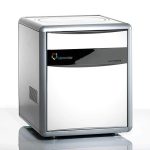
The Cube EA can measure the carbon-to-nitrogen (C:N) ratio of the sample and, if required a small split of the carrier gas can be fed into an Elementar PrecisION IRMS for high-precision δ13C and δ14N analysis. The C:N ratio of the sample can be used as an indicator of the degree of degradation of the sample material and thus its reliability for radiocarbon dating.
[Option] The Carbon Dioxide is Directed to the GIS
The radiocarbon measurement can be performed by the MiCaDaS accelerator mass spectrometer in two different ways, each with their own advantages and drawbacks. A detailed comparison of the two MiCaDaS measurement modes can be found here. In brief, choosing the gas mode does not provide data quality as high as in the traditional graphite mode, but fewer steps are necessary (no graphitization) saving time and reducing the cost.
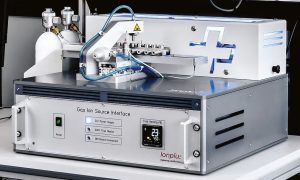
Gas mode measurements are made possible by connecting the Vario Cube EA to the Gas Interface System (GIS). The GIS is fully synchronized with the EA and the MiCaDaS, trapping the CO2 produced from each combusted sample and mixing it with helium to produce a constant and reproducible gas concentration and flowrate to the MiCaDaS ion source.
[Option] The Carbon Dioxide is Graphitized and Pressed
Graphitization
The radiocarbon measurement can be performed by the MiCaDaS accelerator mass spectrometer in two different ways, each with their own advantages and drawbacks. A detailed comparison of the two MiCaDaS measurement modes can be found here. In brief, choosing the traditional graphite mode provides the highest quality data, but requires additional steps that take time and inevitably increase the cost.
Converting the carbon dioxide gas into graphite for radiocarbon measurement is a carefully controlled chemical reduction process designed to produce a clean, stable carbon target for accelerator mass spectrometry. First, the CO₂ sample is purified and quantified in a sealed vacuum system to remove residual gases and potential contaminants. The purified CO₂ is then introduced into a small reaction vessel containing a metal catalyst, most commonly high-purity iron. Hydrogen gas is added, and the sealed reactor is heated to several hundred degrees Celsius, initiating the reduction reaction in which CO₂ is converted to elemental carbon while water is formed as a byproduct. As the reaction proceeds, the carbon precipitates as a fine graphite coating on the surface of the iron catalyst. Throughout the process, pressure and temperature are closely monitored to ensure complete and efficient conversion, which is especially critical for very small carbon amounts. Once the reaction is complete, excess gases and water are removed, and the iron–graphite mixture is pressed into a solid target holder, producing a stable graphite sample suitable for precise radiocarbon analysis.
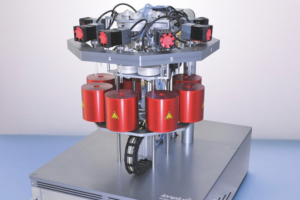
Graphitization is performed in a highly-precise and reproducible manner by the Ionplus Automated Graphitization Equipment (AGE-3). The AGE-3 is synchronized with the Vario Cube EA so that once the two systems are primed and loaded with sample
Cathode (Target) Pressing
Sample graphite is reliably and reproducibly pressed into cathodes by the Ionplus Pneumatic Sample Press (PSP). The prepared cathode (now referred to as a target) is loaded into a 40-position magazine along with other sample, standard and blank targets.
Radiocarbon Content is Measured and Results Reported
Measurement of CO2 from the GIS
An accelerator mass spectrometer such as the Ionplus MiCaDaS, when coupled with a Gas Interface System (GIS), measures the radiocarbon content of a carbon dioxide sample by introducing purified CO₂ directly into the ion source rather than converting it to graphite. In this setup, CO₂ from an elemental analyzer, carbonate handling system, or other CO₂‑producing device is first captured on a zeolite trap and then released into a syringe, where it is diluted with helium, typically to a mixture of about 90% He and 10% CO₂. This gas mixture is continuously fed into the MiCaDaS ion source through a helium flow capillary, allowing the CO₂ molecules to be ionized and converted into negative carbon ions. The AMS then accelerates and separates these ions by mass and charge, enabling direct counting of rare ¹⁴C ions relative to abundant ¹²C and ¹³C.
Measurement of Graphite from the AGE-3 and PSP
In an accelerator mass spectrometer (AMS) such as the Ionplus MiCaDaS system, a graphite target is placed into a cesium sputter ion source, where a beam of focused cesium ions liberates carbon ions from the graphite surface. The carbon ions are then accelerated and passed through magnetic and electrostatic analyzers that separate them by mass and charge, allowing the instrument to isolate the extremely rare ¹⁴C ions from the abundant ¹²C and ¹³C stable isotopes. The MiCaDaS uses a compact design with a permanent magnet and helium stripping to achieve high transmission efficiency and stable beam conditions. Once separated, the ¹⁴C ions are counted individually in a gas ionization detector while ¹²C and ¹³C currents are measured simultaneously with Faraday cups, enabling precise calculation of the ¹⁴C/¹²C ratio. This ratio, corrected for background and isotopic fractionation, yields the radiocarbon content of the original sample with high precision.
Results Processing
Additional calculations are then used to convert the ¹⁴C/¹²C ratio into a corresponding age. For a full account of the calculations and corrections used, please refer to the dedicated webpages.
Results Reporting
<<Result report overview>>
Payment for Services Rendered
An itemized invoice will be provided with your result report. Please contact us if you feel that there’s a problem with the invoiced amount.
<<payment instructions>>
Calcareous Shell or Coral Skeleton
Summary of required quantities and prices:
Graphite Mode (highest precision <2‰)
-
Quantity of shell or coral skeleton required = 20 to 50mg
-
Minimum quantity of shell or coral skeleton required = 10mg
-
UA internal price for H3PO4 hydrolysis & analysis = $175
-
External price for H3PO4 hydrolysis & analysis = $245
-
UA internal price for acid etch, H3PO4 hydrolysis & analysis = $190
-
External price for acid etch, H3PO4 hydrolysis & analysis = $266
Gas Mode (smaller quantities, lower price, lower precision <10‰)
-
Quantity of shell or coral skeleton required = 6 to 16mg
-
Minimum quantity of shell or coral skeleton required = 3.5mg
-
UA internal price for H3PO4 hydrolysis & analysis = $90
-
External price for H3PO4 hydrolysis & analysis = $126
-
UA internal price for acid etch, H3PO4 hydrolysis & analysis = $105
-
External price for acid etch, H3PO4 hydrolysis & analysis = $147
Below is the sequence of steps necessary to obtain a radiocarbon date for a shell or coral skeleton sample. More information is available for each step by opening the drop-down panel. In some cases, additional information can be accessed through links contained within the panels.
You Select the Shell or Coral Samples for Radiocarbon Dating
Shell or Coral Skeleton Quality
Shell, and coral skeletons are widely used in radiocarbon dating to constrain the timing of marine, coastal, and lacustrine processes, as well as some terrestrial and archaeological activities. These materials are composed primarily of biogenic carbonates (e.g., calcium carbonate in aragonite or calcite form) that incorporate carbon during life. Reliable radiocarbon dating depends on isolating carbonate or skeletal material that reflects the time of biological growth and has not been altered, recrystallized, or contaminated after burial.
General Selection Principles: Across all carbonate skeletons, the most reliable samples are those that are well preserved, structurally intact, and demonstrably biogenic in origin. Preference should be given to specimens with natural surfaces, clear growth structures, and minimal evidence of post‑depositional alteration. Sample features to avoid:
- Chalky, powdery, or friable textures indicative of dissolution or recrystallization
- Heavy mineral encrustations, secondary carbonate crusts, or cementation
- Dark staining, sediment infilling, or pervasive bioerosion
- Evidence of heat exposure, consolidation, or conservation treatment
Careful visual and microscopic inspection is essential to identify altered or reworked material prior to submission.
Shell Samples (Marine and Terrestrial): Shells from mollusks and other invertebrates are common radiocarbon targets, but selection practices differ between marine and terrestrial environments.
- Marine shells should ideally be from a single, identifiable species with a known habitat and ecology, and collected from a well-defined stratigraphic context. Intact shells with preserved growth increments are preferred over fragments. Mixing species or combining shells from different ecological niches can introduce age averaging or offsets. Marine shells are subject to marine reservoir effects, wherein dissolved “old” carbon in seawater causes shells to appear artificially old; appropriate regional reservoir corrections are often required and should be discussed with the laboratory.
- Terrestrial shells (e.g., land snails) require particular caution because many species incorporate carbon from limestone or carbonate-rich soils, which can introduce radiocarbon-dead carbon and yield anomalously old ages. Terrestrial shells should only be selected when the species’ ecology and carbonate sourcing are well understood, and samples from carbonate-rich settings should generally be avoided unless specifically accounted for.
In both cases, pretreatment typically involves gentle physical cleaning and controlled acid leaching to remove surface contamination and secondary carbonates without affecting the original shell carbonate.
Coral Skeletons: Corals are among the most valuable materials for high-resolution marine chronologies, sea-level reconstructions, and paleoclimate studies. Reliable samples consist of primary aragonitic coral skeleton with clearly preserved growth banding and no evidence of mineralogical alteration. Corals that have undergone recrystallization from aragonite to calcite, extensive bioerosion, or infilling by secondary carbonates should be rejected, as these processes can profoundly alter the radiocarbon signal.
Routine screening using visual inspection and, where appropriate, spectroscopic or mineralogical techniques (e.g., XRD or FTIR) is strongly recommended to confirm mineralogical integrity. Coral samples also require consideration of marine reservoir effects, which may vary through time and space and can influence apparent ages.
Radiocarbon ages from shells and corals are most robust when supported by multiple dates, independent stratigraphic controls, and complementary material types. Communicating the environmental setting and research goals to the laboratory allows pretreatment and screening protocols to be optimized for the specific material and application.
Shell or Coral Skeleton Quantity
For graphite-mode measurement (highest data quality), please provide 20 to 50mg of shell or coral skeleton for each sample (10mg is usually the minimum quantity we can reliably extract enough CO2 from to provide a reliable high quality measurement).
For gas-mode measurement, please provide at least 3.5mg of shell or coral skeleton for each sample. If the sample is well preserved, then smaller quantities can be accommodated, but they would not be treated as routine samples and may incur additional charges (please contact us to discuss your specialized needs).
You Ship the Shell/Coral Samples to AURORA
Please be sure that samples are allowed to dry thoroughly before packaging to prevent microbial growth or chemical alteration during transit. Also, please use sufficient padding and packaging to ensure that samples and sample containers are adequately protected from incidental damage during transit.
To ship delicate items, use a sturdy, appropriately sized box with at least 3 inches of cushioning (bubble wrap, foam) around each individually wrapped item, preventing movement by filling all voids with peanuts or crumpled paper, and ideally double-boxing for extra protection, then sealing securely with an “H” tape pattern and marking as fragile.
Use a shipping method that permits package tracking and consider purchasing additional insurance in case the shipment is lost by the carrier.
Ship the sample package to:
Dr. Matt Emmons
AURORA, CEM/INE
University of Alaska Fairbanks
1764 Tanana Loop, Box 755910
Fairbanks AK 99775-5910
The Samples are Received, Inspected and Cleaned
Samples are Received
Received samples are immediately compared with your sample submission form and entered into our CARBONTrack (Comprehensive Automated Radiocarbon Backend for Operations, Notification and Tracking) system. CARBONTrack will automatically perform the following tasks:
- Assign a unique tracking number to each sample
- Print out barcode labels to be attached to the sample throughout its progress through our system
- Send a sample receipt email to the sender
- Schedule inspection of the samples
- Schedule the first step(s) of sample processing
- Track the progress of the samples from receipt to data reporting
Sample Inspection and Pretreatment Planning
Every incoming sample undergoes a careful visual and contextual inspection to determine its condition, contamination risk, and the most appropriate cleaning and pretreatment strategy. Technicians assess sample conditions such as surface integrity, preservation state, signs of recrystallization, root penetration, and chemical alteration, depending on the sample sample type. This initial evaluation guides decisions about whether the sample requires physical cleaning, acid etching, solvent washing, ABA or more advanced chemical treatments. By tailoring pretreatment to each sample’s material type and preservation history, we ensure that radiocarbon results reflect the original carbon source, not later contamination.
Physical (Mechanical) Cleaning
Physical or mechanical cleaning removes surface contaminants and degraded material that could compromise dating accuracy. Depending on the sample type, this may include gentle brushing, rinsing, ultrasonic cleaning, wet sieving, or picking under a stereomicroscope. Technicians target intrusive organics, soil particles, and weathered surfaces while preserving the sample’s core structure. This step is essential for eliminating visible contamination before chemical pretreatment begins, and helps ensure that only well-preserved material contributes to the final radiocarbon measurement.
Solvent Cleaning
If mechanical cleaning proves inadequate to remove identified contaminants, then solvents may be used. The type of solvent and contact duration is carefully assessed and kept to a minimum.
The Shell/Coral is Acid Etched
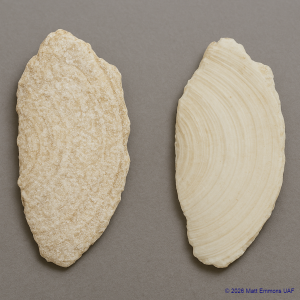
In most cases, recrystallized carbonates are present on the samples’ outer surface and must be removed because they can carry younger or older carbon introduced long after the sample originally formed which would distort the radiocarbon age. These secondary carbonates typically develop on exposed surfaces as groundwater or soil fluids deposit new calcite or aragonite (Zamanian 2016). Acid etching addresses this by briefly exposing the sample to a controlled, dilute acid treatment that dissolves only the outermost, most reactive layers where secondary carbonate accumulates. The short etch removes these overgrowths while preserving the dense, original carbonate beneath, ensuring that the CO₂ ultimately measured reflects the sample’s true geological or archaeological age rather than later environmental overprinting.
The Shell/Coral is Hydrolyzed into Carbon Dioxide
The Ionplus CHS‑2 converts carbonate‑containing samples into carbon dioxide by reacting them with phosphoric acid under tightly controlled, automated conditions. Carbonate samples sealed in vials are first flushed with helium, removing ambient CO₂ and establishing an inert atmosphere. The system then injects heated phosphoric acid into each vial, where the acid–carbonate reaction releases CO₂ gas.
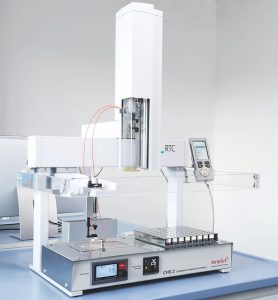
As the reaction proceeds inside a temperature‑regulated heating block, the evolving CO₂ is simultaneously drawn off through a double hollow needle, dried over a chemical desiccant and collected on a zeolite trap for later release. The purified CO₂ can then be directed either to graphitization systems (AGE-3) or directly into the MiCaDaS AMS via the Gas Interface System (GIS) for radiocarbon measurement.
[Option] The Carbon Dioxide is Directed to the GIS
The radiocarbon measurement can be performed by the MiCaDaS accelerator mass spectrometer in two different ways, each with their own advantages and drawbacks. A detailed comparison of the two MiCaDaS measurement modes can be found here. In brief, choosing the gas mode does not provide data quality as high as in the traditional graphite mode, but fewer steps are necessary (no graphitization) saving time and reducing the cost.
Gas mode measurements are made possible by connecting the Vario Cube EA to the Gas Interface System (GIS). The GIS is fully synchronized with the EA and the MiCaDaS, trapping the CO2 produced from each combusted sample and mixing it with helium to produce a constant and reproducible gas concentration and flowrate to the MiCaDaS ion source.
[Option] The Carbon Dioxide is Graphitized and Pressed
Graphitization
The radiocarbon measurement can be performed by the MiCaDaS accelerator mass spectrometer in two different ways, each with their own advantages and drawbacks. A detailed comparison of the two MiCaDaS measurement modes can be found here. In brief, choosing the traditional graphite mode provides the highest quality data, but requires additional steps that take time and inevitably increase the cost.
Converting the carbon dioxide gas into graphite for radiocarbon measurement is a carefully controlled chemical reduction process designed to produce a clean, stable carbon target for accelerator mass spectrometry. First, the CO₂ sample is purified and quantified in a sealed vacuum system to remove residual gases and potential contaminants. The purified CO₂ is then introduced into a small reaction vessel containing a metal catalyst, most commonly high-purity iron. Hydrogen gas is added, and the sealed reactor is heated to several hundred degrees Celsius, initiating the reduction reaction in which CO₂ is converted to elemental carbon while water is formed as a byproduct. As the reaction proceeds, the carbon precipitates as a fine graphite coating on the surface of the iron catalyst. Throughout the process, pressure and temperature are closely monitored to ensure complete and efficient conversion, which is especially critical for very small carbon amounts. Once the reaction is complete, excess gases and water are removed, and the iron–graphite mixture is pressed into a solid target holder, producing a stable graphite sample suitable for precise radiocarbon analysis.
Graphitization is performed in a highly-precise and reproducible manner by the Ionplus Automated Graphitization Equipment (AGE-3). The AGE-3 is synchronized with the Vario Cube EA so that once the two systems are primed and loaded with sample
Cathode (Target) Pressing
Sample graphite is reliably and reproducibly pressed into cathodes by the Ionplus Pneumatic Sample Press (PSP). The prepared cathode (now referred to as a target) is loaded into a 40-position magazine along with other sample, standard and blank targets.
Radiocarbon Content is Measured and Results Reported
Measurement of CO2 from the GIS
An accelerator mass spectrometer such as the Ionplus MiCaDaS, when coupled with a Gas Interface System (GIS), measures the radiocarbon content of a carbon dioxide sample by introducing purified CO₂ directly into the ion source rather than converting it to graphite. In this setup, CO₂ from an elemental analyzer, carbonate handling system, or other CO₂‑producing device is first captured on a zeolite trap and then released into a syringe, where it is diluted with helium, typically to a mixture of about 90% He and 10% CO₂. This gas mixture is continuously fed into the MiCaDaS ion source through a helium flow capillary, allowing the CO₂ molecules to be ionized and converted into negative carbon ions. The AMS then accelerates and separates these ions by mass and charge, enabling direct counting of rare ¹⁴C ions relative to abundant ¹²C and ¹³C.
Measurement of Graphite from the AGE-3 and PSP
In an accelerator mass spectrometer (AMS) such as the Ionplus MiCaDaS system, a graphite target is placed into a cesium sputter ion source, where a beam of focused cesium ions liberates carbon ions from the graphite surface. The carbon ions are then accelerated and passed through magnetic and electrostatic analyzers that separate them by mass and charge, allowing the instrument to isolate the extremely rare ¹⁴C ions from the abundant ¹²C and ¹³C stable isotopes. The MiCaDaS uses a compact design with a permanent magnet and helium stripping to achieve high transmission efficiency and stable beam conditions. Once separated, the ¹⁴C ions are counted individually in a gas ionization detector while ¹²C and ¹³C currents are measured simultaneously with Faraday cups, enabling precise calculation of the ¹⁴C/¹²C ratio. This ratio, corrected for background and isotopic fractionation, yields the radiocarbon content of the original sample with high precision.
Results Processing
Additional calculations are then used to convert the ¹⁴C/¹²C ratio into a corresponding age. For a full account of the calculations and corrections used, please refer to the dedicated webpages.
Results Reporting
<<Result report overview>>
Payment for Services Rendered
An itemized invoice will be provided with your result report. Please contact us if you feel that there’s a problem with the invoiced amount.
<<payment instructions>>
Cellulose (Client Prepared)
Summary of required quantities and prices:
Graphite Mode (highest precision <2‰)
-
Quantity of cellulose required = 5 to 15mg
-
Minimum quantity of cellulose required = 3mg
-
UA internal price for analysis = $165
-
External price for analysis = $231
Gas Mode (smaller quantities, lower price, lower precision <10‰)
-
Quantity of cellulose required = 1.5 to 4.5mg
-
Minimum quantity of cellulose required = 1mg
-
UA internal price for analysis = $80
-
External price for analysis = $112
Below is the sequence of steps necessary to obtain a radiocarbon date for a cellulose sample. More information is available for each step by opening the drop-down panel. In some cases, additional information can be accessed through links contained within the panels.
You Ship the Cellulose Samples to AURORA
Please be sure that samples are allowed to dry thoroughly before packaging to prevent microbial growth or chemical alteration during transit. Also, please use sufficient padding and packaging to ensure that samples and sample containers are adequately protected from incidental damage during transit.
To ship delicate items, use a sturdy, appropriately sized box with at least 3 inches of cushioning (bubble wrap, foam) around each individually wrapped item, preventing movement by filling all voids with peanuts or crumpled paper, and ideally double-boxing for extra protection, then sealing securely with an “H” tape pattern and marking as fragile.
Use a shipping method that permits package tracking and consider purchasing additional insurance in case the shipment is lost by the carrier.
Ship the sample package to:
Dr. Matt Emmons
AURORA, CEM/INE
University of Alaska Fairbanks
1764 Tanana Loop, Box 755910
Fairbanks AK 99775-5910
The Samples are Received and Inspected
Samples are Received
Received samples are immediately compared with your sample submission form and entered into our CARBONTrack (Comprehensive Automated Radiocarbon Backend for Operations, Notification and Tracking) system. CARBONTrack will automatically perform the following tasks:
- Assign a unique tracking number to each sample
- Print out barcode labels to be attached to the sample throughout its progress through our system
- Send a sample receipt email to the sender
- Schedule inspection of the samples
- Schedule the first step(s) of sample processing
- Track the progress of the samples from receipt to data reporting
Samples are Inspected
Every client-prepared sample undergoes a careful visual and physical assessment to ensure the highest level of precision for the upcoming AMS analysis. Our technicians examine the material under magnification to confirm that the samples have not sustained damage in transit and remain free of subtle contaminants like microplastics or other packing materials. By verifying that each sample is in optimal condition before analysis, we can ensure that the resulting data is as accurate and reliable as possible.
Cellulose is Combusted into Carbon Dioxide
Organic samples are quantitatively converted into pure carbon dioxide gas using an Elemental Analyzer such as the Elementar Vario Cube EA. The sample is dropped into a furnace where it is rapidly oxidized, producing simple gases such as CO₂, N₂, and SO₂. These gases then pass through a series of chemical traps and a gas‑chromatographic separation column that remove the unwanted species and isolate CO₂ at high purity.
The Cube EA can measure the carbon-to-nitrogen (C:N) ratio of the sample and, if required a small split of the carrier gas can be fed into an Elementar PrecisION IRMS for high-precision δ13C and δ14N analysis. The C:N ratio of the sample can be used as an indicator of the degree of degradation of the sample material and thus its reliability for radiocarbon dating.
[Option] The Carbon Dioxide is Directed to the GIS
The radiocarbon measurement can be performed by the MiCaDaS accelerator mass spectrometer in two different ways, each with their own advantages and drawbacks. A detailed comparison of the two MiCaDaS measurement modes can be found here. In brief, choosing the gas mode does not provide data quality as high as in the traditional graphite mode, but fewer steps are necessary (no graphitization) saving time and reducing the cost.
Gas mode measurements are made possible by connecting the Vario Cube EA to the Gas Interface System (GIS). The GIS is fully synchronized with the EA and the MiCaDaS, trapping the CO2 produced from each combusted sample and mixing it with helium to produce a constant and reproducible gas concentration and flowrate to the MiCaDaS ion source.
[Option] The Carbon Dioxide is Graphitized and Pressed
Graphitization
The radiocarbon measurement can be performed by the MiCaDaS accelerator mass spectrometer in two different ways, each with their own advantages and drawbacks. A detailed comparison of the two MiCaDaS measurement modes can be found here. In brief, choosing the traditional graphite mode provides the highest quality data, but requires additional steps that take time and inevitably increase the cost.
Converting the carbon dioxide gas into graphite for radiocarbon measurement is a carefully controlled chemical reduction process designed to produce a clean, stable carbon target for accelerator mass spectrometry. First, the CO₂ sample is purified and quantified in a sealed vacuum system to remove residual gases and potential contaminants. The purified CO₂ is then introduced into a small reaction vessel containing a metal catalyst, most commonly high-purity iron. Hydrogen gas is added, and the sealed reactor is heated to several hundred degrees Celsius, initiating the reduction reaction in which CO₂ is converted to elemental carbon while water is formed as a byproduct. As the reaction proceeds, the carbon precipitates as a fine graphite coating on the surface of the iron catalyst. Throughout the process, pressure and temperature are closely monitored to ensure complete and efficient conversion, which is especially critical for very small carbon amounts. Once the reaction is complete, excess gases and water are removed, and the iron–graphite mixture is pressed into a solid target holder, producing a stable graphite sample suitable for precise radiocarbon analysis.
Graphitization is performed in a highly-precise and reproducible manner by the Ionplus Automated Graphitization Equipment (AGE-3). The AGE-3 is synchronized with the Vario Cube EA so that once the two systems are primed and loaded with sample
Cathode (Target) Pressing
Sample graphite is reliably and reproducibly pressed into cathodes by the Ionplus Pneumatic Sample Press (PSP). The prepared cathode (now referred to as a target) is loaded into a 40-position magazine along with other sample, standard and blank targets.
Radiocarbon Content is Measured and Results Reported
Measurement of CO2 from the GIS
An accelerator mass spectrometer such as the Ionplus MiCaDaS, when coupled with a Gas Interface System (GIS), measures the radiocarbon content of a carbon dioxide sample by introducing purified CO₂ directly into the ion source rather than converting it to graphite. In this setup, CO₂ from an elemental analyzer, carbonate handling system, or other CO₂‑producing device is first captured on a zeolite trap and then released into a syringe, where it is diluted with helium, typically to a mixture of about 90% He and 10% CO₂. This gas mixture is continuously fed into the MiCaDaS ion source through a helium flow capillary, allowing the CO₂ molecules to be ionized and converted into negative carbon ions. The AMS then accelerates and separates these ions by mass and charge, enabling direct counting of rare ¹⁴C ions relative to abundant ¹²C and ¹³C.
Measurement of Graphite from the AGE-3 and PSP
In an accelerator mass spectrometer (AMS) such as the Ionplus MiCaDaS system, a graphite target is placed into a cesium sputter ion source, where a beam of focused cesium ions liberates carbon ions from the graphite surface. The carbon ions are then accelerated and passed through magnetic and electrostatic analyzers that separate them by mass and charge, allowing the instrument to isolate the extremely rare ¹⁴C ions from the abundant ¹²C and ¹³C stable isotopes. The MiCaDaS uses a compact design with a permanent magnet and helium stripping to achieve high transmission efficiency and stable beam conditions. Once separated, the ¹⁴C ions are counted individually in a gas ionization detector while ¹²C and ¹³C currents are measured simultaneously with Faraday cups, enabling precise calculation of the ¹⁴C/¹²C ratio. This ratio, corrected for background and isotopic fractionation, yields the radiocarbon content of the original sample with high precision.
Results Processing
Additional calculations are then used to convert the ¹⁴C/¹²C ratio into a corresponding age. For a full account of the calculations and corrections used, please refer to the dedicated webpages.
Results Reporting
<<Result report overview>>
Payment for Services Rendered
An itemized invoice will be provided with your result report. Please contact us if you feel that there’s a problem with the invoiced amount.
<<payment instructions>>
Charcoal/Soot
Summary of required quantities and prices:
Graphite Mode (highest precision <2‰)
-
Quantity of charcoal or soot required = 3 to 9mg
-
Minimum quantity of charcoal or soot required = 2mg
-
UA internal price for analysis (no pretreatment) = $165
-
External price for analysis (no pretreatment) = $231
-
UA internal price for ABA and analysis = $195
-
External price for ABA and analysis = $261
Gas Mode (smaller quantities, lower price, lower precision <10‰)
-
Quantity of charcoal or soot required = 1 to 3mg
-
Minimum quantity of charcoal or soot required = 0.6mg
-
UA internal price for analysis = $80
-
External price for analysis = $112
-
UA internal price for ABA and analysis = $110
-
External price for ABA and analysis = $142
Below is the sequence of steps necessary to obtain a radiocarbon date for a charcoal or soot sample. More information is available for each step by opening the drop-down panel. In some cases, additional information can be accessed through links contained within the panels.
You Select the Charcoal Samples for Radiocarbon Dating
Charcoal/Soot Sample Quality
Charcoal is one of the most commonly dated materials in radiocarbon analysis because it is composed of chemically stable, carbon‑rich material formed during combustion and is often well preserved in archaeological and paleoenvironmental contexts. The most reliable charcoal samples are those derived from short‑lived plant materials (such as twigs, small branches, or seeds) that were burned soon after growth, thereby minimizing “inbuilt age” effects. Whenever possible, charcoal fragments should be identified to taxon or growth form, as large pieces of heartwood from long‑lived trees may be decades to centuries older than the fire or depositional event of interest.
High‑quality charcoal should appear firm, lightweight, and distinctly black, with preserved cellular structure visible under a hand lens or microscope. Samples that are brown, friable, powdery, or heavily mineralized are more likely to be partially degraded, incompletely carbonized, or contaminated with soil‑derived organic matter and should be avoided. Charcoal recovered from well‑defined, undisturbed stratigraphic contexts such as hearths, fire layers, or sealed sediment horizons is preferred over material from bioturbated, reworked, or groundwater‑affected deposits, where charcoal can be transported and redeposited long after formation.
Contamination is a critical concern for charcoal dating. Charcoal readily adsorbs humic and fulvic acids, carbonates, and fine sediment particles from surrounding soils, all of which can introduce carbon of a different age. To reduce these risks, samples should be physically cleaned to remove adhering sediment and rootlets prior to laboratory pretreatment. Avoid charcoal fragments that are visibly encrusted, cemented, or penetrated by modern roots. Particular caution is warranted for very small or highly degraded fragments, as they are more susceptible to contamination and may not withstand rigorous pretreatment.
Appropriate chemical pretreatment most commonly acid–base–acid (ABA) (or, in some cases, more aggressive oxidation protocols) is used to remove secondary carbonates and soil‑derived organic compounds while isolating the most chemically resistant charcoal carbon fraction. Because different fire conditions can produce charcoal of varying chemical stability, laboratories may recommend specific pretreatment approaches based on sample appearance and context. For best results, clients are encouraged to submit sufficient material to allow for thorough pretreatment and, where possible, to provide contextual information that helps distinguish primary fire residues from reworked or residual charcoal.
Careful selection of well‑preserved, contextually secure charcoal combined with appropriate pretreatment yields radiocarbon ages that are among the most robust and interpretable available, making charcoal an excellent material for archaeological, paleoenvironmental, and geomorphic dating applications.
Charcoal/Soot Sample Quantity
For graphite-mode measurement (highest data quality), please provide 3 to 9mg of charcoal/soot for each sample (2mg is usually the minimum quantity we need to provide a reliable high quality measurement).
For gas-mode measurement, please provide 1 to 3mg (at least 0.6mg) of charcoal/soot for each sample. Smaller quantities can be accommodated, but they would not be treated as routine samples and may incur additional charges (please contact us to discuss your specialized needs).
You Ship the Charcoal Samples to AURORA
Please be sure that samples are allowed to dry thoroughly before packaging to prevent microbial growth or chemical alteration during transit. Also, please use sufficient padding and packaging to ensure that samples and sample containers are adequately protected from incidental damage during transit.
To ship delicate items, use a sturdy, appropriately sized box with at least 3 inches of cushioning (bubble wrap, foam) around each individually wrapped item, preventing movement by filling all voids with peanuts or crumpled paper, and ideally double-boxing for extra protection, then sealing securely with an “H” tape pattern and marking as fragile.
Use a shipping method that permits package tracking and consider purchasing additional insurance in case the shipment is lost by the carrier.
Ship the sample package to:
Dr. Matt Emmons
AURORA, CEM/INE
University of Alaska Fairbanks
1764 Tanana Loop, Box 755910
Fairbanks AK 99775-5910
The Samples are Received, Inspected and Cleaned
Samples are Received
Received samples are immediately compared with your sample submission form and entered into our CARBONTrack (Comprehensive Automated Radiocarbon Backend for Operations, Notification and Tracking) system. CARBONTrack will automatically perform the following tasks:
- Assign a unique tracking number to each sample
- Print out barcode labels to be attached to the sample throughout its progress through our system
- Send a sample receipt email to the sender
- Schedule inspection of the samples
- Schedule the first step(s) of sample processing
- Track the progress of the samples from receipt to data reporting
Sample Inspection and Pretreatment Planning
Every incoming sample undergoes a careful visual and contextual inspection to determine its condition, contamination risk, and the most appropriate cleaning and pretreatment strategy. Technicians assess sample conditions such as surface integrity, preservation state, signs of recrystallization, root penetration, and chemical alteration, depending on the sample sample type. This initial evaluation guides decisions about whether the sample requires physical cleaning, acid etching, solvent washing, ABA or more advanced chemical treatments. By tailoring pretreatment to each sample’s material type and preservation history, we ensure that radiocarbon results reflect the original carbon source, not later contamination.
Physical (Mechanical) Cleaning
Physical or mechanical cleaning removes surface contaminants and degraded material that could compromise dating accuracy. Depending on the sample type, this may include gentle brushing, rinsing, ultrasonic cleaning, wet sieving, or picking under a stereomicroscope. Technicians target intrusive organics, soil particles, and weathered surfaces while preserving the sample’s core structure. This step is essential for eliminating visible contamination before chemical pretreatment begins, and helps ensure that only well-preserved material contributes to the final radiocarbon measurement.
Solvent Cleaning
If mechanical cleaning proves inadequate to remove identified contaminants, then solvents may be used. The type of solvent and contact duration is carefully assessed and kept to a minimum.
The Samples are Decontaminated (Acid-Base-Acid)
The Acid–Base–Acid (ABA) pretreatment is used in radiocarbon dating to remove contaminants from other carbon-bearing samples prior to radiocarbon analysis by AMS. The initial acid step dissolves secondary carbonates, the base step removes humic acids and other soluble organic contaminants introduced from soils, and the final acid step neutralizes the sample and eliminates any atmospheric carbon absorbed during the base treatment. By isolating the original, chemically stable carbon fraction formed at the time of burning or formation, ABA pretreatment helps ensure that the measured radiocarbon age accurately reflects the sample’s true age rather than later environmental carbon inputs.
The procedures used are based on those developed by (De Vries 1954). See (Bird 2013) for a detailed account of the ABA and ABOx pretreatment of charcoal.
Summary of the Acid-Base-Acid procedure
- Demineralization
- Removal of humins
- Neutralization
- Dehydration
Optimizing ABA pretreatment requires adjusting steps based on:
- Preservation state
- Structural condition
- Contamination load
- Degree of mineralization
Well‑preserved samples tolerate standard protocols, while fragile or degraded specimens require gentler chemical conditions and less destructive methods that preserve both the sample and the accuracy of radiocarbon measurement.
Charcoal is Combusted into Carbon Dioxide
Organic samples are quantitatively converted into pure carbon dioxide gas using an Elemental Analyzer such as the Elementar Vario Cube EA. The sample is dropped into a furnace where it is rapidly oxidized, producing simple gases such as CO₂, N₂, and SO₂. These gases then pass through a series of chemical traps and a gas‑chromatographic separation column that remove the unwanted species and isolate CO₂ at high purity.
The Cube EA can measure the carbon-to-nitrogen (C:N) ratio of the sample and, if required a small split of the carrier gas can be fed into an Elementar PrecisION IRMS for high-precision δ13C and δ14N analysis. The C:N ratio of the sample can be used as an indicator of the degree of degradation of the sample material and thus its reliability for radiocarbon dating.
[Option] The Carbon Dioxide is Directed to the GIS
The radiocarbon measurement can be performed by the MiCaDaS accelerator mass spectrometer in two different ways, each with their own advantages and drawbacks. A detailed comparison of the two MiCaDaS measurement modes can be found here. In brief, choosing the gas mode does not provide data quality as high as in the traditional graphite mode, but fewer steps are necessary (no graphitization) saving time and reducing the cost.
Gas mode measurements are made possible by connecting the Vario Cube EA to the Gas Interface System (GIS). The GIS is fully synchronized with the EA and the MiCaDaS, trapping the CO2 produced from each combusted sample and mixing it with helium to produce a constant and reproducible gas concentration and flowrate to the MiCaDaS ion source.
[Option] The Carbon Dioxide is Graphitized and Pressed
Graphitization
The radiocarbon measurement can be performed by the MiCaDaS accelerator mass spectrometer in two different ways, each with their own advantages and drawbacks. A detailed comparison of the two MiCaDaS measurement modes can be found here. In brief, choosing the traditional graphite mode provides the highest quality data, but requires additional steps that take time and inevitably increase the cost.
Converting the carbon dioxide gas into graphite for radiocarbon measurement is a carefully controlled chemical reduction process designed to produce a clean, stable carbon target for accelerator mass spectrometry. First, the CO₂ sample is purified and quantified in a sealed vacuum system to remove residual gases and potential contaminants. The purified CO₂ is then introduced into a small reaction vessel containing a metal catalyst, most commonly high-purity iron. Hydrogen gas is added, and the sealed reactor is heated to several hundred degrees Celsius, initiating the reduction reaction in which CO₂ is converted to elemental carbon while water is formed as a byproduct. As the reaction proceeds, the carbon precipitates as a fine graphite coating on the surface of the iron catalyst. Throughout the process, pressure and temperature are closely monitored to ensure complete and efficient conversion, which is especially critical for very small carbon amounts. Once the reaction is complete, excess gases and water are removed, and the iron–graphite mixture is pressed into a solid target holder, producing a stable graphite sample suitable for precise radiocarbon analysis.
Graphitization is performed in a highly-precise and reproducible manner by the Ionplus Automated Graphitization Equipment (AGE-3). The AGE-3 is synchronized with the Vario Cube EA so that once the two systems are primed and loaded with sample
Cathode (Target) Pressing
Sample graphite is reliably and reproducibly pressed into cathodes by the Ionplus Pneumatic Sample Press (PSP). The prepared cathode (now referred to as a target) is loaded into a 40-position magazine along with other sample, standard and blank targets.
Radiocarbon Content is Measured and Results Reported
Measurement of CO2 from the GIS
An accelerator mass spectrometer such as the Ionplus MiCaDaS, when coupled with a Gas Interface System (GIS), measures the radiocarbon content of a carbon dioxide sample by introducing purified CO₂ directly into the ion source rather than converting it to graphite. In this setup, CO₂ from an elemental analyzer, carbonate handling system, or other CO₂‑producing device is first captured on a zeolite trap and then released into a syringe, where it is diluted with helium, typically to a mixture of about 90% He and 10% CO₂. This gas mixture is continuously fed into the MiCaDaS ion source through a helium flow capillary, allowing the CO₂ molecules to be ionized and converted into negative carbon ions. The AMS then accelerates and separates these ions by mass and charge, enabling direct counting of rare ¹⁴C ions relative to abundant ¹²C and ¹³C.
Measurement of Graphite from the AGE-3 and PSP
In an accelerator mass spectrometer (AMS) such as the Ionplus MiCaDaS system, a graphite target is placed into a cesium sputter ion source, where a beam of focused cesium ions liberates carbon ions from the graphite surface. The carbon ions are then accelerated and passed through magnetic and electrostatic analyzers that separate them by mass and charge, allowing the instrument to isolate the extremely rare ¹⁴C ions from the abundant ¹²C and ¹³C stable isotopes. The MiCaDaS uses a compact design with a permanent magnet and helium stripping to achieve high transmission efficiency and stable beam conditions. Once separated, the ¹⁴C ions are counted individually in a gas ionization detector while ¹²C and ¹³C currents are measured simultaneously with Faraday cups, enabling precise calculation of the ¹⁴C/¹²C ratio. This ratio, corrected for background and isotopic fractionation, yields the radiocarbon content of the original sample with high precision.
Results Processing
Additional calculations are then used to convert the ¹⁴C/¹²C ratio into a corresponding age. For a full account of the calculations and corrections used, please refer to the dedicated webpages.
Results Reporting
<<Result report overview>>
Payment for Services Rendered
An itemized invoice will be provided with your result report. Please contact us if you feel that there’s a problem with the invoiced amount.
<<payment instructions>>
Collagen/Gelatin (Client Prepared)
Summary of required quantities and prices:
Graphite Mode (highest precision <2‰)
-
Quantity of collagen required = 8 to 20mg
-
Minimum quantity of collagen required = 4mg
-
UA internal price for analysis = $165
-
External price for analysis = $231
Gas Mode (smaller quantities, lower price, lower precision <10‰)
-
Quantity of collagen required = 2.5 to 7mg
-
Minimum quantity of collagen required = 1.3mg
-
UA internal price for analysis = $80
-
External price for analysis = $112
Below is the sequence of steps necessary to obtain a radiocarbon date for a collagen sample. More information is available for each step by opening the drop-down panel. In some cases, additional information can be accessed through links contained within the panels.
You Ship the Collagen Samples to AURORA
Please be sure that samples are allowed to dry thoroughly before packaging to prevent microbial growth or chemical alteration during transit. Also, please use sufficient padding and packaging to ensure that samples and sample containers are adequately protected from incidental damage during transit.
To ship delicate items, use a sturdy, appropriately sized box with at least 3 inches of cushioning (bubble wrap, foam) around each individually wrapped item, preventing movement by filling all voids with peanuts or crumpled paper, and ideally double-boxing for extra protection, then sealing securely with an “H” tape pattern and marking as fragile.
Use a shipping method that permits package tracking and consider purchasing additional insurance in case the shipment is lost by the carrier.
Ship the sample package to:
Dr. Matt Emmons
AURORA, CEM/INE
University of Alaska Fairbanks
1764 Tanana Loop, Box 755910
Fairbanks AK 99775-5910
The Samples are Received and Inspected
Samples are Received
Received samples are immediately compared with your sample submission form and entered into our CARBONTrack (Comprehensive Automated Radiocarbon Backend for Operations, Notification and Tracking) system. CARBONTrack will automatically perform the following tasks:
- Assign a unique tracking number to each sample
- Print out barcode labels to be attached to the sample throughout its progress through our system
- Send a sample receipt email to the sender
- Schedule inspection of the samples
- Schedule the first step(s) of sample processing
- Track the progress of the samples from receipt to data reporting
Samples are Inspected
Every client-prepared sample undergoes a careful visual and physical assessment to ensure the highest level of precision for the upcoming AMS analysis. Our technicians examine the material under magnification to confirm that the samples have not sustained damage in transit and remain free of subtle contaminants like microplastics or other packing materials. By verifying that each sample is in optimal condition before analysis, we can ensure that the resulting data is as accurate and reliable as possible.
Collagen is Combusted into Carbon Dioxide
Organic samples are quantitatively converted into pure carbon dioxide gas using an Elemental Analyzer such as the Elementar Vario Cube EA. The sample is dropped into a furnace where it is rapidly oxidized, producing simple gases such as CO₂, N₂, and SO₂. These gases then pass through a series of chemical traps and a gas‑chromatographic separation column that remove the unwanted species and isolate CO₂ at high purity.
The Cube EA can measure the carbon-to-nitrogen (C:N) ratio of the sample and, if required a small split of the carrier gas can be fed into an Elementar PrecisION IRMS for high-precision δ13C and δ14N analysis. The C:N ratio of the sample can be used as an indicator of the degree of degradation of the sample material and thus its reliability for radiocarbon dating.
[Option] The Carbon Dioxide is Directed to the GIS
The radiocarbon measurement can be performed by the MiCaDaS accelerator mass spectrometer in two different ways, each with their own advantages and drawbacks. A detailed comparison of the two MiCaDaS measurement modes can be found here. In brief, choosing the gas mode does not provide data quality as high as in the traditional graphite mode, but fewer steps are necessary (no graphitization) saving time and reducing the cost.
Gas mode measurements are made possible by connecting the Vario Cube EA to the Gas Interface System (GIS). The GIS is fully synchronized with the EA and the MiCaDaS, trapping the CO2 produced from each combusted sample and mixing it with helium to produce a constant and reproducible gas concentration and flowrate to the MiCaDaS ion source.
[Option] The Carbon Dioxide is Graphitized and Pressed
Graphitization
The radiocarbon measurement can be performed by the MiCaDaS accelerator mass spectrometer in two different ways, each with their own advantages and drawbacks. A detailed comparison of the two MiCaDaS measurement modes can be found here. In brief, choosing the traditional graphite mode provides the highest quality data, but requires additional steps that take time and inevitably increase the cost.
Converting the carbon dioxide gas into graphite for radiocarbon measurement is a carefully controlled chemical reduction process designed to produce a clean, stable carbon target for accelerator mass spectrometry. First, the CO₂ sample is purified and quantified in a sealed vacuum system to remove residual gases and potential contaminants. The purified CO₂ is then introduced into a small reaction vessel containing a metal catalyst, most commonly high-purity iron. Hydrogen gas is added, and the sealed reactor is heated to several hundred degrees Celsius, initiating the reduction reaction in which CO₂ is converted to elemental carbon while water is formed as a byproduct. As the reaction proceeds, the carbon precipitates as a fine graphite coating on the surface of the iron catalyst. Throughout the process, pressure and temperature are closely monitored to ensure complete and efficient conversion, which is especially critical for very small carbon amounts. Once the reaction is complete, excess gases and water are removed, and the iron–graphite mixture is pressed into a solid target holder, producing a stable graphite sample suitable for precise radiocarbon analysis.
Graphitization is performed in a highly-precise and reproducible manner by the Ionplus Automated Graphitization Equipment (AGE-3). The AGE-3 is synchronized with the Vario Cube EA so that once the two systems are primed and loaded with sample
Cathode (Target) Pressing
Sample graphite is reliably and reproducibly pressed into cathodes by the Ionplus Pneumatic Sample Press (PSP). The prepared cathode (now referred to as a target) is loaded into a 40-position magazine along with other sample, standard and blank targets.
Radiocarbon Content is Measured and Results Reported
Measurement of CO2 from the GIS
An accelerator mass spectrometer such as the Ionplus MiCaDaS, when coupled with a Gas Interface System (GIS), measures the radiocarbon content of a carbon dioxide sample by introducing purified CO₂ directly into the ion source rather than converting it to graphite. In this setup, CO₂ from an elemental analyzer, carbonate handling system, or other CO₂‑producing device is first captured on a zeolite trap and then released into a syringe, where it is diluted with helium, typically to a mixture of about 90% He and 10% CO₂. This gas mixture is continuously fed into the MiCaDaS ion source through a helium flow capillary, allowing the CO₂ molecules to be ionized and converted into negative carbon ions. The AMS then accelerates and separates these ions by mass and charge, enabling direct counting of rare ¹⁴C ions relative to abundant ¹²C and ¹³C.
Measurement of Graphite from the AGE-3 and PSP
In an accelerator mass spectrometer (AMS) such as the Ionplus MiCaDaS system, a graphite target is placed into a cesium sputter ion source, where a beam of focused cesium ions liberates carbon ions from the graphite surface. The carbon ions are then accelerated and passed through magnetic and electrostatic analyzers that separate them by mass and charge, allowing the instrument to isolate the extremely rare ¹⁴C ions from the abundant ¹²C and ¹³C stable isotopes. The MiCaDaS uses a compact design with a permanent magnet and helium stripping to achieve high transmission efficiency and stable beam conditions. Once separated, the ¹⁴C ions are counted individually in a gas ionization detector while ¹²C and ¹³C currents are measured simultaneously with Faraday cups, enabling precise calculation of the ¹⁴C/¹²C ratio. This ratio, corrected for background and isotopic fractionation, yields the radiocarbon content of the original sample with high precision.
Results Processing
Additional calculations are then used to convert the ¹⁴C/¹²C ratio into a corresponding age. For a full account of the calculations and corrections used, please refer to the dedicated webpages.
Results Reporting
<<Result report overview>>
Payment for Services Rendered
An itemized invoice will be provided with your result report. Please contact us if you feel that there’s a problem with the invoiced amount.
<<payment instructions>>
Cremated/Calcined Bone
Calcined bones are the white, brittle skeletal remains produced when bone is exposed to high temperatures during cremation, typically above 600–700°C. At these temperatures, organic components such as collagen are destroyed, and the bone’s mineral fraction (primarily bioapatite )undergoes structural changes. The result is a highly crystalline, inorganic material that no longer contains original organic carbon but retains carbonate ions within the apatite lattice. These carbonate ions can be used for radiocarbon dating, making calcined bone a viable target in contexts where collagen is absent, such as ancient cremation burials.
Summary of required quantities and prices:
Graphite Mode (highest precision <2‰)
-
Quantity of calcined bone required = 1200 to 3000mg
-
Minimum quantity of calcined bone required = 600mg
-
UA internal price for pretreatment & analysis = $190
-
External price for pretreatment & analysis = $266
Gas Mode (smaller quantities, lower price, lower precision <10‰)
-
Quantity of calcined bone required = 400 to 1000mg
-
Minimum quantity of calcined bone required = 200mg
-
UA internal price for pretreatment & analysis = $105
-
External price for pretreatment & analysis = $147
Below is the sequence of steps necessary to obtain a radiocarbon date for a calcined bone sample. More information is available for each step by opening the drop-down panel. In some cases, additional information can be accessed through links contained within the panels.
You Select the Calcined Bone Samples for Radiocarbon Dating
Calcined Bone Quality
The best calcined bone samples for radiocarbon dating are those that were fully and evenly exposed to high temperatures, resulting in complete calcination and a stable, crystalline apatite structure. These bones typically appear bright white, dense, and homogenous, with minimal discoloration or residual organic material. In contrast, poorly calcined bones, those exposed to uneven or insufficient heat may retain charred organic residues or exhibit patchy coloration (gray, black, or brown), indicating incomplete combustion. Such samples are more susceptible to contamination from environmental carbon or carbon exchange with pyre gases, which can compromise the accuracy of the radiocarbon date. If multiple bones are available, selecting the one with the greatest structural integrity and the least visible degradation will give the best chance of obtaining a high‑quality, interpretable result.
Calcined Bone Quantity
For graphite-mode measurement (highest data quality), please provide 1200 to 3000mg of calcined bone for each sample (600mg is usually the minimum quantity of calcined bone we can reliably isolate enough carbonate from to provide a reliable high quality measurement).
For gas-mode measurement, please provide at least 200mg of calcined bone for each sample. If the calcined bone is well preserved, then smaller quantities can be accommodated, but they would not be treated as routine samples and may incur additional charges (please contact us to discuss your specialized needs).
You Ship the Calcined Bone Samples to AURORA
Please be sure that samples are allowed to dry thoroughly before packaging to prevent microbial growth or chemical alteration during transit. Also, please use sufficient padding and packaging to ensure that samples and sample containers are adequately protected from incidental damage during transit.
To ship delicate items, use a sturdy, appropriately sized box with at least 3 inches of cushioning (bubble wrap, foam) around each individually wrapped item, preventing movement by filling all voids with peanuts or crumpled paper, and ideally double-boxing for extra protection, then sealing securely with an “H” tape pattern and marking as fragile.
Use a shipping method that permits package tracking and consider purchasing additional insurance in case the shipment is lost by the carrier.
Ship the sample package to:
Dr. Matt Emmons
AURORA, CEM/INE
University of Alaska Fairbanks
1764 Tanana Loop, Box 755910
Fairbanks AK 99775-5910
The Samples are Received, Inspected and Cleaned
Samples are Received
Received samples are immediately compared with your sample submission form and entered into our CARBONTrack (Comprehensive Automated Radiocarbon Backend for Operations, Notification and Tracking) system. CARBONTrack will automatically perform the following tasks:
- Assign a unique tracking number to each sample
- Print out barcode labels to be attached to the sample throughout its progress through our system
- Send a sample receipt email to the sender
- Schedule inspection of the samples
- Schedule the first step(s) of sample processing
- Track the progress of the samples from receipt to data reporting
Sample Inspection and Pretreatment Planning
Every incoming sample undergoes a careful visual and contextual inspection to determine its condition, contamination risk, and the most appropriate cleaning and pretreatment strategy. Technicians assess sample conditions such as surface integrity, preservation state, signs of recrystallization, root penetration, and chemical alteration, depending on the sample sample type. This initial evaluation guides decisions about whether the sample requires physical cleaning, acid etching, solvent washing, ABA or more advanced chemical treatments. By tailoring pretreatment to each sample’s material type and preservation history, we ensure that radiocarbon results reflect the original carbon source, not later contamination.
Physical (Mechanical) Cleaning
Physical or mechanical cleaning removes surface contaminants and degraded material that could compromise dating accuracy. Depending on the sample type, this may include gentle brushing, rinsing, ultrasonic cleaning, wet sieving, or picking under a stereomicroscope. Technicians target intrusive organics, soil particles, and weathered surfaces while preserving the sample’s core structure. This step is essential for eliminating visible contamination before chemical pretreatment begins, and helps ensure that only well-preserved material contributes to the final radiocarbon measurement.
Solvent Cleaning
If mechanical cleaning proves inadequate to remove identified contaminants, then solvents may be used. The type of solvent and contact duration is carefully assessed and kept to a minimum.
The Calcined Bone Undergoes Carbonate Isolation
Radiocarbon dating of calcined bone involves isolating and analyzing the carbonate fraction of the bone apatite. The methods used follow those developed by (Lanting 2001) and reassessed by (Snoeck 2016).
Sodium hypochlorite solution is used to remove organic material and acetic acid is used to remove the more soluble carbonate and apatite fractions.
Summary of the Carbonate Isolation Procedure
- Clean the calcined bone if necessary
- Remove any soft crust from the surface
- Grind/crush 100-150 mg of the calcine bone
- Remove organics with 1.5% sodium hypochlorite solution
- Remove soluble/adsorbed carbonates with 1M acetic acid
The Sample is Acid Hydrolysed to Carbon Dioxide
The Ionplus CHS‑2 converts carbonate‑containing samples into carbon dioxide by reacting them with phosphoric acid under tightly controlled, automated conditions. Carbonate samples sealed in vials are first flushed with helium, removing ambient CO₂ and establishing an inert atmosphere. The system then injects heated phosphoric acid into each vial, where the acid–carbonate reaction releases CO₂ gas.
As the reaction proceeds inside a temperature‑regulated heating block, the evolving CO₂ is simultaneously drawn off through a double hollow needle, dried over a chemical desiccant and collected on a zeolite trap for later release. The purified CO₂ can then be directed either to graphitization systems (AGE-3) or directly into the MiCaDaS AMS via the Gas Interface System (GIS) for radiocarbon measurement.
[Option] The Carbon Dioxide is Directed to the GIS
The radiocarbon measurement can be performed by the MiCaDaS accelerator mass spectrometer in two different ways, each with their own advantages and drawbacks. A detailed comparison of the two MiCaDaS measurement modes can be found here. In brief, choosing the gas mode does not provide data quality as high as in the traditional graphite mode, but fewer steps are necessary (no graphitization) saving time and reducing the cost.
Gas mode measurements are made possible by connecting the Vario Cube EA to the Gas Interface System (GIS). The GIS is fully synchronized with the EA and the MiCaDaS, trapping the CO2 produced from each combusted sample and mixing it with helium to produce a constant and reproducible gas concentration and flowrate to the MiCaDaS ion source.
[Option] The Carbon Dioxide is Graphitized and Pressed
Graphitization
The radiocarbon measurement can be performed by the MiCaDaS accelerator mass spectrometer in two different ways, each with their own advantages and drawbacks. A detailed comparison of the two MiCaDaS measurement modes can be found here. In brief, choosing the traditional graphite mode provides the highest quality data, but requires additional steps that take time and inevitably increase the cost.
Converting the carbon dioxide gas into graphite for radiocarbon measurement is a carefully controlled chemical reduction process designed to produce a clean, stable carbon target for accelerator mass spectrometry. First, the CO₂ sample is purified and quantified in a sealed vacuum system to remove residual gases and potential contaminants. The purified CO₂ is then introduced into a small reaction vessel containing a metal catalyst, most commonly high-purity iron. Hydrogen gas is added, and the sealed reactor is heated to several hundred degrees Celsius, initiating the reduction reaction in which CO₂ is converted to elemental carbon while water is formed as a byproduct. As the reaction proceeds, the carbon precipitates as a fine graphite coating on the surface of the iron catalyst. Throughout the process, pressure and temperature are closely monitored to ensure complete and efficient conversion, which is especially critical for very small carbon amounts. Once the reaction is complete, excess gases and water are removed, and the iron–graphite mixture is pressed into a solid target holder, producing a stable graphite sample suitable for precise radiocarbon analysis.
Graphitization is performed in a highly-precise and reproducible manner by the Ionplus Automated Graphitization Equipment (AGE-3). The AGE-3 is synchronized with the Vario Cube EA so that once the two systems are primed and loaded with sample
Cathode (Target) Pressing
Sample graphite is reliably and reproducibly pressed into cathodes by the Ionplus Pneumatic Sample Press (PSP). The prepared cathode (now referred to as a target) is loaded into a 40-position magazine along with other sample, standard and blank targets.
Radiocarbon Content is Measured and Results Reported
Measurement of CO2 from the GIS
An accelerator mass spectrometer such as the Ionplus MiCaDaS, when coupled with a Gas Interface System (GIS), measures the radiocarbon content of a carbon dioxide sample by introducing purified CO₂ directly into the ion source rather than converting it to graphite. In this setup, CO₂ from an elemental analyzer, carbonate handling system, or other CO₂‑producing device is first captured on a zeolite trap and then released into a syringe, where it is diluted with helium, typically to a mixture of about 90% He and 10% CO₂. This gas mixture is continuously fed into the MiCaDaS ion source through a helium flow capillary, allowing the CO₂ molecules to be ionized and converted into negative carbon ions. The AMS then accelerates and separates these ions by mass and charge, enabling direct counting of rare ¹⁴C ions relative to abundant ¹²C and ¹³C.
Measurement of Graphite from the AGE-3 and PSP
In an accelerator mass spectrometer (AMS) such as the Ionplus MiCaDaS system, a graphite target is placed into a cesium sputter ion source, where a beam of focused cesium ions liberates carbon ions from the graphite surface. The carbon ions are then accelerated and passed through magnetic and electrostatic analyzers that separate them by mass and charge, allowing the instrument to isolate the extremely rare ¹⁴C ions from the abundant ¹²C and ¹³C stable isotopes. The MiCaDaS uses a compact design with a permanent magnet and helium stripping to achieve high transmission efficiency and stable beam conditions. Once separated, the ¹⁴C ions are counted individually in a gas ionization detector while ¹²C and ¹³C currents are measured simultaneously with Faraday cups, enabling precise calculation of the ¹⁴C/¹²C ratio. This ratio, corrected for background and isotopic fractionation, yields the radiocarbon content of the original sample with high precision.
Results Processing
Additional calculations are then used to convert the ¹⁴C/¹²C ratio into a corresponding age. For a full account of the calculations and corrections used, please refer to the dedicated webpages.
Results Reporting
<<Result report overview>>
Payment for Services Rendered
An itemized invoice will be provided with your result report. Please contact us if you feel that there’s a problem with the invoiced amount.
<<payment instructions>>
Diatoms/Phytoliths
Diatoms and phytoliths are composed primarily of silica with only a fraction of a percent of silica-bound or silica-occluded organic carbon. It’s likely that sample-size constraints will preclude graphite-mode analysis.
Summary of required quantities and prices:
Graphite Mode (highest precision <2‰)
-
Quantity of diatom/phytolith required = 600 to 1500mg
-
Minimum quantity of diatom/phytolith required = 300mg
-
UA internal price for analysis (no pretreatment)= $165
-
External price for analysis (no pretreatment)= $231
-
UA internal price for ABA & analysis = $195
-
External price for ABA & analysis = $273
Gas Mode (smaller quantities, lower price, lower precision <10‰)
-
Quantity of diatom/phytolith required = 200 to 500mg
-
Minimum quantity of diatom/phytolith required = 100mg
-
UA internal price for analysis (no pretreatment) = $80
-
External price for analysis (no pretreatment)= $112
-
UA internal price for ABA & analysis = $110
-
External price for ABA & analysis = $154
Below is the sequence of steps necessary to obtain a radiocarbon date for a diatom/phytolith sample. More information is available for each step by opening the drop-down panel. In some cases, additional information can be accessed through links contained within the panels.
You Select the Diatom/Phytolith Samples for Radiocarbon Dating
Diatom/Phytolith Quality
When selecting diatom or phytolith samples for radiocarbon dating, priority should be given to well‑preserved diatom frustules recovered from clearly defined, low‑energy sedimentary contexts such as laminated lake sediments or peat‑marginal aquatic deposits, where reworking and temporal mixing are minimized. Samples should exhibit high diatom or phytolith concentrations, with assemblages dominated by intact identifiable morphotypes rather than fragmented material, and should avoid intervals enriched in detrital clays, carbonates, or visible macro‑organic debris.
Mixed or bulk samples spanning multiple ecological niches or sedimentary events should be avoided where possible, as they can average ages and obscure temporal resolution. Ultimately, diatom/phytolith‑based radiocarbon results are most reliable when supported by high concentration, taxonomically consistent assemblages and corroborated with parallel dating of terrestrial macrofossils or independent stratigraphic age controls to identify contamination, reworking, or reservoir biases.
Phytoliths visibly coated with organic films or sourced from horizons rich in charcoal, detrital plant debris, or volcanic ash should be avoided, as these materials can contribute carbon that is not coeval with phytolith formation. Assemblages influenced by substantial bioturbation, erosion, or redeposition should be treated with caution, and mixed samples spanning extended formation intervals should be avoided to prevent age averaging. Given ongoing debate about the source, stability, and isolation of phytolith‑occluded carbon, radiocarbon results from phytoliths are best considered highly interpretive and should be corroborated with independent ages from associated terrestrial macrofossils or sediments to identify potential contamination, inheritance, or systematic bias.
See (Ingalls 2004) and (Zuo 2016) for additional insight.
Diatom/Phytolith Quantity
For graphite-mode measurement (highest data quality), please provide 600 to 1500mg of diatom/phytolith for each sample (300mg is usually the minimum quantity we need to provide a reliable high quality measurement).
For gas-mode measurement, please provide 200 to 500mg (at least 100mg)of diatom/phytolith for each sample. Smaller quantities can be accommodated, but they would not be treated as routine samples and may incur additional charges (please contact us to discuss your specialized needs).
You Ship the Diatom/Phytolith Samples to AURORA
Please be sure that samples are allowed to dry thoroughly before packaging to prevent microbial growth or chemical alteration during transit. Also, please use sufficient padding and packaging to ensure that samples and sample containers are adequately protected from incidental damage during transit.
To ship delicate items, use a sturdy, appropriately sized box with at least 3 inches of cushioning (bubble wrap, foam) around each individually wrapped item, preventing movement by filling all voids with peanuts or crumpled paper, and ideally double-boxing for extra protection, then sealing securely with an “H” tape pattern and marking as fragile.
Use a shipping method that permits package tracking and consider purchasing additional insurance in case the shipment is lost by the carrier.
Ship the sample package to:
Dr. Matt Emmons
AURORA, CEM/INE
University of Alaska Fairbanks
1764 Tanana Loop, Box 755910
Fairbanks AK 99775-5910
The Samples are Received, Inspected and Cleaned
Samples are Received
Received samples are immediately compared with your sample submission form and entered into our CARBONTrack (Comprehensive Automated Radiocarbon Backend for Operations, Notification and Tracking) system. CARBONTrack will automatically perform the following tasks:
- Assign a unique tracking number to each sample
- Print out barcode labels to be attached to the sample throughout its progress through our system
- Send a sample receipt email to the sender
- Schedule inspection of the samples
- Schedule the first step(s) of sample processing
- Track the progress of the samples from receipt to data reporting
Sample Inspection and Pretreatment Planning
Every incoming sample undergoes a careful visual and contextual inspection to determine its condition, contamination risk, and the most appropriate cleaning and pretreatment strategy. Technicians assess sample conditions such as surface integrity, preservation state, signs of recrystallization, root penetration, and chemical alteration, depending on the sample sample type. This initial evaluation guides decisions about whether the sample requires physical cleaning, acid etching, solvent washing, ABA or more advanced chemical treatments. By tailoring pretreatment to each sample’s material type and preservation history, we ensure that radiocarbon results reflect the original carbon source, not later contamination.
Physical (Mechanical) Cleaning
Physical or mechanical cleaning removes surface contaminants and degraded material that could compromise dating accuracy. Depending on the sample type, this may include gentle brushing, rinsing, ultrasonic cleaning, wet sieving, or picking under a stereomicroscope. Technicians target intrusive organics, soil particles, and weathered surfaces while preserving the sample’s core structure. This step is essential for eliminating visible contamination before chemical pretreatment begins, and helps ensure that only well-preserved material contributes to the final radiocarbon measurement.
Solvent Cleaning
If mechanical cleaning proves inadequate to remove identified contaminants, then solvents may be used. The type of solvent and contact duration is carefully assessed and kept to a minimum.
The Samples are Decontaminated (Acid-Base-Acid)
The Acid–Base–Acid (ABA) pretreatment is used in radiocarbon dating to remove contaminants from other carbon-bearing samples prior to radiocarbon analysis by AMS. The initial acid step dissolves secondary carbonates, the base step removes humic acids and other soluble organic contaminants introduced from soils, and the final acid step neutralizes the sample and eliminates any atmospheric carbon absorbed during the base treatment. By isolating the original, chemically stable carbon fraction formed at the time of burning or formation, ABA pretreatment helps ensure that the measured radiocarbon age accurately reflects the sample’s true age rather than later environmental carbon inputs.
The procedures used are based on those developed by (De Vries 1954). See (Bird 2013) for a detailed account of the ABA and ABOx pretreatment of charcoal.
Summary of the Acid-Base-Acid procedure
- Demineralization
- Removal of humins
- Neutralization
- Dehydration
Optimizing ABA pretreatment requires adjusting steps based on:
- Preservation state
- Structural condition
- Contamination load
- Degree of mineralization
Well‑preserved samples tolerate standard protocols, while fragile or degraded specimens require gentler chemical conditions and less destructive methods that preserve both the sample and the accuracy of radiocarbon measurement.
Diatoms/Phytoliths are Combusted into Carbon Dioxide
Organic samples are quantitatively converted into pure carbon dioxide gas using an Elemental Analyzer such as the Elementar Vario Cube EA. The sample is dropped into a furnace where it is rapidly oxidized, producing simple gases such as CO₂, N₂, and SO₂. These gases then pass through a series of chemical traps and a gas‑chromatographic separation column that remove the unwanted species and isolate CO₂ at high purity.
The Cube EA can measure the carbon-to-nitrogen (C:N) ratio of the sample and, if required a small split of the carrier gas can be fed into an Elementar PrecisION IRMS for high-precision δ13C and δ14N analysis. The C:N ratio of the sample can be used as an indicator of the degree of degradation of the sample material and thus its reliability for radiocarbon dating.
[Option] The Carbon Dioxide is Directed to the GIS
The radiocarbon measurement can be performed by the MiCaDaS accelerator mass spectrometer in two different ways, each with their own advantages and drawbacks. A detailed comparison of the two MiCaDaS measurement modes can be found here. In brief, choosing the gas mode does not provide data quality as high as in the traditional graphite mode, but fewer steps are necessary (no graphitization) saving time and reducing the cost.
Gas mode measurements are made possible by connecting the Vario Cube EA to the Gas Interface System (GIS). The GIS is fully synchronized with the EA and the MiCaDaS, trapping the CO2 produced from each combusted sample and mixing it with helium to produce a constant and reproducible gas concentration and flowrate to the MiCaDaS ion source.
[Option] The Carbon Dioxide is Graphitized and Pressed
Graphitization
The radiocarbon measurement can be performed by the MiCaDaS accelerator mass spectrometer in two different ways, each with their own advantages and drawbacks. A detailed comparison of the two MiCaDaS measurement modes can be found here. In brief, choosing the traditional graphite mode provides the highest quality data, but requires additional steps that take time and inevitably increase the cost.
Converting the carbon dioxide gas into graphite for radiocarbon measurement is a carefully controlled chemical reduction process designed to produce a clean, stable carbon target for accelerator mass spectrometry. First, the CO₂ sample is purified and quantified in a sealed vacuum system to remove residual gases and potential contaminants. The purified CO₂ is then introduced into a small reaction vessel containing a metal catalyst, most commonly high-purity iron. Hydrogen gas is added, and the sealed reactor is heated to several hundred degrees Celsius, initiating the reduction reaction in which CO₂ is converted to elemental carbon while water is formed as a byproduct. As the reaction proceeds, the carbon precipitates as a fine graphite coating on the surface of the iron catalyst. Throughout the process, pressure and temperature are closely monitored to ensure complete and efficient conversion, which is especially critical for very small carbon amounts. Once the reaction is complete, excess gases and water are removed, and the iron–graphite mixture is pressed into a solid target holder, producing a stable graphite sample suitable for precise radiocarbon analysis.
Graphitization is performed in a highly-precise and reproducible manner by the Ionplus Automated Graphitization Equipment (AGE-3). The AGE-3 is synchronized with the Vario Cube EA so that once the two systems are primed and loaded with sample
Cathode (Target) Pressing
Sample graphite is reliably and reproducibly pressed into cathodes by the Ionplus Pneumatic Sample Press (PSP). The prepared cathode (now referred to as a target) is loaded into a 40-position magazine along with other sample, standard and blank targets.
Radiocarbon Content is Measured and Results Reported
Measurement of CO2 from the GIS
An accelerator mass spectrometer such as the Ionplus MiCaDaS, when coupled with a Gas Interface System (GIS), measures the radiocarbon content of a carbon dioxide sample by introducing purified CO₂ directly into the ion source rather than converting it to graphite. In this setup, CO₂ from an elemental analyzer, carbonate handling system, or other CO₂‑producing device is first captured on a zeolite trap and then released into a syringe, where it is diluted with helium, typically to a mixture of about 90% He and 10% CO₂. This gas mixture is continuously fed into the MiCaDaS ion source through a helium flow capillary, allowing the CO₂ molecules to be ionized and converted into negative carbon ions. The AMS then accelerates and separates these ions by mass and charge, enabling direct counting of rare ¹⁴C ions relative to abundant ¹²C and ¹³C.
Measurement of Graphite from the AGE-3 and PSP
In an accelerator mass spectrometer (AMS) such as the Ionplus MiCaDaS system, a graphite target is placed into a cesium sputter ion source, where a beam of focused cesium ions liberates carbon ions from the graphite surface. The carbon ions are then accelerated and passed through magnetic and electrostatic analyzers that separate them by mass and charge, allowing the instrument to isolate the extremely rare ¹⁴C ions from the abundant ¹²C and ¹³C stable isotopes. The MiCaDaS uses a compact design with a permanent magnet and helium stripping to achieve high transmission efficiency and stable beam conditions. Once separated, the ¹⁴C ions are counted individually in a gas ionization detector while ¹²C and ¹³C currents are measured simultaneously with Faraday cups, enabling precise calculation of the ¹⁴C/¹²C ratio. This ratio, corrected for background and isotopic fractionation, yields the radiocarbon content of the original sample with high precision.
Results Processing
Additional calculations are then used to convert the ¹⁴C/¹²C ratio into a corresponding age. For a full account of the calculations and corrections used, please refer to the dedicated webpages.
Results Reporting
<<Result report overview>>
Payment for Services Rendered
An itemized invoice will be provided with your result report. Please contact us if you feel that there’s a problem with the invoiced amount.
<<payment instructions>>
Dissolved Inorganic Carbon (DIC)
Summary of required quantities and prices:
Graphite Mode (highest precision <2‰)
-
Quantity of water required = 200 to 1000ml
-
Minimum quantity of water required = 100ml
-
UA internal price for H3PO4 hydrolysis & analysis = $175
-
External price for H3PO4 hydrolysis & analysis = $245
Gas Mode (smaller quantities, lower price, lower precision <10‰)
-
Quantity of water required = 50 to 300ml
-
Minimum quantity of water required = 10ml
-
UA internal price for H3PO4 hydrolysis & analysis = $90
-
External price for H3PO4 hydrolysis & analysis = $126
The above quantities assume that the water samples are typical ocean, lake, pond, ground or pore water and are not have unusually high or low DIC concentrations. If you suspect that your samples fall outside of these ‘norms’, please contact us to discuss your specific needs.
Below is the sequence of steps necessary to obtain a radiocarbon date for a DIC in water sample. More information is available for each step by opening the drop-down panel. In some cases, additional information can be accessed through links contained within the panels.
You Select the DIC Samples for Radiocarbon Dating
DIC in Water Quality
Radiocarbon dating of dissolved inorganic carbon (DIC) in water can provide valuable information about groundwater residence times, recharge processes, surface–groundwater interactions, and carbon cycling, but reliable results depend heavily on careful sample selection and handling. The most suitable samples are collected from well‑characterized hydrologic settings where the sources of dissolved carbon are understood and the water mass can be reasonably associated with a discrete recharge or equilibration history. Preference should be given to waters with minimal mixing between modern atmospheric CO₂ and geologically old carbon unless such mixing is central to the research objective.
Reliable DIC samples are typically obtained from springs, wells, streams, lakes, or groundwater monitoring points that are actively flowing or well flushed, rather than stagnant or poorly mixed waters. Sampling locations influenced by carbonate bedrock dissolution, deep groundwater circulation, hydrothermal inputs, or anthropogenic CO₂ sources require particular caution, as these processes can introduce radiocarbon‑dead or isotopically altered carbon that biases apparent ages toward artificially old values. Where possible, supporting geochemical data (e.g., alkalinity, δ¹³C, pH, major ion chemistry) should be collected alongside radiocarbon samples to help evaluate carbon sources and system openness.
Avoidance of contamination during sampling is critical. Water samples intended for DIC radiocarbon analysis must be collected using airtight, gas‑free procedures to prevent exchange with atmospheric CO₂, which contains modern radiocarbon and can significantly skew results. Samples should be collected directly into appropriate containers without headspace and should not be aerated, shaken, or filtered in ways that promote gas exchange. Contact with carbonate dust, cement, lime, or organic debris during sampling should be avoided, as should exposure to preservatives or reagents not approved for radiocarbon work. Sampling from heavily disturbed channels, surface films, or zones of obvious biological activity should also be avoided unless these features are part of the research goal.
Because DIC integrates carbon from atmospheric CO₂, soil respiration, carbonate mineral dissolution, and biological processes, radiocarbon ages generally reflect a mixture of sources rather than a simple “water age.” As a result, DIC radiocarbon results are most reliable when interpreted within a broader hydrogeochemical framework and, where possible, compared with complementary tracers or independent dating methods. Clear communication with the laboratory regarding site hydrology, geology, sampling methods, and research objectives allows appropriate screening, preparation, and interpretation of DIC samples and helps ensure meaningful radiocarbon results.
DIC in Water Quantity
For graphite-mode measurement (highest data quality), please provide 200 to 1000ml of water for each sample (100ml is usually the minimum quantity we can reliably extract enough CO2 from to provide a reliable high quality measurement).
For gas-mode measurement, please provide at least 50ml of water for each sample. Smaller quantities can be accommodated, but they would not be treated as routine samples and may incur additional charges (please contact us to discuss your specialized needs).
You Ship the DIC Samples to AURORA
Please be sure that samples are allowed to dry thoroughly before packaging to prevent microbial growth or chemical alteration during transit. Also, please use sufficient padding and packaging to ensure that samples and sample containers are adequately protected from incidental damage during transit.
To ship delicate items, use a sturdy, appropriately sized box with at least 3 inches of cushioning (bubble wrap, foam) around each individually wrapped item, preventing movement by filling all voids with peanuts or crumpled paper, and ideally double-boxing for extra protection, then sealing securely with an “H” tape pattern and marking as fragile.
Use a shipping method that permits package tracking and consider purchasing additional insurance in case the shipment is lost by the carrier.
Ship the sample package to:
Dr. Matt Emmons
AURORA, CEM/INE
University of Alaska Fairbanks
1764 Tanana Loop, Box 755910
Fairbanks AK 99775-5910
If the water samples have not been poisoned or sterilized to arrest post-collection biological activity, then the DIC samples should be kept cool and shipped by the fastest method available to maintain sample integrity. Please inform us of the impending sample arrival so that we can transfer the samples to a refrigerator without delay.
The Samples are Received and Inspected
Samples are Received
Received samples are immediately compared with your sample submission form and entered into our CARBONTrack (Comprehensive Automated Radiocarbon Backend for Operations, Notification and Tracking) system. CARBONTrack will automatically perform the following tasks:
- Assign a unique tracking number to each sample
- Print out barcode labels to be attached to the sample throughout its progress through our system
- Send a sample receipt email to the sender
- Schedule inspection of the samples
- Schedule the first step(s) of sample processing
- Track the progress of the samples from receipt to data reporting
Sample Inspection and Pretreatment Planning
Every incoming sample undergoes a careful visual and contextual inspection to determine its condition, contamination risk, and the most appropriate cleaning and pretreatment strategy. Technicians assess sample conditions such as surface integrity, preservation state, signs of recrystallization, root penetration, and chemical alteration, depending on the sample sample type. This initial evaluation guides decisions about whether the sample requires physical cleaning, acid etching, solvent washing, ABA or more advanced chemical treatments. By tailoring pretreatment to each sample’s material type and preservation history, we ensure that radiocarbon results reflect the original carbon source, not later contamination.
Physical (Mechanical) Cleaning
Physical or mechanical cleaning removes surface contaminants and degraded material that could compromise dating accuracy. Depending on the sample type, this may include gentle brushing, rinsing, ultrasonic cleaning, wet sieving, or picking under a stereomicroscope. Technicians target intrusive organics, soil particles, and weathered surfaces while preserving the sample’s core structure. This step is essential for eliminating visible contamination before chemical pretreatment begins, and helps ensure that only well-preserved material contributes to the final radiocarbon measurement.
Solvent Cleaning
If mechanical cleaning proves inadequate to remove identified contaminants, then solvents may be used. The type of solvent and contact duration is carefully assessed and kept to a minimum.
The DIC is Hydrolyzed into Carbon Dioxide
The Ionplus CHS‑2 converts carbonate‑containing samples into carbon dioxide by reacting them with phosphoric acid under tightly controlled, automated conditions. Carbonate samples sealed in vials are first flushed with helium, removing ambient CO₂ and establishing an inert atmosphere. The system then injects heated phosphoric acid into each vial, where the acid–carbonate reaction releases CO₂ gas.
As the reaction proceeds inside a temperature‑regulated heating block, the evolving CO₂ is simultaneously drawn off through a double hollow needle, dried over a chemical desiccant and collected on a zeolite trap for later release. The purified CO₂ can then be directed either to graphitization systems (AGE-3) or directly into the MiCaDaS AMS via the Gas Interface System (GIS) for radiocarbon measurement.
[Option] The Carbon Dioxide is Directed to the GIS
The radiocarbon measurement can be performed by the MiCaDaS accelerator mass spectrometer in two different ways, each with their own advantages and drawbacks. A detailed comparison of the two MiCaDaS measurement modes can be found here. In brief, choosing the gas mode does not provide data quality as high as in the traditional graphite mode, but fewer steps are necessary (no graphitization) saving time and reducing the cost.
Gas mode measurements are made possible by connecting the Vario Cube EA to the Gas Interface System (GIS). The GIS is fully synchronized with the EA and the MiCaDaS, trapping the CO2 produced from each combusted sample and mixing it with helium to produce a constant and reproducible gas concentration and flowrate to the MiCaDaS ion source.
[Option] The Carbon Dioxide is Graphitized and Pressed
Graphitization
The radiocarbon measurement can be performed by the MiCaDaS accelerator mass spectrometer in two different ways, each with their own advantages and drawbacks. A detailed comparison of the two MiCaDaS measurement modes can be found here. In brief, choosing the traditional graphite mode provides the highest quality data, but requires additional steps that take time and inevitably increase the cost.
Converting the carbon dioxide gas into graphite for radiocarbon measurement is a carefully controlled chemical reduction process designed to produce a clean, stable carbon target for accelerator mass spectrometry. First, the CO₂ sample is purified and quantified in a sealed vacuum system to remove residual gases and potential contaminants. The purified CO₂ is then introduced into a small reaction vessel containing a metal catalyst, most commonly high-purity iron. Hydrogen gas is added, and the sealed reactor is heated to several hundred degrees Celsius, initiating the reduction reaction in which CO₂ is converted to elemental carbon while water is formed as a byproduct. As the reaction proceeds, the carbon precipitates as a fine graphite coating on the surface of the iron catalyst. Throughout the process, pressure and temperature are closely monitored to ensure complete and efficient conversion, which is especially critical for very small carbon amounts. Once the reaction is complete, excess gases and water are removed, and the iron–graphite mixture is pressed into a solid target holder, producing a stable graphite sample suitable for precise radiocarbon analysis.
Graphitization is performed in a highly-precise and reproducible manner by the Ionplus Automated Graphitization Equipment (AGE-3). The AGE-3 is synchronized with the Vario Cube EA so that once the two systems are primed and loaded with sample
Cathode (Target) Pressing
Sample graphite is reliably and reproducibly pressed into cathodes by the Ionplus Pneumatic Sample Press (PSP). The prepared cathode (now referred to as a target) is loaded into a 40-position magazine along with other sample, standard and blank targets.
Radiocarbon Content is Measured and Results Reported
Measurement of CO2 from the GIS
An accelerator mass spectrometer such as the Ionplus MiCaDaS, when coupled with a Gas Interface System (GIS), measures the radiocarbon content of a carbon dioxide sample by introducing purified CO₂ directly into the ion source rather than converting it to graphite. In this setup, CO₂ from an elemental analyzer, carbonate handling system, or other CO₂‑producing device is first captured on a zeolite trap and then released into a syringe, where it is diluted with helium, typically to a mixture of about 90% He and 10% CO₂. This gas mixture is continuously fed into the MiCaDaS ion source through a helium flow capillary, allowing the CO₂ molecules to be ionized and converted into negative carbon ions. The AMS then accelerates and separates these ions by mass and charge, enabling direct counting of rare ¹⁴C ions relative to abundant ¹²C and ¹³C.
Measurement of Graphite from the AGE-3 and PSP
In an accelerator mass spectrometer (AMS) such as the Ionplus MiCaDaS system, a graphite target is placed into a cesium sputter ion source, where a beam of focused cesium ions liberates carbon ions from the graphite surface. The carbon ions are then accelerated and passed through magnetic and electrostatic analyzers that separate them by mass and charge, allowing the instrument to isolate the extremely rare ¹⁴C ions from the abundant ¹²C and ¹³C stable isotopes. The MiCaDaS uses a compact design with a permanent magnet and helium stripping to achieve high transmission efficiency and stable beam conditions. Once separated, the ¹⁴C ions are counted individually in a gas ionization detector while ¹²C and ¹³C currents are measured simultaneously with Faraday cups, enabling precise calculation of the ¹⁴C/¹²C ratio. This ratio, corrected for background and isotopic fractionation, yields the radiocarbon content of the original sample with high precision.
Results Processing
Additional calculations are then used to convert the ¹⁴C/¹²C ratio into a corresponding age. For a full account of the calculations and corrections used, please refer to the dedicated webpages.
Results Reporting
<<Result report overview>>
Payment for Services Rendered
An itemized invoice will be provided with your result report. Please contact us if you feel that there’s a problem with the invoiced amount.
<<payment instructions>>
Feces
Summary of required quantities and prices:
Graphite Mode (highest precision <2‰)
-
Quantity of feces required = 12 to 30mg
-
Minimum quantity of feces required = 6mg
-
UA internal price for analysis (no pretreatment)= $165
-
External price for analysis (no pretreatment) = $231
-
UA internal price for hair ABA & analysis = $195
-
External price for hair ABA & analysis = $273
Gas Mode (smaller quantities, lower price, lower precision <10‰)
-
Quantity of feces required = 4 to 10mg
-
Minimum quantity of feces required = 2mg
-
UA internal price for analysis (no pretreatment) = $80
-
External price for analysis (no pretreatment) = $112
-
UA internal price for hair ABA & analysis = $110
-
External price for hair ABA & analysis = $154
Below is the sequence of steps necessary to obtain a radiocarbon date for a feces sample. More information is available for each step by opening the drop-down panel. In some cases, additional information can be accessed through links contained within the panels.
You Select the Feces Samples for Radiocarbon Dating
Feces Quality
Feces, whether preserved as coprolites (desiccated or mineralized feces) or as younger dung deposits can be valuable materials for radiocarbon dating because they often represent short‑lived biological carbon deposited over very brief time intervals. When carefully selected, fecal material can closely date episodes of animal or human presence, occupation, or ecological activity. The most reliable samples are discrete, well‑preserved fecal masses with identifiable morphology and clear stratigraphic context, rather than diffuse or sediment‑mixed organic residues.
High‑quality feces samples should appear cohesive and internally structured, retaining recognizable textures or inclusions (such as plant fragments, insect parts, hair, or bone splinters) consistent with original deposition. Desiccated or anoxically preserved material generally performs better than samples that are heavily decomposed, homogenized, or oxidized. Care should be taken to avoid material that appears heavily infiltrated by surrounding sediment, extensively mineralized, or penetrated by modern roots, as these features increase the likelihood of mixed or contaminated carbon. Whenever possible, samples should be collected from sealed or well‑defined contexts (e.g., caves, rock shelters, arid deposits, frozen environments, or clearly bounded sediment layers) where post‑depositional disturbance is minimal.
Contamination control is especially critical for feces because these materials are rich in organic compounds and readily absorb humic and fulvic acids, soil organic matter, carbonates, and microbial biomass after deposition. Modern contamination can also be introduced through handling, consolidation, or exposure during excavation. Samples should therefore be physically cleaned to remove adhering sediment and foreign material, and clients should avoid washing or chemically treating specimens prior to submission. Well‑documented provenance and information about depositional environment are important, as feces from bioturbated or water‑reworked sediments may yield ages that reflect mixed carbon sources rather than a single event.
Laboratory pretreatment is typically tailored to isolate the most appropriate carbon fraction, often focusing on structurally resistant organic components while removing secondary carbonates and mobile soil‑derived organics. Because feces may incorporate dietary carbon from diverse sources (and, in some cases, from aquatic systems with reservoir effects), radiocarbon results should be interpreted cautiously and, where possible, compared with independent dates from associated materials. With careful selection, adequate sample size, and appropriate pretreatment, feces and coprolites can provide robust and informative radiocarbon ages for archaeological, paleoecological, and paleoenvironmental research.
Feces Quantity
For graphite-mode measurement (highest data quality), please provide 12 to 30mg of feces for each sample (6mg is usually the minimum quantity we need to provide a reliable high quality measurement).
For gas-mode measurement, please provide 4 to 10mg (at least 2mg) of feces for each sample. Smaller quantities can be accommodated, but they would not be treated as routine samples and may incur additional charges (please contact us to discuss your specialized needs).
You Ship the Feces Samples to AURORA
Please be sure that samples are allowed to dry thoroughly before packaging to prevent microbial growth or chemical alteration during transit. Also, please use sufficient padding and packaging to ensure that samples and sample containers are adequately protected from incidental damage during transit.
To ship delicate items, use a sturdy, appropriately sized box with at least 3 inches of cushioning (bubble wrap, foam) around each individually wrapped item, preventing movement by filling all voids with peanuts or crumpled paper, and ideally double-boxing for extra protection, then sealing securely with an “H” tape pattern and marking as fragile.
Use a shipping method that permits package tracking and consider purchasing additional insurance in case the shipment is lost by the carrier.
Ship the sample package to:
Dr. Matt Emmons
AURORA, CEM/INE
University of Alaska Fairbanks
1764 Tanana Loop, Box 755910
Fairbanks AK 99775-5910
The Samples are Received, inspected and Cleaned
Samples are Received
Received samples are immediately compared with your sample submission form and entered into our CARBONTrack (Comprehensive Automated Radiocarbon Backend for Operations, Notification and Tracking) system. CARBONTrack will automatically perform the following tasks:
- Assign a unique tracking number to each sample
- Print out barcode labels to be attached to the sample throughout its progress through our system
- Send a sample receipt email to the sender
- Schedule inspection of the samples
- Schedule the first step(s) of sample processing
- Track the progress of the samples from receipt to data reporting
Sample Inspection and Pretreatment Planning
Every incoming sample undergoes a careful visual and contextual inspection to determine its condition, contamination risk, and the most appropriate cleaning and pretreatment strategy. Technicians assess sample conditions such as surface integrity, preservation state, signs of recrystallization, root penetration, and chemical alteration, depending on the sample sample type. This initial evaluation guides decisions about whether the sample requires physical cleaning, acid etching, solvent washing, ABA or more advanced chemical treatments. By tailoring pretreatment to each sample’s material type and preservation history, we ensure that radiocarbon results reflect the original carbon source, not later contamination.
Physical (Mechanical) Cleaning
Physical or mechanical cleaning removes surface contaminants and degraded material that could compromise dating accuracy. Depending on the sample type, this may include gentle brushing, rinsing, ultrasonic cleaning, wet sieving, or picking under a stereomicroscope. Technicians target intrusive organics, soil particles, and weathered surfaces while preserving the sample’s core structure. This step is essential for eliminating visible contamination before chemical pretreatment begins, and helps ensure that only well-preserved material contributes to the final radiocarbon measurement.
Solvent Cleaning
If mechanical cleaning proves inadequate to remove identified contaminants, then solvents may be used. The type of solvent and contact duration is carefully assessed and kept to a minimum.
The Samples are Decontaminated (Acid-Base-Acid)
The Acid–Base–Acid (ABA) pretreatment is used in radiocarbon dating to remove contaminants from other carbon-bearing samples prior to radiocarbon analysis by AMS. The initial acid step dissolves secondary carbonates, the base step removes humic acids and other soluble organic contaminants introduced from soils, and the final acid step neutralizes the sample and eliminates any atmospheric carbon absorbed during the base treatment. By isolating the original, chemically stable carbon fraction formed at the time of burning or formation, ABA pretreatment helps ensure that the measured radiocarbon age accurately reflects the sample’s true age rather than later environmental carbon inputs.
The procedures used are based on those developed by (De Vries 1954). See (Bird 2013) for a detailed account of the ABA and ABOx pretreatment of charcoal.
Summary of the Acid-Base-Acid procedure
- Demineralization
- Removal of humins
- Neutralization
- Dehydration
Optimizing ABA pretreatment requires adjusting steps based on:
- Preservation state
- Structural condition
- Contamination load
- Degree of mineralization
Well‑preserved samples tolerate standard protocols, while fragile or degraded specimens require gentler chemical conditions and less destructive methods that preserve both the sample and the accuracy of radiocarbon measurement.
Feces Samples are Combusted into Carbon Dioxide
Organic samples are quantitatively converted into pure carbon dioxide gas using an Elemental Analyzer such as the Elementar Vario Cube EA. The sample is dropped into a furnace where it is rapidly oxidized, producing simple gases such as CO₂, N₂, and SO₂. These gases then pass through a series of chemical traps and a gas‑chromatographic separation column that remove the unwanted species and isolate CO₂ at high purity.
The Cube EA can measure the carbon-to-nitrogen (C:N) ratio of the sample and, if required a small split of the carrier gas can be fed into an Elementar PrecisION IRMS for high-precision δ13C and δ14N analysis. The C:N ratio of the sample can be used as an indicator of the degree of degradation of the sample material and thus its reliability for radiocarbon dating.
[Option] The Carbon Dioxide is Directed to the GIS
The radiocarbon measurement can be performed by the MiCaDaS accelerator mass spectrometer in two different ways, each with their own advantages and drawbacks. A detailed comparison of the two MiCaDaS measurement modes can be found here. In brief, choosing the gas mode does not provide data quality as high as in the traditional graphite mode, but fewer steps are necessary (no graphitization) saving time and reducing the cost.
Gas mode measurements are made possible by connecting the Vario Cube EA to the Gas Interface System (GIS). The GIS is fully synchronized with the EA and the MiCaDaS, trapping the CO2 produced from each combusted sample and mixing it with helium to produce a constant and reproducible gas concentration and flowrate to the MiCaDaS ion source.
[Option] The Carbon Dioxide is Graphitized and Pressed
Graphitization
The radiocarbon measurement can be performed by the MiCaDaS accelerator mass spectrometer in two different ways, each with their own advantages and drawbacks. A detailed comparison of the two MiCaDaS measurement modes can be found here. In brief, choosing the traditional graphite mode provides the highest quality data, but requires additional steps that take time and inevitably increase the cost.
Converting the carbon dioxide gas into graphite for radiocarbon measurement is a carefully controlled chemical reduction process designed to produce a clean, stable carbon target for accelerator mass spectrometry. First, the CO₂ sample is purified and quantified in a sealed vacuum system to remove residual gases and potential contaminants. The purified CO₂ is then introduced into a small reaction vessel containing a metal catalyst, most commonly high-purity iron. Hydrogen gas is added, and the sealed reactor is heated to several hundred degrees Celsius, initiating the reduction reaction in which CO₂ is converted to elemental carbon while water is formed as a byproduct. As the reaction proceeds, the carbon precipitates as a fine graphite coating on the surface of the iron catalyst. Throughout the process, pressure and temperature are closely monitored to ensure complete and efficient conversion, which is especially critical for very small carbon amounts. Once the reaction is complete, excess gases and water are removed, and the iron–graphite mixture is pressed into a solid target holder, producing a stable graphite sample suitable for precise radiocarbon analysis.
Graphitization is performed in a highly-precise and reproducible manner by the Ionplus Automated Graphitization Equipment (AGE-3). The AGE-3 is synchronized with the Vario Cube EA so that once the two systems are primed and loaded with sample
Cathode (Target) Pressing
Sample graphite is reliably and reproducibly pressed into cathodes by the Ionplus Pneumatic Sample Press (PSP). The prepared cathode (now referred to as a target) is loaded into a 40-position magazine along with other sample, standard and blank targets.
Radiocarbon Content is Measured and Results Reported
Measurement of CO2 from the GIS
An accelerator mass spectrometer such as the Ionplus MiCaDaS, when coupled with a Gas Interface System (GIS), measures the radiocarbon content of a carbon dioxide sample by introducing purified CO₂ directly into the ion source rather than converting it to graphite. In this setup, CO₂ from an elemental analyzer, carbonate handling system, or other CO₂‑producing device is first captured on a zeolite trap and then released into a syringe, where it is diluted with helium, typically to a mixture of about 90% He and 10% CO₂. This gas mixture is continuously fed into the MiCaDaS ion source through a helium flow capillary, allowing the CO₂ molecules to be ionized and converted into negative carbon ions. The AMS then accelerates and separates these ions by mass and charge, enabling direct counting of rare ¹⁴C ions relative to abundant ¹²C and ¹³C.
Measurement of Graphite from the AGE-3 and PSP
In an accelerator mass spectrometer (AMS) such as the Ionplus MiCaDaS system, a graphite target is placed into a cesium sputter ion source, where a beam of focused cesium ions liberates carbon ions from the graphite surface. The carbon ions are then accelerated and passed through magnetic and electrostatic analyzers that separate them by mass and charge, allowing the instrument to isolate the extremely rare ¹⁴C ions from the abundant ¹²C and ¹³C stable isotopes. The MiCaDaS uses a compact design with a permanent magnet and helium stripping to achieve high transmission efficiency and stable beam conditions. Once separated, the ¹⁴C ions are counted individually in a gas ionization detector while ¹²C and ¹³C currents are measured simultaneously with Faraday cups, enabling precise calculation of the ¹⁴C/¹²C ratio. This ratio, corrected for background and isotopic fractionation, yields the radiocarbon content of the original sample with high precision.
Results Processing
Additional calculations are then used to convert the ¹⁴C/¹²C ratio into a corresponding age. For a full account of the calculations and corrections used, please refer to the dedicated webpages.
Results Reporting
<<Result report overview>>
Payment for Services Rendered
An itemized invoice will be provided with your result report. Please contact us if you feel that there’s a problem with the invoiced amount.
<<payment instructions>>
Foraminifera
Summummary of required quantities and prices:
Graphite Mode (highest precision <2‰)
-
Quantity of foraminifera required = 20 to 50mg
-
Minimum quantity of foraminifera required = 10mg
-
UA internal price for H3PO4 hydrolysis & analysis = $175
-
External price for H3PO4 hydrolysis & analysis = $245
-
UA internal price for acid etch, H3PO4 hydrolysis & analysis = $190
-
External price for acid etch, H3PO4 hydrolysis & analysis = $266
Gas Mode (smaller quantities, lower price, lower precision <10‰)
-
Quantity of foraminifera required = 6 to 16mg
-
Minimum quantity of foraminifera required = 3mg
-
UA internal price for H3PO4 hydrolysis & analysis = $90
-
External price for H3PO4 hydrolysis & analysis = $126
-
UA internal price for acid etch, H3PO4 hydrolysis & analysis = $105
-
External price for acid etch, H3PO4 hydrolysis & analysis = $147
Below is the sequence of steps necessary to obtain a radiocarbon date for a foraminifera sample. More information is available for each step by opening the drop-down panel. In some cases, additional information can be accessed through links contained within the panels.
You Select the Foraminifera Samples for Radiocarbon Dating
Foraminifera Quality
Foraminifera are widely used in radiocarbon dating of marine and lacustrine sediments because their carbonate shells (tests) are produced during life and can closely reflect the timing of sediment deposition when appropriately selected. The most reliable foraminifera samples consist of clean, well‑preserved tests from a single species or a tightly constrained ecological group, collected from clearly defined sedimentary horizons. Whenever possible, planktonic or benthic species with well‑understood depth habitats and ecological preferences should be selected, as this helps minimize uncertainty related to habitat mixing and reservoir effects.
High‑quality samples should include intact, translucent to opaque tests that show minimal signs of dissolution, recrystallization, or breakage. Specimens that appear chalky, heavily etched, iron‑stained, or filled with sediment are more likely to have undergone post‑depositional alteration and should be avoided. Mixing species with different ecological niches (e.g., shallow benthic and deep‑dwelling planktonic forms) can result in age averaging or offsets and is discouraged unless explicitly required by the research design. Adequate numbers of individuals should be selected to meet minimum carbon requirements while avoiding inclusion of poorly preserved or ambiguous specimens.
Contamination control is critical for foraminifera dating. Samples must be free of secondary carbonate precipitates, clay infillings, organic coatings, and reworked “fossil” foraminifera that are significantly older than the enclosing sediment. Reworked specimens are often more abraded, darker, or morphologically distinct and should be excluded through careful microscopic inspection. Foraminifera from environments influenced by freshwater input, carbonate bedrock, or old dissolved inorganic carbon require special attention due to marine or lacustrine reservoir effects, which can shift apparent radiocarbon ages and may require independent correction.
Prior to analysis, foraminifera are typically subjected to gentle physical cleaning (e.g., brushing) followed by controlled chemical pretreatment to remove surface-bound contaminants without altering the primary carbonate. Acid leaching steps may be used to remove secondary carbonates, but overly aggressive treatments should be avoided to prevent loss of original shell material. Because radiocarbon ages obtained from foraminifera reflect the time of calcification rather than sediment deposition per se, results are best interpreted within a broader stratigraphic framework and, where possible, compared with independent age controls such as terrestrial macrofossils or tephra layers.
By carefully selecting well‑preserved, ecologically consistent foraminifera and applying appropriate cleaning and pretreatment protocols, clients can obtain robust and interpretable radiocarbon ages that are well suited to paleoceanographic, paleoclimate, and sediment‑chronological studies.
Foraminifera Quantity
For graphite-mode measurement (highest data quality), please provide 20 to 50mg of foraminifera for each sample (10mg is usually the minimum quantity we can reliably extract enough CO2 from to provide a reliable high quality measurement).
For gas-mode measurement, please provide at least 3mg of foraminifera for each sample. If the sample is well preserved, then smaller quantities can be accommodated, but they would not be treated as routine samples and may incur additional charges (please contact us to discuss your specialized needs).
You Ship the Foraminifera Samples to AURORA
Please be sure that samples are allowed to dry thoroughly before packaging to prevent microbial growth or chemical alteration during transit. Also, please use sufficient padding and packaging to ensure that samples and sample containers are adequately protected from incidental damage during transit.
To ship delicate items, use a sturdy, appropriately sized box with at least 3 inches of cushioning (bubble wrap, foam) around each individually wrapped item, preventing movement by filling all voids with peanuts or crumpled paper, and ideally double-boxing for extra protection, then sealing securely with an “H” tape pattern and marking as fragile.
Use a shipping method that permits package tracking and consider purchasing additional insurance in case the shipment is lost by the carrier.
Ship the sample package to:
Dr. Matt Emmons
AURORA, CEM/INE
University of Alaska Fairbanks
1764 Tanana Loop, Box 755910
Fairbanks AK 99775-5910
The Samples are Received, Inspected and Cleaned
Samples are Received
Received samples are immediately compared with your sample submission form and entered into our CARBONTrack (Comprehensive Automated Radiocarbon Backend for Operations, Notification and Tracking) system. CARBONTrack will automatically perform the following tasks:
- Assign a unique tracking number to each sample
- Print out barcode labels to be attached to the sample throughout its progress through our system
- Send a sample receipt email to the sender
- Schedule inspection of the samples
- Schedule the first step(s) of sample processing
- Track the progress of the samples from receipt to data reporting
Sample Inspection and Pretreatment Planning
Every incoming sample undergoes a careful visual and contextual inspection to determine its condition, contamination risk, and the most appropriate cleaning and pretreatment strategy. Technicians assess sample conditions such as surface integrity, preservation state, signs of recrystallization, root penetration, and chemical alteration, depending on the sample sample type. This initial evaluation guides decisions about whether the sample requires physical cleaning, acid etching, solvent washing, ABA or more advanced chemical treatments. By tailoring pretreatment to each sample’s material type and preservation history, we ensure that radiocarbon results reflect the original carbon source, not later contamination.
Physical (Mechanical) Cleaning
Physical or mechanical cleaning removes surface contaminants and degraded material that could compromise dating accuracy. Depending on the sample type, this may include gentle brushing, rinsing, ultrasonic cleaning, wet sieving, or picking under a stereomicroscope. Technicians target intrusive organics, soil particles, and weathered surfaces while preserving the sample’s core structure. This step is essential for eliminating visible contamination before chemical pretreatment begins, and helps ensure that only well-preserved material contributes to the final radiocarbon measurement.
Solvent Cleaning
If mechanical cleaning proves inadequate to remove identified contaminants, then solvents may be used. The type of solvent and contact duration is carefully assessed and kept to a minimum.
[Option] The Foraminifera are Acid Etched
In most cases, recrystallized carbonates are present on the samples’ outer surface and must be removed because they can carry younger or older carbon introduced long after the sample originally formed which would distort the radiocarbon age. These secondary carbonates typically develop on exposed surfaces as groundwater or soil fluids deposit new calcite or aragonite (Zamanian 2016). Acid etching addresses this by briefly exposing the sample to a controlled, dilute acid treatment that dissolves only the outermost, most reactive layers where secondary carbonate accumulates. The short etch removes these overgrowths while preserving the dense, original carbonate beneath, ensuring that the CO₂ ultimately measured reflects the sample’s true geological or archaeological age rather than later environmental overprinting.
The Foraminifera are Hydrolyzed into Carbon Dioxide
The Ionplus CHS‑2 converts carbonate‑containing samples into carbon dioxide by reacting them with phosphoric acid under tightly controlled, automated conditions. Carbonate samples sealed in vials are first flushed with helium, removing ambient CO₂ and establishing an inert atmosphere. The system then injects heated phosphoric acid into each vial, where the acid–carbonate reaction releases CO₂ gas.
As the reaction proceeds inside a temperature‑regulated heating block, the evolving CO₂ is simultaneously drawn off through a double hollow needle, dried over a chemical desiccant and collected on a zeolite trap for later release. The purified CO₂ can then be directed either to graphitization systems (AGE-3) or directly into the MiCaDaS AMS via the Gas Interface System (GIS) for radiocarbon measurement.
[Option] The Carbon Dioxide is Directed to the GIS
The radiocarbon measurement can be performed by the MiCaDaS accelerator mass spectrometer in two different ways, each with their own advantages and drawbacks. A detailed comparison of the two MiCaDaS measurement modes can be found here. In brief, choosing the gas mode does not provide data quality as high as in the traditional graphite mode, but fewer steps are necessary (no graphitization) saving time and reducing the cost.
Gas mode measurements are made possible by connecting the Vario Cube EA to the Gas Interface System (GIS). The GIS is fully synchronized with the EA and the MiCaDaS, trapping the CO2 produced from each combusted sample and mixing it with helium to produce a constant and reproducible gas concentration and flowrate to the MiCaDaS ion source.
[Option] The Carbon Dioxide is Graphitized and Pressed
Graphitization
The radiocarbon measurement can be performed by the MiCaDaS accelerator mass spectrometer in two different ways, each with their own advantages and drawbacks. A detailed comparison of the two MiCaDaS measurement modes can be found here. In brief, choosing the traditional graphite mode provides the highest quality data, but requires additional steps that take time and inevitably increase the cost.
Converting the carbon dioxide gas into graphite for radiocarbon measurement is a carefully controlled chemical reduction process designed to produce a clean, stable carbon target for accelerator mass spectrometry. First, the CO₂ sample is purified and quantified in a sealed vacuum system to remove residual gases and potential contaminants. The purified CO₂ is then introduced into a small reaction vessel containing a metal catalyst, most commonly high-purity iron. Hydrogen gas is added, and the sealed reactor is heated to several hundred degrees Celsius, initiating the reduction reaction in which CO₂ is converted to elemental carbon while water is formed as a byproduct. As the reaction proceeds, the carbon precipitates as a fine graphite coating on the surface of the iron catalyst. Throughout the process, pressure and temperature are closely monitored to ensure complete and efficient conversion, which is especially critical for very small carbon amounts. Once the reaction is complete, excess gases and water are removed, and the iron–graphite mixture is pressed into a solid target holder, producing a stable graphite sample suitable for precise radiocarbon analysis.
Graphitization is performed in a highly-precise and reproducible manner by the Ionplus Automated Graphitization Equipment (AGE-3). The AGE-3 is synchronized with the Vario Cube EA so that once the two systems are primed and loaded with sample
Cathode (Target) Pressing
Sample graphite is reliably and reproducibly pressed into cathodes by the Ionplus Pneumatic Sample Press (PSP). The prepared cathode (now referred to as a target) is loaded into a 40-position magazine along with other sample, standard and blank targets.
Radiocarbon Content is Measured and Results Reported
Measurement of CO2 from the GIS
An accelerator mass spectrometer such as the Ionplus MiCaDaS, when coupled with a Gas Interface System (GIS), measures the radiocarbon content of a carbon dioxide sample by introducing purified CO₂ directly into the ion source rather than converting it to graphite. In this setup, CO₂ from an elemental analyzer, carbonate handling system, or other CO₂‑producing device is first captured on a zeolite trap and then released into a syringe, where it is diluted with helium, typically to a mixture of about 90% He and 10% CO₂. This gas mixture is continuously fed into the MiCaDaS ion source through a helium flow capillary, allowing the CO₂ molecules to be ionized and converted into negative carbon ions. The AMS then accelerates and separates these ions by mass and charge, enabling direct counting of rare ¹⁴C ions relative to abundant ¹²C and ¹³C.
Measurement of Graphite from the AGE-3 and PSP
In an accelerator mass spectrometer (AMS) such as the Ionplus MiCaDaS system, a graphite target is placed into a cesium sputter ion source, where a beam of focused cesium ions liberates carbon ions from the graphite surface. The carbon ions are then accelerated and passed through magnetic and electrostatic analyzers that separate them by mass and charge, allowing the instrument to isolate the extremely rare ¹⁴C ions from the abundant ¹²C and ¹³C stable isotopes. The MiCaDaS uses a compact design with a permanent magnet and helium stripping to achieve high transmission efficiency and stable beam conditions. Once separated, the ¹⁴C ions are counted individually in a gas ionization detector while ¹²C and ¹³C currents are measured simultaneously with Faraday cups, enabling precise calculation of the ¹⁴C/¹²C ratio. This ratio, corrected for background and isotopic fractionation, yields the radiocarbon content of the original sample with high precision.
Results Processing
Additional calculations are then used to convert the ¹⁴C/¹²C ratio into a corresponding age. For a full account of the calculations and corrections used, please refer to the dedicated webpages.
Results Reporting
<<Result report overview>>
Payment for Services Rendered
An itemized invoice will be provided with your result report. Please contact us if you feel that there’s a problem with the invoiced amount.
<<payment instructions>>
Graphite (Client Prepared)
Client-prepared graphite samples can be received as iron-graphite mixtures ready to be pressed into cathodes or as client-pressed cathodes (targets) ready to be analyzed. Cathodes can be purchased directly from Ionplus AG.
Summary of required quantities and prices:
Graphite Mode (highest precision <2‰)
-
Quantity of graphite required = 2 to 6mg
-
Minimum quantity of graphite required = 1.2mg
-
UA internal price for analysis (client-prepared target)= $100
-
External price for analysis (client-prepared target)= $140
-
UA internal price for target pressing & analysis = $110
-
External price for target pressing & analysis = $150
Below is the sequence of steps necessary to obtain a radiocarbon date for a graphite sample.
You Ship the Graphite Samples to AURORA
Please be sure that samples are allowed to dry thoroughly before packaging to prevent microbial growth or chemical alteration during transit. Also, please use sufficient padding and packaging to ensure that samples and sample containers are adequately protected from incidental damage during transit.
To ship delicate items, use a sturdy, appropriately sized box with at least 3 inches of cushioning (bubble wrap, foam) around each individually wrapped item, preventing movement by filling all voids with peanuts or crumpled paper, and ideally double-boxing for extra protection, then sealing securely with an “H” tape pattern and marking as fragile.
Use a shipping method that permits package tracking and consider purchasing additional insurance in case the shipment is lost by the carrier.
Ship the sample package to:
Dr. Matt Emmons
AURORA, CEM/INE
University of Alaska Fairbanks
1764 Tanana Loop, Box 755910
Fairbanks AK 99775-5910
The Samples are Received and Inspected
Samples are Received
Received samples are immediately compared with your sample submission form and entered into our CARBONTrack (Comprehensive Automated Radiocarbon Backend for Operations, Notification and Tracking) system. CARBONTrack will automatically perform the following tasks:
- Assign a unique tracking number to each sample
- Print out barcode labels to be attached to the sample throughout its progress through our system
- Send a sample receipt email to the sender
- Schedule inspection of the samples
- Schedule the first step(s) of sample processing
- Track the progress of the samples from receipt to data reporting
Samples are Inspected
Every client-prepared sample undergoes a careful visual and physical assessment to ensure the highest level of precision for the upcoming AMS analysis. Our technicians examine the material under magnification to confirm that the samples have not sustained damage in transit and remain free of subtle contaminants like microplastics or other packing materials. By verifying that each sample is in optimal condition before analysis, we can ensure that the resulting data is as accurate and reliable as possible.
[Option] The Graphite is Pressed
Sample graphite is reliably and reproducibly pressed into cathodes by the Ionplus Pneumatic Sample Press (PSP). The prepared cathode (now referred to as a target) is now loaded into a 40-position magazine along with other sample, standard and blank targets.
Radiocarbon Content is Measured and Results Reported
Measurement of CO2 from the GIS
An accelerator mass spectrometer such as the Ionplus MiCaDaS, when coupled with a Gas Interface System (GIS), measures the radiocarbon content of a carbon dioxide sample by introducing purified CO₂ directly into the ion source rather than converting it to graphite. In this setup, CO₂ from an elemental analyzer, carbonate handling system, or other CO₂‑producing device is first captured on a zeolite trap and then released into a syringe, where it is diluted with helium, typically to a mixture of about 90% He and 10% CO₂. This gas mixture is continuously fed into the MiCaDaS ion source through a helium flow capillary, allowing the CO₂ molecules to be ionized and converted into negative carbon ions. The AMS then accelerates and separates these ions by mass and charge, enabling direct counting of rare ¹⁴C ions relative to abundant ¹²C and ¹³C.
Measurement of Graphite from the AGE-3 and PSP
In an accelerator mass spectrometer (AMS) such as the Ionplus MiCaDaS system, a graphite target is placed into a cesium sputter ion source, where a beam of focused cesium ions liberates carbon ions from the graphite surface. The carbon ions are then accelerated and passed through magnetic and electrostatic analyzers that separate them by mass and charge, allowing the instrument to isolate the extremely rare ¹⁴C ions from the abundant ¹²C and ¹³C stable isotopes. The MiCaDaS uses a compact design with a permanent magnet and helium stripping to achieve high transmission efficiency and stable beam conditions. Once separated, the ¹⁴C ions are counted individually in a gas ionization detector while ¹²C and ¹³C currents are measured simultaneously with Faraday cups, enabling precise calculation of the ¹⁴C/¹²C ratio. This ratio, corrected for background and isotopic fractionation, yields the radiocarbon content of the original sample with high precision.
Results Processing
Additional calculations are then used to convert the ¹⁴C/¹²C ratio into a corresponding age. For a full account of the calculations and corrections used, please refer to the dedicated webpages.
Results Reporting
<<Result report overview>>
Payment for Services Rendered
An itemized invoice will be provided with your result report. Please contact us if you feel that there’s a problem with the invoiced amount.
<<payment instructions>>
Hair/Fur/Feather
Summary of required quantities and prices:
Graphite Mode (highest precision <2‰)
-
Quantity of hair/fur/feather required = 5 to 13mg
-
Minimum quantity of hair/fur/feather required = 3mg
-
UA internal price for analysis (no pretreatment)= $165
-
External price for analysis (no pretreatment) = $231
-
UA internal price for hair ABA & analysis = $195
-
External price for hair ABA & analysis = $273
Gas Mode (smaller quantities, lower price, lower precision <10‰)
-
Quantity of hair/fur/feather required = 2 to 4.5mg
-
Minimum quantity of hair/fur/feather required = 1mg
-
UA internal price for analysis (no pretreatment) = $80
-
External price for analysis (no pretreatment) = $112
-
UA internal price for hair ABA & analysis = $110
-
External price for hair ABA & analysis = $154
Below is the sequence of steps necessary to obtain a radiocarbon date for a hair, fur or feather sample. More information is available for each step by opening the drop-down panel. In some cases, additional information can be accessed through links contained within the panels.
You Select the Hair/Fur/Feather Samples for Radiocarbon Dating
Hair/Fur/Feather Quality
Hair, fur, and feathers are valuable materials for radiocarbon dating because they are short‑lived tissues that form over relatively brief periods and can closely reflect the timing of an organism’s life or a specific depositional event. The most reliable samples are well‑preserved, clearly identifiable strands or feathers that retain their original structure and are recovered from secure archaeological or stratigraphic contexts. Preference should be given to material that is dry, cohesive, and visually intact, for example, hair that remains fibrous rather than powdery, fur with preserved shaft and cuticle structure, or feathers with intact barbs and rachis rather than heavily fragmented or degraded remains.
Context and preservation history are critical. Hair, fur, and feathers should be selected from sealed or low‑disturbance environments such as caves, rock shelters, frozen deposits, arid settings, or well‑defined sedimentary layers, where post‑depositional mixing and microbial alteration are minimized. Samples from bioturbated soils or surface contexts require particular caution, as these materials are easily transported and can be intrusive. Whenever possible, discrete samples from a single individual or species should be dated rather than mixed assemblages, which can lead to age averaging or ambiguous results.
Contamination is a primary concern for keratin‑based materials. Hair, fur, and feathers readily adsorb humic and fulvic acids from soils, lipids from surrounding sediments, microbial residues, and modern contaminants from handling or conservation treatments. Samples that appear greasy, coated, mineralized, or penetrated by rootlets are less likely to yield reliable results and should be avoided. Museum or curated specimens may have been treated with preservatives, pesticides, adhesives, or cleaning agents containing modern carbon; any known treatment history should be disclosed to the laboratory, and treated specimens should be avoided when possible.
Prior to analysis, samples undergo careful physical cleaning and chemical pretreatment to remove adhering sediment and exogenous organic compounds while isolating the original keratin carbon. Because hair, fur, and feathers are relatively small and may yield limited carbon, submitting sufficient material is important to allow for effective pretreatment and quality screening. When carefully selected, contextually secure, and properly cleaned, these materials can provide high‑quality and interpretable radiocarbon ages that are especially useful for archaeological, paleoecological, and ecological studies.
Hair/Fur/Feather Quantity
For graphite-mode measurement (highest data quality), please provide 5 to 13mg of hair, fur, or feather for each sample (3mg is usually the minimum quantity we need to provide a reliable high quality measurement).
For gas-mode measurement, please provide 2 to 4.5mg (at least 1mg)of hair, fur or feather for each sample. Smaller quantities can be accommodated, but they would not be treated as routine samples and may incur additional charges (please contact us to discuss your specialized needs).
You Ship the Hair/Fur/Feather Samples to AURORA
Please be sure that samples are allowed to dry thoroughly before packaging to prevent microbial growth or chemical alteration during transit. Also, please use sufficient padding and packaging to ensure that samples and sample containers are adequately protected from incidental damage during transit.
To ship delicate items, use a sturdy, appropriately sized box with at least 3 inches of cushioning (bubble wrap, foam) around each individually wrapped item, preventing movement by filling all voids with peanuts or crumpled paper, and ideally double-boxing for extra protection, then sealing securely with an “H” tape pattern and marking as fragile.
Use a shipping method that permits package tracking and consider purchasing additional insurance in case the shipment is lost by the carrier.
Ship the sample package to:
Dr. Matt Emmons
AURORA, CEM/INE
University of Alaska Fairbanks
1764 Tanana Loop, Box 755910
Fairbanks AK 99775-5910
The Samples are Received, Inspected and Cleaned
Samples are Received
Received samples are immediately compared with your sample submission form and entered into our CARBONTrack (Comprehensive Automated Radiocarbon Backend for Operations, Notification and Tracking) system. CARBONTrack will automatically perform the following tasks:
- Assign a unique tracking number to each sample
- Print out barcode labels to be attached to the sample throughout its progress through our system
- Send a sample receipt email to the sender
- Schedule inspection of the samples
- Schedule the first step(s) of sample processing
- Track the progress of the samples from receipt to data reporting
Sample Inspection and Pretreatment Planning
Every incoming sample undergoes a careful visual and contextual inspection to determine its condition, contamination risk, and the most appropriate cleaning and pretreatment strategy. Technicians assess sample conditions such as surface integrity, preservation state, signs of recrystallization, root penetration, and chemical alteration, depending on the sample sample type. This initial evaluation guides decisions about whether the sample requires physical cleaning, acid etching, solvent washing, ABA or more advanced chemical treatments. By tailoring pretreatment to each sample’s material type and preservation history, we ensure that radiocarbon results reflect the original carbon source, not later contamination.
Physical (Mechanical) Cleaning
Physical or mechanical cleaning removes surface contaminants and degraded material that could compromise dating accuracy. Depending on the sample type, this may include gentle brushing, rinsing, ultrasonic cleaning, wet sieving, or picking under a stereomicroscope. Technicians target intrusive organics, soil particles, and weathered surfaces while preserving the sample’s core structure. This step is essential for eliminating visible contamination before chemical pretreatment begins, and helps ensure that only well-preserved material contributes to the final radiocarbon measurement.
Solvent Cleaning
If mechanical cleaning proves inadequate to remove identified contaminants, then solvents may be used. The type of solvent and contact duration is carefully assessed and kept to a minimum.
The Samples are Decontaminated (Acid-Base-Acid)
The Acid–Base–Acid (ABA) pretreatment is used in radiocarbon dating to remove contaminants from other carbon-bearing samples prior to radiocarbon analysis by AMS. The initial acid step dissolves secondary carbonates, the base step removes humic acids and other soluble organic contaminants introduced from soils, and the final acid step neutralizes the sample and eliminates any atmospheric carbon absorbed during the base treatment. By isolating the original, chemically stable carbon fraction formed at the time of burning or formation, ABA pretreatment helps ensure that the measured radiocarbon age accurately reflects the sample’s true age rather than later environmental carbon inputs.
The procedures used are based on those developed by (De Vries 1954). See (Bird 2013) for a detailed account of the ABA and ABOx pretreatment of charcoal.
Summary of the Acid-Base-Acid procedure
- Demineralization
- Removal of humins
- Neutralization
- Dehydration
Optimizing ABA pretreatment requires adjusting steps based on:
- Preservation state
- Structural condition
- Contamination load
- Degree of mineralization
Well‑preserved samples tolerate standard protocols, while fragile or degraded specimens require gentler chemical conditions and less destructive methods that preserve both the sample and the accuracy of radiocarbon measurement.
Hair/Fur/Feather is Combusted into Carbon Dioxide
Organic samples are quantitatively converted into pure carbon dioxide gas using an Elemental Analyzer such as the Elementar Vario Cube EA. The sample is dropped into a furnace where it is rapidly oxidized, producing simple gases such as CO₂, N₂, and SO₂. These gases then pass through a series of chemical traps and a gas‑chromatographic separation column that remove the unwanted species and isolate CO₂ at high purity.
The Cube EA can measure the carbon-to-nitrogen (C:N) ratio of the sample and, if required a small split of the carrier gas can be fed into an Elementar PrecisION IRMS for high-precision δ13C and δ14N analysis. The C:N ratio of the sample can be used as an indicator of the degree of degradation of the sample material and thus its reliability for radiocarbon dating.
[Option] The Carbon Dioxide is Directed to the GIS
The radiocarbon measurement can be performed by the MiCaDaS accelerator mass spectrometer in two different ways, each with their own advantages and drawbacks. A detailed comparison of the two MiCaDaS measurement modes can be found here. In brief, choosing the gas mode does not provide data quality as high as in the traditional graphite mode, but fewer steps are necessary (no graphitization) saving time and reducing the cost.
Gas mode measurements are made possible by connecting the Vario Cube EA to the Gas Interface System (GIS). The GIS is fully synchronized with the EA and the MiCaDaS, trapping the CO2 produced from each combusted sample and mixing it with helium to produce a constant and reproducible gas concentration and flowrate to the MiCaDaS ion source.
[Option] The Carbon Dioxide is Graphitized and Pressed
Graphitization
The radiocarbon measurement can be performed by the MiCaDaS accelerator mass spectrometer in two different ways, each with their own advantages and drawbacks. A detailed comparison of the two MiCaDaS measurement modes can be found here. In brief, choosing the traditional graphite mode provides the highest quality data, but requires additional steps that take time and inevitably increase the cost.
Converting the carbon dioxide gas into graphite for radiocarbon measurement is a carefully controlled chemical reduction process designed to produce a clean, stable carbon target for accelerator mass spectrometry. First, the CO₂ sample is purified and quantified in a sealed vacuum system to remove residual gases and potential contaminants. The purified CO₂ is then introduced into a small reaction vessel containing a metal catalyst, most commonly high-purity iron. Hydrogen gas is added, and the sealed reactor is heated to several hundred degrees Celsius, initiating the reduction reaction in which CO₂ is converted to elemental carbon while water is formed as a byproduct. As the reaction proceeds, the carbon precipitates as a fine graphite coating on the surface of the iron catalyst. Throughout the process, pressure and temperature are closely monitored to ensure complete and efficient conversion, which is especially critical for very small carbon amounts. Once the reaction is complete, excess gases and water are removed, and the iron–graphite mixture is pressed into a solid target holder, producing a stable graphite sample suitable for precise radiocarbon analysis.
Graphitization is performed in a highly-precise and reproducible manner by the Ionplus Automated Graphitization Equipment (AGE-3). The AGE-3 is synchronized with the Vario Cube EA so that once the two systems are primed and loaded with sample
Cathode (Target) Pressing
Sample graphite is reliably and reproducibly pressed into cathodes by the Ionplus Pneumatic Sample Press (PSP). The prepared cathode (now referred to as a target) is loaded into a 40-position magazine along with other sample, standard and blank targets.
Radiocarbon Content is Measured and Results Reported
Measurement of CO2 from the GIS
An accelerator mass spectrometer such as the Ionplus MiCaDaS, when coupled with a Gas Interface System (GIS), measures the radiocarbon content of a carbon dioxide sample by introducing purified CO₂ directly into the ion source rather than converting it to graphite. In this setup, CO₂ from an elemental analyzer, carbonate handling system, or other CO₂‑producing device is first captured on a zeolite trap and then released into a syringe, where it is diluted with helium, typically to a mixture of about 90% He and 10% CO₂. This gas mixture is continuously fed into the MiCaDaS ion source through a helium flow capillary, allowing the CO₂ molecules to be ionized and converted into negative carbon ions. The AMS then accelerates and separates these ions by mass and charge, enabling direct counting of rare ¹⁴C ions relative to abundant ¹²C and ¹³C.
Measurement of Graphite from the AGE-3 and PSP
In an accelerator mass spectrometer (AMS) such as the Ionplus MiCaDaS system, a graphite target is placed into a cesium sputter ion source, where a beam of focused cesium ions liberates carbon ions from the graphite surface. The carbon ions are then accelerated and passed through magnetic and electrostatic analyzers that separate them by mass and charge, allowing the instrument to isolate the extremely rare ¹⁴C ions from the abundant ¹²C and ¹³C stable isotopes. The MiCaDaS uses a compact design with a permanent magnet and helium stripping to achieve high transmission efficiency and stable beam conditions. Once separated, the ¹⁴C ions are counted individually in a gas ionization detector while ¹²C and ¹³C currents are measured simultaneously with Faraday cups, enabling precise calculation of the ¹⁴C/¹²C ratio. This ratio, corrected for background and isotopic fractionation, yields the radiocarbon content of the original sample with high precision.
Results Processing
Additional calculations are then used to convert the ¹⁴C/¹²C ratio into a corresponding age. For a full account of the calculations and corrections used, please refer to the dedicated webpages.
Results Reporting
<<Result report overview>>
Payment for Services Rendered
An itemized invoice will be provided with your result report. Please contact us if you feel that there’s a problem with the invoiced amount.
<<payment instructions>>
Horn/Hoof/Claw
Summary of required quantities and prices:
Graphite Mode (highest precision <2‰)
-
Quantity of horn/hoof/claw required = 16 to 40mg
-
Minimum quantity of horn/hoof/claw required = 8mg
-
UA internal price for analysis (no pretreatment)= $165
-
External price for analysis (no pretreatment) = $231
-
UA internal price for hair ABA & analysis = $195
-
External price for hair ABA & analysis = $273
Gas Mode (smaller quantities, lower price, lower precision <10‰)
-
Quantity of horn/hoof/claw required = 5 to 14mg
-
Minimum quantity of horn/hoof/claw required = 2.5mg
-
UA internal price for analysis (no pretreatment) = $80
-
External price for analysis (no pretreatment) = $112
-
UA internal price for hair ABA & analysis = $110
-
External price for hair ABA & analysis = $154
Below is the sequence of steps necessary to obtain a radiocarbon date for a horn, hoof or claw sample. More information is available for each step by opening the drop-down panel. In some cases, additional information can be accessed through links contained within the panels.
You Select the Horn/Hoof/Claw Samples for Radiocarbon Dating
Horn/Hoof/Claw Quality
Animal horn, hoof, and claw are well‑suited materials for radiocarbon dating because they are composed primarily of keratin, a protein that forms over relatively short periods and can preserve original biological carbon when burial or storage conditions are favorable. The most reliable samples are well‑preserved, dense, and structurally intact pieces that can be clearly identified and confidently associated with a secure archaeological, historical, or stratigraphic context. Preference should be given to compact portions that retain their original texture and morphology rather than thin, flaky, or heavily eroded fragments, which are more vulnerable to contamination and degradation.
Reliable horn, hoof, and claw samples should appear dry, cohesive, and fibrous when examined closely. Horn cores or outer sheaths, intact hoof wall fragments, and claws with preserved curvature and lamellar structure are generally good candidates. Samples that are soft, crumbly, delaminated, or extensively cracked may have experienced significant chemical alteration and should be approached with caution. As with other keratinous tissues, these materials are best selected from sealed or low‑disturbance environments such as caves, frozen deposits, arid contexts, or clearly defined occupational layers where microbial activity and post‑depositional mixing are minimized.
Contamination control is particularly important for horn, hoof, and claw samples. These tissues readily adsorb humic and fulvic acids from soils, lipids, microbial residues, and fine sediment particles, all of which can introduce carbon unrelated to the original growth event. Modern contamination may also derive from handling, conservation treatments, preservatives, adhesives, or surface coatings applied to curated specimens. Samples showing greasy films, mineral crusts, persistent soil coatings, or visible root penetration should be avoided when possible. Clients should not clean, consolidate, or chemically treat samples prior to submission and should inform the laboratory of any known conservation or treatment history.
Before radiocarbon measurement, horn, hoof, and claw samples undergo careful physical cleaning and tailored chemical pretreatment designed to remove adhering sediment, soil‑derived organic compounds, and other exogenous carbon while isolating the original keratin fraction. Because these materials are often small and yield limited carbon, providing adequate sample mass is important to allow for effective pretreatment and quality screening. When carefully selected, well preserved, and properly treated, animal horn, hoof, and claw can yield robust and meaningful radiocarbon ages, particularly for archaeological, paleoecological, and historical studies focused on short‑term biological or cultural events.
Horn/Hoof/Claw Quantity
For graphite-mode measurement (highest data quality), please provide 16 to 40mg of horn, hoof or claw for each sample (8mg is usually the minimum quantity we need to provide a reliable high quality measurement).
For gas-mode measurement, please provide 5 to 14mg (at least 2.5mg)of horn, hoof, or claw for each sample. Smaller quantities can be accommodated, but they would not be treated as routine samples and may incur additional charges (please contact us to discuss your specialized needs).
You Ship the Horn/Hoof/Claw Samples to AURORA
Please be sure that samples are allowed to dry thoroughly before packaging to prevent microbial growth or chemical alteration during transit. Also, please use sufficient padding and packaging to ensure that samples and sample containers are adequately protected from incidental damage during transit.
To ship delicate items, use a sturdy, appropriately sized box with at least 3 inches of cushioning (bubble wrap, foam) around each individually wrapped item, preventing movement by filling all voids with peanuts or crumpled paper, and ideally double-boxing for extra protection, then sealing securely with an “H” tape pattern and marking as fragile.
Use a shipping method that permits package tracking and consider purchasing additional insurance in case the shipment is lost by the carrier.
Ship the sample package to:
Dr. Matt Emmons
AURORA, CEM/INE
University of Alaska Fairbanks
1764 Tanana Loop, Box 755910
Fairbanks AK 99775-5910
The Samples are Received, Inspected and Cleaned
Samples are Received
Received samples are immediately compared with your sample submission form and entered into our CARBONTrack (Comprehensive Automated Radiocarbon Backend for Operations, Notification and Tracking) system. CARBONTrack will automatically perform the following tasks:
- Assign a unique tracking number to each sample
- Print out barcode labels to be attached to the sample throughout its progress through our system
- Send a sample receipt email to the sender
- Schedule inspection of the samples
- Schedule the first step(s) of sample processing
- Track the progress of the samples from receipt to data reporting
Sample Inspection and Pretreatment Planning
Every incoming sample undergoes a careful visual and contextual inspection to determine its condition, contamination risk, and the most appropriate cleaning and pretreatment strategy. Technicians assess sample conditions such as surface integrity, preservation state, signs of recrystallization, root penetration, and chemical alteration, depending on the sample sample type. This initial evaluation guides decisions about whether the sample requires physical cleaning, acid etching, solvent washing, ABA or more advanced chemical treatments. By tailoring pretreatment to each sample’s material type and preservation history, we ensure that radiocarbon results reflect the original carbon source, not later contamination.
Physical (Mechanical) Cleaning
Physical or mechanical cleaning removes surface contaminants and degraded material that could compromise dating accuracy. Depending on the sample type, this may include gentle brushing, rinsing, ultrasonic cleaning, wet sieving, or picking under a stereomicroscope. Technicians target intrusive organics, soil particles, and weathered surfaces while preserving the sample’s core structure. This step is essential for eliminating visible contamination before chemical pretreatment begins, and helps ensure that only well-preserved material contributes to the final radiocarbon measurement.
Solvent Cleaning
If mechanical cleaning proves inadequate to remove identified contaminants, then solvents may be used. The type of solvent and contact duration is carefully assessed and kept to a minimum.
The Samples are Decontaminated (Acid-Base-Acid)
The Acid–Base–Acid (ABA) pretreatment is used in radiocarbon dating to remove contaminants from other carbon-bearing samples prior to radiocarbon analysis by AMS. The initial acid step dissolves secondary carbonates, the base step removes humic acids and other soluble organic contaminants introduced from soils, and the final acid step neutralizes the sample and eliminates any atmospheric carbon absorbed during the base treatment. By isolating the original, chemically stable carbon fraction formed at the time of burning or formation, ABA pretreatment helps ensure that the measured radiocarbon age accurately reflects the sample’s true age rather than later environmental carbon inputs.
The procedures used are based on those developed by (De Vries 1954). See (Bird 2013) for a detailed account of the ABA and ABOx pretreatment of charcoal.
Summary of the Acid-Base-Acid procedure
- Demineralization
- Removal of humins
- Neutralization
- Dehydration
Optimizing ABA pretreatment requires adjusting steps based on:
- Preservation state
- Structural condition
- Contamination load
- Degree of mineralization
Well‑preserved samples tolerate standard protocols, while fragile or degraded specimens require gentler chemical conditions and less destructive methods that preserve both the sample and the accuracy of radiocarbon measurement.
Horn/Hoof/Claw Sample is Combusted into Carbon Dioxide
Organic samples are quantitatively converted into pure carbon dioxide gas using an Elemental Analyzer such as the Elementar Vario Cube EA. The sample is dropped into a furnace where it is rapidly oxidized, producing simple gases such as CO₂, N₂, and SO₂. These gases then pass through a series of chemical traps and a gas‑chromatographic separation column that remove the unwanted species and isolate CO₂ at high purity.
The Cube EA can measure the carbon-to-nitrogen (C:N) ratio of the sample and, if required a small split of the carrier gas can be fed into an Elementar PrecisION IRMS for high-precision δ13C and δ14N analysis. The C:N ratio of the sample can be used as an indicator of the degree of degradation of the sample material and thus its reliability for radiocarbon dating.
[Option] The Carbon Dioxide is Directed to the GIS
The radiocarbon measurement can be performed by the MiCaDaS accelerator mass spectrometer in two different ways, each with their own advantages and drawbacks. A detailed comparison of the two MiCaDaS measurement modes can be found here. In brief, choosing the gas mode does not provide data quality as high as in the traditional graphite mode, but fewer steps are necessary (no graphitization) saving time and reducing the cost.
Gas mode measurements are made possible by connecting the Vario Cube EA to the Gas Interface System (GIS). The GIS is fully synchronized with the EA and the MiCaDaS, trapping the CO2 produced from each combusted sample and mixing it with helium to produce a constant and reproducible gas concentration and flowrate to the MiCaDaS ion source.
[Option] The Carbon Dioxide is Graphitized and Pressed
Graphitization
The radiocarbon measurement can be performed by the MiCaDaS accelerator mass spectrometer in two different ways, each with their own advantages and drawbacks. A detailed comparison of the two MiCaDaS measurement modes can be found here. In brief, choosing the traditional graphite mode provides the highest quality data, but requires additional steps that take time and inevitably increase the cost.
Converting the carbon dioxide gas into graphite for radiocarbon measurement is a carefully controlled chemical reduction process designed to produce a clean, stable carbon target for accelerator mass spectrometry. First, the CO₂ sample is purified and quantified in a sealed vacuum system to remove residual gases and potential contaminants. The purified CO₂ is then introduced into a small reaction vessel containing a metal catalyst, most commonly high-purity iron. Hydrogen gas is added, and the sealed reactor is heated to several hundred degrees Celsius, initiating the reduction reaction in which CO₂ is converted to elemental carbon while water is formed as a byproduct. As the reaction proceeds, the carbon precipitates as a fine graphite coating on the surface of the iron catalyst. Throughout the process, pressure and temperature are closely monitored to ensure complete and efficient conversion, which is especially critical for very small carbon amounts. Once the reaction is complete, excess gases and water are removed, and the iron–graphite mixture is pressed into a solid target holder, producing a stable graphite sample suitable for precise radiocarbon analysis.
Graphitization is performed in a highly-precise and reproducible manner by the Ionplus Automated Graphitization Equipment (AGE-3). The AGE-3 is synchronized with the Vario Cube EA so that once the two systems are primed and loaded with sample
Cathode (Target) Pressing
Sample graphite is reliably and reproducibly pressed into cathodes by the Ionplus Pneumatic Sample Press (PSP). The prepared cathode (now referred to as a target) is loaded into a 40-position magazine along with other sample, standard and blank targets.
Radiocarbon Content is Measured and Results Reported
Measurement of CO2 from the GIS
An accelerator mass spectrometer such as the Ionplus MiCaDaS, when coupled with a Gas Interface System (GIS), measures the radiocarbon content of a carbon dioxide sample by introducing purified CO₂ directly into the ion source rather than converting it to graphite. In this setup, CO₂ from an elemental analyzer, carbonate handling system, or other CO₂‑producing device is first captured on a zeolite trap and then released into a syringe, where it is diluted with helium, typically to a mixture of about 90% He and 10% CO₂. This gas mixture is continuously fed into the MiCaDaS ion source through a helium flow capillary, allowing the CO₂ molecules to be ionized and converted into negative carbon ions. The AMS then accelerates and separates these ions by mass and charge, enabling direct counting of rare ¹⁴C ions relative to abundant ¹²C and ¹³C.
Measurement of Graphite from the AGE-3 and PSP
In an accelerator mass spectrometer (AMS) such as the Ionplus MiCaDaS system, a graphite target is placed into a cesium sputter ion source, where a beam of focused cesium ions liberates carbon ions from the graphite surface. The carbon ions are then accelerated and passed through magnetic and electrostatic analyzers that separate them by mass and charge, allowing the instrument to isolate the extremely rare ¹⁴C ions from the abundant ¹²C and ¹³C stable isotopes. The MiCaDaS uses a compact design with a permanent magnet and helium stripping to achieve high transmission efficiency and stable beam conditions. Once separated, the ¹⁴C ions are counted individually in a gas ionization detector while ¹²C and ¹³C currents are measured simultaneously with Faraday cups, enabling precise calculation of the ¹⁴C/¹²C ratio. This ratio, corrected for background and isotopic fractionation, yields the radiocarbon content of the original sample with high precision.
Results Processing
Additional calculations are then used to convert the ¹⁴C/¹²C ratio into a corresponding age. For a full account of the calculations and corrections used, please refer to the dedicated webpages.
Results Reporting
<<Result report overview>>
Payment for Services Rendered
An itemized invoice will be provided with your result report. Please contact us if you feel that there’s a problem with the invoiced amount.
<<payment instructions>>
Insects
Summary of required quantities and prices:
Graphite Mode (highest precision <2‰)
-
Quantity of insect exoskeleton required = 6 to 15mg
-
Minimum quantity of insect exoskeleton required = 3mg
-
UA internal price for analysis (no pretreatment)= $165
-
External price for analysis (no pretreatment)= $231
-
UA internal price for ABA & analysis = $195
-
External price for ABA & analysis = $273
Gas Mode (smaller quantities, lower price, lower precision <10‰)
-
Quantity of insect exoskeleton required = 2 to 5mg
-
Minimum quantity of insect exoskeleton required = 1mg
-
UA internal price for analysis (no pretreatment) = $80
-
External price for analysis (no pretreatment)= $112
-
UA internal price for ABA & analysis = $110
-
External price for ABA & analysis = $154
Insect exoskeleton is composed primarily of chitin (a nitrogen-containing polysaccharide). Below is the sequence of steps necessary to obtain a radiocarbon date for an insect sample. More information is available for each step by opening the drop-down panel. In some cases, additional information can be accessed through links contained within the panels.
You Select the Insect Samples for Radiocarbon Dating
Insect Exoskeleton Quality
When selecting insect samples for radiocarbon dating, Preference should be given to robust, chitin‑rich body parts such as elytra (beetle wing cases), head capsules, or mandibles which are more resistant to chemical and microbial degradation than delicate tissues and are less likely to adsorb soil‑derived contaminants. Remains should be visibly intact, unmineralized, and uncoated, avoiding specimens with adhering sediment, carbonate encrustations, resinous films, or evidence of consolidation or curation treatments.
Context is critical: insects recovered from sealed, well‑defined stratigraphic contexts (e.g., laminated lake sediments, peat profiles, ice, or clearly bounded archaeological deposits) are preferable to those from bioturbated or reworked sediments, as insects can be redeposited long after death. Because insects may ingest or be coated with older carbon sources (e.g., detrital soil organic matter, aquatic carbon with reservoir effects), taxa with well‑understood ecologies should be selected, and aquatic or detritivorous species treated with particular caution unless the research question explicitly targets those systems. Bulk dating of mixed taxa or multiple individuals should be avoided unless statistically and ecologically justified, as taxon mixing can average ages and obscure signals.
See (Briant 2025) for additional insight.
Insect Exoskeleton Quantity
For graphite-mode measurement (highest data quality), please provide 6 to 15mg of insect exoskeleton for each sample (3mg is usually the minimum quantity we need to provide a reliable high quality measurement).
For gas-mode measurement, please provide 2 to 5mg (at least 1mg)of insect exoskeleton for each sample. Smaller quantities can be accommodated, but they would not be treated as routine samples and may incur additional charges (please contact us to discuss your specialized needs).
You Ship the Insect Samples to AURORA
Please be sure that samples are allowed to dry thoroughly before packaging to prevent microbial growth or chemical alteration during transit. Also, please use sufficient padding and packaging to ensure that samples and sample containers are adequately protected from incidental damage during transit.
To ship delicate items, use a sturdy, appropriately sized box with at least 3 inches of cushioning (bubble wrap, foam) around each individually wrapped item, preventing movement by filling all voids with peanuts or crumpled paper, and ideally double-boxing for extra protection, then sealing securely with an “H” tape pattern and marking as fragile.
Use a shipping method that permits package tracking and consider purchasing additional insurance in case the shipment is lost by the carrier.
Ship the sample package to:
Dr. Matt Emmons
AURORA, CEM/INE
University of Alaska Fairbanks
1764 Tanana Loop, Box 755910
Fairbanks AK 99775-5910
The Samples are Received, Inspected and Cleaned
Samples are Received
Received samples are immediately compared with your sample submission form and entered into our CARBONTrack (Comprehensive Automated Radiocarbon Backend for Operations, Notification and Tracking) system. CARBONTrack will automatically perform the following tasks:
- Assign a unique tracking number to each sample
- Print out barcode labels to be attached to the sample throughout its progress through our system
- Send a sample receipt email to the sender
- Schedule inspection of the samples
- Schedule the first step(s) of sample processing
- Track the progress of the samples from receipt to data reporting
Sample Inspection and Pretreatment Planning
Every incoming sample undergoes a careful visual and contextual inspection to determine its condition, contamination risk, and the most appropriate cleaning and pretreatment strategy. Technicians assess sample conditions such as surface integrity, preservation state, signs of recrystallization, root penetration, and chemical alteration, depending on the sample sample type. This initial evaluation guides decisions about whether the sample requires physical cleaning, acid etching, solvent washing, ABA or more advanced chemical treatments. By tailoring pretreatment to each sample’s material type and preservation history, we ensure that radiocarbon results reflect the original carbon source, not later contamination.
Physical (Mechanical) Cleaning
Physical or mechanical cleaning removes surface contaminants and degraded material that could compromise dating accuracy. Depending on the sample type, this may include gentle brushing, rinsing, ultrasonic cleaning, wet sieving, or picking under a stereomicroscope. Technicians target intrusive organics, soil particles, and weathered surfaces while preserving the sample’s core structure. This step is essential for eliminating visible contamination before chemical pretreatment begins, and helps ensure that only well-preserved material contributes to the final radiocarbon measurement.
Solvent Cleaning
If mechanical cleaning proves inadequate to remove identified contaminants, then solvents may be used. The type of solvent and contact duration is carefully assessed and kept to a minimum.
The Samples are Decontaminated (Acid-Base-Acid)
The Acid–Base–Acid (ABA) pretreatment is used in radiocarbon dating to remove contaminants from other carbon-bearing samples prior to radiocarbon analysis by AMS. The initial acid step dissolves secondary carbonates, the base step removes humic acids and other soluble organic contaminants introduced from soils, and the final acid step neutralizes the sample and eliminates any atmospheric carbon absorbed during the base treatment. By isolating the original, chemically stable carbon fraction formed at the time of burning or formation, ABA pretreatment helps ensure that the measured radiocarbon age accurately reflects the sample’s true age rather than later environmental carbon inputs.
The procedures used are based on those developed by (De Vries 1954). See (Bird 2013) for a detailed account of the ABA and ABOx pretreatment of charcoal.
Summary of the Acid-Base-Acid procedure
- Demineralization
- Removal of humins
- Neutralization
- Dehydration
Optimizing ABA pretreatment requires adjusting steps based on:
- Preservation state
- Structural condition
- Contamination load
- Degree of mineralization
Well‑preserved samples tolerate standard protocols, while fragile or degraded specimens require gentler chemical conditions and less destructive methods that preserve both the sample and the accuracy of radiocarbon measurement.
Insect Samples are Combusted into Carbon Dioxide
Organic samples are quantitatively converted into pure carbon dioxide gas using an Elemental Analyzer such as the Elementar Vario Cube EA. The sample is dropped into a furnace where it is rapidly oxidized, producing simple gases such as CO₂, N₂, and SO₂. These gases then pass through a series of chemical traps and a gas‑chromatographic separation column that remove the unwanted species and isolate CO₂ at high purity.
The Cube EA can measure the carbon-to-nitrogen (C:N) ratio of the sample and, if required a small split of the carrier gas can be fed into an Elementar PrecisION IRMS for high-precision δ13C and δ14N analysis. The C:N ratio of the sample can be used as an indicator of the degree of degradation of the sample material and thus its reliability for radiocarbon dating.
[Option] The Carbon Dioxide is Directed to the GIS
The radiocarbon measurement can be performed by the MiCaDaS accelerator mass spectrometer in two different ways, each with their own advantages and drawbacks. A detailed comparison of the two MiCaDaS measurement modes can be found here. In brief, choosing the gas mode does not provide data quality as high as in the traditional graphite mode, but fewer steps are necessary (no graphitization) saving time and reducing the cost.
Gas mode measurements are made possible by connecting the Vario Cube EA to the Gas Interface System (GIS). The GIS is fully synchronized with the EA and the MiCaDaS, trapping the CO2 produced from each combusted sample and mixing it with helium to produce a constant and reproducible gas concentration and flowrate to the MiCaDaS ion source.
[Option] The Carbon Dioxide is Graphitized and Pressed
Graphitization
The radiocarbon measurement can be performed by the MiCaDaS accelerator mass spectrometer in two different ways, each with their own advantages and drawbacks. A detailed comparison of the two MiCaDaS measurement modes can be found here. In brief, choosing the traditional graphite mode provides the highest quality data, but requires additional steps that take time and inevitably increase the cost.
Converting the carbon dioxide gas into graphite for radiocarbon measurement is a carefully controlled chemical reduction process designed to produce a clean, stable carbon target for accelerator mass spectrometry. First, the CO₂ sample is purified and quantified in a sealed vacuum system to remove residual gases and potential contaminants. The purified CO₂ is then introduced into a small reaction vessel containing a metal catalyst, most commonly high-purity iron. Hydrogen gas is added, and the sealed reactor is heated to several hundred degrees Celsius, initiating the reduction reaction in which CO₂ is converted to elemental carbon while water is formed as a byproduct. As the reaction proceeds, the carbon precipitates as a fine graphite coating on the surface of the iron catalyst. Throughout the process, pressure and temperature are closely monitored to ensure complete and efficient conversion, which is especially critical for very small carbon amounts. Once the reaction is complete, excess gases and water are removed, and the iron–graphite mixture is pressed into a solid target holder, producing a stable graphite sample suitable for precise radiocarbon analysis.
Graphitization is performed in a highly-precise and reproducible manner by the Ionplus Automated Graphitization Equipment (AGE-3). The AGE-3 is synchronized with the Vario Cube EA so that once the two systems are primed and loaded with sample
Cathode (Target) Pressing
Sample graphite is reliably and reproducibly pressed into cathodes by the Ionplus Pneumatic Sample Press (PSP). The prepared cathode (now referred to as a target) is loaded into a 40-position magazine along with other sample, standard and blank targets.
Radiocarbon Content is Measured and Results Reported
Measurement of CO2 from the GIS
An accelerator mass spectrometer such as the Ionplus MiCaDaS, when coupled with a Gas Interface System (GIS), measures the radiocarbon content of a carbon dioxide sample by introducing purified CO₂ directly into the ion source rather than converting it to graphite. In this setup, CO₂ from an elemental analyzer, carbonate handling system, or other CO₂‑producing device is first captured on a zeolite trap and then released into a syringe, where it is diluted with helium, typically to a mixture of about 90% He and 10% CO₂. This gas mixture is continuously fed into the MiCaDaS ion source through a helium flow capillary, allowing the CO₂ molecules to be ionized and converted into negative carbon ions. The AMS then accelerates and separates these ions by mass and charge, enabling direct counting of rare ¹⁴C ions relative to abundant ¹²C and ¹³C.
Measurement of Graphite from the AGE-3 and PSP
In an accelerator mass spectrometer (AMS) such as the Ionplus MiCaDaS system, a graphite target is placed into a cesium sputter ion source, where a beam of focused cesium ions liberates carbon ions from the graphite surface. The carbon ions are then accelerated and passed through magnetic and electrostatic analyzers that separate them by mass and charge, allowing the instrument to isolate the extremely rare ¹⁴C ions from the abundant ¹²C and ¹³C stable isotopes. The MiCaDaS uses a compact design with a permanent magnet and helium stripping to achieve high transmission efficiency and stable beam conditions. Once separated, the ¹⁴C ions are counted individually in a gas ionization detector while ¹²C and ¹³C currents are measured simultaneously with Faraday cups, enabling precise calculation of the ¹⁴C/¹²C ratio. This ratio, corrected for background and isotopic fractionation, yields the radiocarbon content of the original sample with high precision.
Results Processing
Additional calculations are then used to convert the ¹⁴C/¹²C ratio into a corresponding age. For a full account of the calculations and corrections used, please refer to the dedicated webpages.
Results Reporting
<<Result report overview>>
Payment for Services Rendered
An itemized invoice will be provided with your result report. Please contact us if you feel that there’s a problem with the invoiced amount.
<<payment instructions>>
Ivory/Tusk
Summary of required quantities and prices:
Graphite Mode (highest precision <2‰)
-
Quantity of ivory or tusk required = 40 to 100mg
-
Minimum quantity of ivory or tusk required = 20mg
-
UA internal price for collagen extraction & analysis = $215
-
External price for collagen extraction & analysis = $301
-
UA internal price for collagen extraction, ultrafiltration & analysis = $240
-
External price for collagen extraction, ultrafiltration & analysis = $336
Gas Mode (smaller quantities, lower price, lower precision <10‰)
-
Quantity of ivory or tusk required = 13 to 30mg
-
Minimum quantity of ivory or tusk required = 7mg
-
UA internal price for collagen extraction & analysis = $130
-
External price for collagen extraction & analysis = $182
-
UA internal price for collagen extraction, ultrafiltration & analysis = $155
-
External price for collagen extraction, ultrafiltration & analysis = $217
Below is the sequence of steps necessary to obtain a radiocarbon date for an ivory or tusk sample. More information is available for each step by opening the drop-down panel. In some cases, additional information can be accessed through links contained within the panels.
You Select the Ivory/Tusk Samples for Radiocarbon Dating
Ivory or Tusk Quality
Animal tusk and ivory such as those derived from elephant, mammoth, walrus, or other large mammals are well‑established materials for radiocarbon dating because they contain biogenic collagen and carbonate components that can preserve original biological carbon when preservation conditions are favorable. The most reliable samples are dense, well‑preserved pieces with intact internal structure and a secure archaeological, geological, or historical context. Preference should be given to compact interior portions of tusk or ivory rather than surface material, as outer layers are more susceptible to environmental alteration, handling, and contamination.
High‑quality tusk or ivory samples should appear hard, cohesive, and relatively heavy for their size, with visible growth structure (e.g., Schreger lines in proboscidean ivory) and minimal cracking or powdering. Material that is chalky, friable, extensively fractured, or heavily mineralized is less likely to retain sufficient endogenous collagen and should generally be avoided. Samples that have been exposed to prolonged groundwater flow, freeze–thaw cycling, or soil formation processes require particular caution, as these conditions can accelerate chemical alteration and carbon exchange.
Contamination control is especially important for tusk and ivory. These materials can absorb humic and fulvic acids from surrounding soils, incorporate carbonate from groundwater, or host microbial residues, all of which can skew radiocarbon ages. In curated or museum collections, tusks and ivory objects are often treated with conservation materials such as consolidants, adhesives, waxes, or surface coatings that contain modern carbon and can severely compromise dating results. Samples with known or suspected conservation treatments should be avoided whenever possible, and any treatment history should be clearly communicated to the laboratory. Clients should not clean, polish, glue, or chemically treat tusk or ivory samples prior to submission.
Radiocarbon analysis of tusk and ivory typically involves collagen extraction and quality screening, with sample acceptance based on collagen yield and established chemical criteria. Because preservation quality can vary within a single specimen, providing sufficient material allows laboratories to target the most suitable portions and apply rigorous pretreatment. When carefully selected, contextually secure, and properly treated, animal tusk and ivory can yield robust and interpretable radiocarbon ages that are valuable for archaeological, paleoecological, and Quaternary research applications.
Ivory or Tusk Quantity
For graphite-mode measurement (highest data quality), please provide 40 to 100mg of ivory or tusk for each sample (20mg is usually the minimum quantity we can reliably extract enough collagen from to provide a reliable high quality measurement).
For gas-mode measurement, please provide at least 7mg of ivory or tusk for each sample. If the sample is well preserved, then smaller quantities can be accommodated, but they would not be treated as routine samples and may incur additional charges (please contact us to discuss your specialized needs).
You Ship the Ivory/Tusk Samples to AURORA
Please be sure that samples are allowed to dry thoroughly before packaging to prevent microbial growth or chemical alteration during transit. Also, please use sufficient padding and packaging to ensure that samples and sample containers are adequately protected from incidental damage during transit.
To ship delicate items, use a sturdy, appropriately sized box with at least 3 inches of cushioning (bubble wrap, foam) around each individually wrapped item, preventing movement by filling all voids with peanuts or crumpled paper, and ideally double-boxing for extra protection, then sealing securely with an “H” tape pattern and marking as fragile.
Use a shipping method that permits package tracking and consider purchasing additional insurance in case the shipment is lost by the carrier.
Ship the sample package to:
Dr. Matt Emmons
AURORA, CEM/INE
University of Alaska Fairbanks
1764 Tanana Loop, Box 755910
Fairbanks AK 99775-5910
The Samples are Received, Inspected and Cleaned
Samples are Received
Received samples are immediately compared with your sample submission form and entered into our CARBONTrack (Comprehensive Automated Radiocarbon Backend for Operations, Notification and Tracking) system. CARBONTrack will automatically perform the following tasks:
- Assign a unique tracking number to each sample
- Print out barcode labels to be attached to the sample throughout its progress through our system
- Send a sample receipt email to the sender
- Schedule inspection of the samples
- Schedule the first step(s) of sample processing
- Track the progress of the samples from receipt to data reporting
Sample Inspection and Pretreatment Planning
Every incoming sample undergoes a careful visual and contextual inspection to determine its condition, contamination risk, and the most appropriate cleaning and pretreatment strategy. Technicians assess sample conditions such as surface integrity, preservation state, signs of recrystallization, root penetration, and chemical alteration, depending on the sample sample type. This initial evaluation guides decisions about whether the sample requires physical cleaning, acid etching, solvent washing, ABA or more advanced chemical treatments. By tailoring pretreatment to each sample’s material type and preservation history, we ensure that radiocarbon results reflect the original carbon source, not later contamination.
Physical (Mechanical) Cleaning
Physical or mechanical cleaning removes surface contaminants and degraded material that could compromise dating accuracy. Depending on the sample type, this may include gentle brushing, rinsing, ultrasonic cleaning, wet sieving, or picking under a stereomicroscope. Technicians target intrusive organics, soil particles, and weathered surfaces while preserving the sample’s core structure. This step is essential for eliminating visible contamination before chemical pretreatment begins, and helps ensure that only well-preserved material contributes to the final radiocarbon measurement.
Solvent Cleaning
If mechanical cleaning proves inadequate to remove identified contaminants, then solvents may be used. The type of solvent and contact duration is carefully assessed and kept to a minimum.
Collagen is Extracted from the Ivory/Tusk Samples
Extracting collagen from samples is a multi-step laboratory process designed to isolate and purify the organic protein fraction while removing contaminants that can compromise analytical results. The methods used are based on those developed by (Longin 1971), (Brown 1988) and (Bronk Ramsey 2004).
Summary of the collagen extraction procedure
- Demineralization
- Removal of humins
- Gelatinization
- Dehydration
Optimizing collagen extraction requires adjusting cleaning steps, acid/alkali strength, temperature, and filtration techniques based on:
- Preservation state
- Structural condition
- Contamination load
- Degree of mineralization
Well‑preserved samples tolerate standard protocols, while fragile or degraded specimens require gentler chemical conditions and less destructive methods that preserve both the sample and the accuracy of radiocarbon measurement.
The Collagen is Combusted into Carbon Dioxide
Organic samples are quantitatively converted into pure carbon dioxide gas using an Elemental Analyzer such as the Elementar Vario Cube EA. The sample is dropped into a furnace where it is rapidly oxidized, producing simple gases such as CO₂, N₂, and SO₂. These gases then pass through a series of chemical traps and a gas‑chromatographic separation column that remove the unwanted species and isolate CO₂ at high purity.
The Cube EA can measure the carbon-to-nitrogen (C:N) ratio of the sample and, if required a small split of the carrier gas can be fed into an Elementar PrecisION IRMS for high-precision δ13C and δ14N analysis. The C:N ratio of the sample can be used as an indicator of the degree of degradation of the sample material and thus its reliability for radiocarbon dating.
[Option] The Carbon Dioxide is Directed to the GIS
The radiocarbon measurement can be performed by the MiCaDaS accelerator mass spectrometer in two different ways, each with their own advantages and drawbacks. A detailed comparison of the two MiCaDaS measurement modes can be found here. In brief, choosing the gas mode does not provide data quality as high as in the traditional graphite mode, but fewer steps are necessary (no graphitization) saving time and reducing the cost.
Gas mode measurements are made possible by connecting the Vario Cube EA to the Gas Interface System (GIS). The GIS is fully synchronized with the EA and the MiCaDaS, trapping the CO2 produced from each combusted sample and mixing it with helium to produce a constant and reproducible gas concentration and flowrate to the MiCaDaS ion source.
[Option] The Carbon Dioxide is Graphitized and Pressed
Graphitization
The radiocarbon measurement can be performed by the MiCaDaS accelerator mass spectrometer in two different ways, each with their own advantages and drawbacks. A detailed comparison of the two MiCaDaS measurement modes can be found here. In brief, choosing the traditional graphite mode provides the highest quality data, but requires additional steps that take time and inevitably increase the cost.
Converting the carbon dioxide gas into graphite for radiocarbon measurement is a carefully controlled chemical reduction process designed to produce a clean, stable carbon target for accelerator mass spectrometry. First, the CO₂ sample is purified and quantified in a sealed vacuum system to remove residual gases and potential contaminants. The purified CO₂ is then introduced into a small reaction vessel containing a metal catalyst, most commonly high-purity iron. Hydrogen gas is added, and the sealed reactor is heated to several hundred degrees Celsius, initiating the reduction reaction in which CO₂ is converted to elemental carbon while water is formed as a byproduct. As the reaction proceeds, the carbon precipitates as a fine graphite coating on the surface of the iron catalyst. Throughout the process, pressure and temperature are closely monitored to ensure complete and efficient conversion, which is especially critical for very small carbon amounts. Once the reaction is complete, excess gases and water are removed, and the iron–graphite mixture is pressed into a solid target holder, producing a stable graphite sample suitable for precise radiocarbon analysis.
Graphitization is performed in a highly-precise and reproducible manner by the Ionplus Automated Graphitization Equipment (AGE-3). The AGE-3 is synchronized with the Vario Cube EA so that once the two systems are primed and loaded with sample
Cathode (Target) Pressing
Sample graphite is reliably and reproducibly pressed into cathodes by the Ionplus Pneumatic Sample Press (PSP). The prepared cathode (now referred to as a target) is loaded into a 40-position magazine along with other sample, standard and blank targets.
Radiocarbon Content is Measured and Results Reported
Measurement of CO2 from the GIS
An accelerator mass spectrometer such as the Ionplus MiCaDaS, when coupled with a Gas Interface System (GIS), measures the radiocarbon content of a carbon dioxide sample by introducing purified CO₂ directly into the ion source rather than converting it to graphite. In this setup, CO₂ from an elemental analyzer, carbonate handling system, or other CO₂‑producing device is first captured on a zeolite trap and then released into a syringe, where it is diluted with helium, typically to a mixture of about 90% He and 10% CO₂. This gas mixture is continuously fed into the MiCaDaS ion source through a helium flow capillary, allowing the CO₂ molecules to be ionized and converted into negative carbon ions. The AMS then accelerates and separates these ions by mass and charge, enabling direct counting of rare ¹⁴C ions relative to abundant ¹²C and ¹³C.
Measurement of Graphite from the AGE-3 and PSP
In an accelerator mass spectrometer (AMS) such as the Ionplus MiCaDaS system, a graphite target is placed into a cesium sputter ion source, where a beam of focused cesium ions liberates carbon ions from the graphite surface. The carbon ions are then accelerated and passed through magnetic and electrostatic analyzers that separate them by mass and charge, allowing the instrument to isolate the extremely rare ¹⁴C ions from the abundant ¹²C and ¹³C stable isotopes. The MiCaDaS uses a compact design with a permanent magnet and helium stripping to achieve high transmission efficiency and stable beam conditions. Once separated, the ¹⁴C ions are counted individually in a gas ionization detector while ¹²C and ¹³C currents are measured simultaneously with Faraday cups, enabling precise calculation of the ¹⁴C/¹²C ratio. This ratio, corrected for background and isotopic fractionation, yields the radiocarbon content of the original sample with high precision.
Results Processing
Additional calculations are then used to convert the ¹⁴C/¹²C ratio into a corresponding age. For a full account of the calculations and corrections used, please refer to the dedicated webpages.
Results Reporting
<<Result report overview>>
Payment for Services Rendered
An itemized invoice will be provided with your result report. Please contact us if you feel that there’s a problem with the invoiced amount.
<<payment instructions>>
Leather
Summary of required quantities and prices:
Graphite Mode (highest precision <2‰)
-
Quantity of leather required = 8 to 20mg
-
Minimum quantity of leather required = 4mg
-
UA internal price for collagen extraction & analysis = $215
-
External price for collagen extraction & analysis = $301
-
UA internal price for collagen extraction, ultrafiltration & analysis = $240
-
External price for collagen extraction, ultrafiltration & analysis = $336
Gas Mode (smaller quantities, lower price, lower precision <10‰)
-
Quantity of leather required = 3 to 7mg
-
Minimum quantity of leather required = 1.3mg
-
UA internal price for collagen extraction & analysis = $130
-
External price for collagen extraction & analysis = $182
-
UA internal price for collagen extraction, ultrafiltration & analysis = $155
-
External price for collagen extraction, ultrafiltration & analysis = $217
Below is the sequence of steps necessary to obtain a radiocarbon date for a leather sample. More information is available for each step by opening the drop-down panel. In some cases, additional information can be accessed through links contained within the panels.
You Select the Leather Samples for Radiocarbon Dating
Leather Quality
Leather can be a suitable material for radiocarbon dating because it is derived from animal hide and retains collagen, a protein that can preserve original biological carbon when conditions are favorable. The most reliable leather samples are those that are well preserved, structurally intact, and minimally altered by manufacturing or post‑depositional processes, and that can be confidently associated with a defined archaeological or historical context. Preference should be given to thicker, cohesive pieces that retain visible fiber structure rather than thin, brittle, or heavily degraded fragments, which are more susceptible to contamination and collagen loss.
A critical consideration for leather is its processing and treatment history. Many leathers have been subjected to tanning, curing, dyeing, oiling, or waxing, often using materials derived from plants, minerals, or modern synthetic compounds. Vegetable tanning agents, fats, resins, smoke residues, metal salts (e.g., alum or chromium), preservatives, and modern conservation treatments can all introduce carbon that is not contemporaneous with the original hide. As a result, clients should avoid leather samples that show evidence of heavy tanning treatments, surface coatings, adhesives, pigments, or consolidation whenever possible, or should clearly indicate suspected treatments to the laboratory. Untreated or lightly processed leathers generally provide more reliable dating targets than highly finished or chemically complex materials.
Leather is also prone to contamination from soil‑derived humic and fulvic acids, groundwater carbonates, microbial activity, and modern handling residues, especially when recovered from burial environments. Samples that are greasy, mineralized, heavily stained, or penetrated by rootlets are less likely to yield reliable results and should be selected only with caution. Clients should not wash, clean, or chemically treat leather prior to submission, as this can introduce additional contaminants or remove diagnostically important material.
Before analysis, leather samples typically undergo collagen extraction and quality screening, designed to remove exogenous carbon and isolate the original hide-derived protein fraction. Because tanning and burial can reduce collagen yield, providing sufficient sample mass is especially important. When carefully selected, well preserved, and fully documented with respect to context and treatment history, leather can provide robust and interpretable radiocarbon ages that are well suited to archaeological, historical, and paleoecological studies.
Leather Quantity
For graphite-mode measurement (highest data quality), please provide 8 to 20mg of leather for each sample (4mg is usually the minimum quantity we can reliably extract enough collagen from to provide a reliable high quality measurement).
For gas-mode measurement, please provide at least 1.3mg of leather for each sample. If the sample is well preserved, then smaller quantities can be accommodated, but they would not be treated as routine samples and may incur additional charges (please contact us to discuss your specialized needs).
You Ship the Leather Samples to AURORA
Please be sure that samples are allowed to dry thoroughly before packaging to prevent microbial growth or chemical alteration during transit. Also, please use sufficient padding and packaging to ensure that samples and sample containers are adequately protected from incidental damage during transit.
To ship delicate items, use a sturdy, appropriately sized box with at least 3 inches of cushioning (bubble wrap, foam) around each individually wrapped item, preventing movement by filling all voids with peanuts or crumpled paper, and ideally double-boxing for extra protection, then sealing securely with an “H” tape pattern and marking as fragile.
Use a shipping method that permits package tracking and consider purchasing additional insurance in case the shipment is lost by the carrier.
Ship the sample package to:
Dr. Matt Emmons
AURORA, CEM/INE
University of Alaska Fairbanks
1764 Tanana Loop, Box 755910
Fairbanks AK 99775-5910
The Samples are Received, Inspected and Cleaned
Samples are Received
Received samples are immediately compared with your sample submission form and entered into our CARBONTrack (Comprehensive Automated Radiocarbon Backend for Operations, Notification and Tracking) system. CARBONTrack will automatically perform the following tasks:
- Assign a unique tracking number to each sample
- Print out barcode labels to be attached to the sample throughout its progress through our system
- Send a sample receipt email to the sender
- Schedule inspection of the samples
- Schedule the first step(s) of sample processing
- Track the progress of the samples from receipt to data reporting
Sample Inspection and Pretreatment Planning
Every incoming sample undergoes a careful visual and contextual inspection to determine its condition, contamination risk, and the most appropriate cleaning and pretreatment strategy. Technicians assess sample conditions such as surface integrity, preservation state, signs of recrystallization, root penetration, and chemical alteration, depending on the sample sample type. This initial evaluation guides decisions about whether the sample requires physical cleaning, acid etching, solvent washing, ABA or more advanced chemical treatments. By tailoring pretreatment to each sample’s material type and preservation history, we ensure that radiocarbon results reflect the original carbon source, not later contamination.
Physical (Mechanical) Cleaning
Physical or mechanical cleaning removes surface contaminants and degraded material that could compromise dating accuracy. Depending on the sample type, this may include gentle brushing, rinsing, ultrasonic cleaning, wet sieving, or picking under a stereomicroscope. Technicians target intrusive organics, soil particles, and weathered surfaces while preserving the sample’s core structure. This step is essential for eliminating visible contamination before chemical pretreatment begins, and helps ensure that only well-preserved material contributes to the final radiocarbon measurement.
Solvent Cleaning
If mechanical cleaning proves inadequate to remove identified contaminants, then solvents may be used. The type of solvent and contact duration is carefully assessed and kept to a minimum.
Collagen is Extracted from the Leather Sample
Extracting collagen from samples is a multi-step laboratory process designed to isolate and purify the organic protein fraction while removing contaminants that can compromise analytical results. The methods used are based on those developed by (Longin 1971), (Brown 1988) and (Bronk Ramsey 2004).
Summary of the collagen extraction procedure
- Demineralization
- Removal of humins
- Gelatinization
- Dehydration
Optimizing collagen extraction requires adjusting cleaning steps, acid/alkali strength, temperature, and filtration techniques based on:
- Preservation state
- Structural condition
- Contamination load
- Degree of mineralization
Well‑preserved samples tolerate standard protocols, while fragile or degraded specimens require gentler chemical conditions and less destructive methods that preserve both the sample and the accuracy of radiocarbon measurement.
Collagen is Combusted into Carbon Dioxide
Organic samples are quantitatively converted into pure carbon dioxide gas using an Elemental Analyzer such as the Elementar Vario Cube EA. The sample is dropped into a furnace where it is rapidly oxidized, producing simple gases such as CO₂, N₂, and SO₂. These gases then pass through a series of chemical traps and a gas‑chromatographic separation column that remove the unwanted species and isolate CO₂ at high purity.
The Cube EA can measure the carbon-to-nitrogen (C:N) ratio of the sample and, if required a small split of the carrier gas can be fed into an Elementar PrecisION IRMS for high-precision δ13C and δ14N analysis. The C:N ratio of the sample can be used as an indicator of the degree of degradation of the sample material and thus its reliability for radiocarbon dating.
[Option] The Carbon Dioxide is Directed to the GIS
The radiocarbon measurement can be performed by the MiCaDaS accelerator mass spectrometer in two different ways, each with their own advantages and drawbacks. A detailed comparison of the two MiCaDaS measurement modes can be found here. In brief, choosing the gas mode does not provide data quality as high as in the traditional graphite mode, but fewer steps are necessary (no graphitization) saving time and reducing the cost.
Gas mode measurements are made possible by connecting the Vario Cube EA to the Gas Interface System (GIS). The GIS is fully synchronized with the EA and the MiCaDaS, trapping the CO2 produced from each combusted sample and mixing it with helium to produce a constant and reproducible gas concentration and flowrate to the MiCaDaS ion source.
[Option] The Carbon Dioxide is Graphitized and Pressed
Graphitization
The radiocarbon measurement can be performed by the MiCaDaS accelerator mass spectrometer in two different ways, each with their own advantages and drawbacks. A detailed comparison of the two MiCaDaS measurement modes can be found here. In brief, choosing the traditional graphite mode provides the highest quality data, but requires additional steps that take time and inevitably increase the cost.
Converting the carbon dioxide gas into graphite for radiocarbon measurement is a carefully controlled chemical reduction process designed to produce a clean, stable carbon target for accelerator mass spectrometry. First, the CO₂ sample is purified and quantified in a sealed vacuum system to remove residual gases and potential contaminants. The purified CO₂ is then introduced into a small reaction vessel containing a metal catalyst, most commonly high-purity iron. Hydrogen gas is added, and the sealed reactor is heated to several hundred degrees Celsius, initiating the reduction reaction in which CO₂ is converted to elemental carbon while water is formed as a byproduct. As the reaction proceeds, the carbon precipitates as a fine graphite coating on the surface of the iron catalyst. Throughout the process, pressure and temperature are closely monitored to ensure complete and efficient conversion, which is especially critical for very small carbon amounts. Once the reaction is complete, excess gases and water are removed, and the iron–graphite mixture is pressed into a solid target holder, producing a stable graphite sample suitable for precise radiocarbon analysis.
Graphitization is performed in a highly-precise and reproducible manner by the Ionplus Automated Graphitization Equipment (AGE-3). The AGE-3 is synchronized with the Vario Cube EA so that once the two systems are primed and loaded with sample
Cathode (Target) Pressing
Sample graphite is reliably and reproducibly pressed into cathodes by the Ionplus Pneumatic Sample Press (PSP). The prepared cathode (now referred to as a target) is loaded into a 40-position magazine along with other sample, standard and blank targets.
Radiocarbon Content is Measured and Results Reported
Measurement of CO2 from the GIS
An accelerator mass spectrometer such as the Ionplus MiCaDaS, when coupled with a Gas Interface System (GIS), measures the radiocarbon content of a carbon dioxide sample by introducing purified CO₂ directly into the ion source rather than converting it to graphite. In this setup, CO₂ from an elemental analyzer, carbonate handling system, or other CO₂‑producing device is first captured on a zeolite trap and then released into a syringe, where it is diluted with helium, typically to a mixture of about 90% He and 10% CO₂. This gas mixture is continuously fed into the MiCaDaS ion source through a helium flow capillary, allowing the CO₂ molecules to be ionized and converted into negative carbon ions. The AMS then accelerates and separates these ions by mass and charge, enabling direct counting of rare ¹⁴C ions relative to abundant ¹²C and ¹³C.
Measurement of Graphite from the AGE-3 and PSP
In an accelerator mass spectrometer (AMS) such as the Ionplus MiCaDaS system, a graphite target is placed into a cesium sputter ion source, where a beam of focused cesium ions liberates carbon ions from the graphite surface. The carbon ions are then accelerated and passed through magnetic and electrostatic analyzers that separate them by mass and charge, allowing the instrument to isolate the extremely rare ¹⁴C ions from the abundant ¹²C and ¹³C stable isotopes. The MiCaDaS uses a compact design with a permanent magnet and helium stripping to achieve high transmission efficiency and stable beam conditions. Once separated, the ¹⁴C ions are counted individually in a gas ionization detector while ¹²C and ¹³C currents are measured simultaneously with Faraday cups, enabling precise calculation of the ¹⁴C/¹²C ratio. This ratio, corrected for background and isotopic fractionation, yields the radiocarbon content of the original sample with high precision.
Results Processing
Additional calculations are then used to convert the ¹⁴C/¹²C ratio into a corresponding age. For a full account of the calculations and corrections used, please refer to the dedicated webpages.
Results Reporting
<<Result report overview>>
Payment for Services Rendered
An itemized invoice will be provided with your result report. Please contact us if you feel that there’s a problem with the invoiced amount.
<<payment instructions>>
Lime Mortar
Summary of required quantities and prices:
Graphite Mode (highest precision <2‰)
-
Quantity of lime mortar required = 80 to 200mg
-
Minimum quantity of lime mortar required = 40mg
-
UA internal price for H3PO4 hydrolysis & analysis = $175
-
External price for H3PO4 hydrolysis & analysis = $245
-
UA internal price for carbonate isolation, H3PO4 hydrolysis & analysis = TBD
-
External price for carbonate isolation, H3PO4 hydrolysis & analysis = TBD
Gas Mode (smaller quantities, lower price, lower precision <10‰)
-
Quantity of lime mortar required = 25 to 70mg
-
Minimum quantity of lime mortar required = 15mg
-
UA internal price for H3PO4 hydrolysis & analysis = $90
-
External price for H3PO4 hydrolysis & analysis = $126
-
UA internal price for carbonate isolation, H3PO4 hydrolysis & analysis = TBD
-
External price for carbonate isolation, H3PO4 hydrolysis & analysis = TBD
Below is the sequence of steps necessary to obtain a radiocarbon date for a lime mortar sample. More information is available for each step by opening the drop-down panel. In some cases, additional information can be accessed through links contained within the panels.
You Select the Lime Mortar Samples for Radiocarbon Dating
Lime Mortar Quality
Lime mortar can be radiocarbon dated by targeting the atmospheric carbon fixed during lime carbonation, making it a valuable material for dating the construction or renovation phases of historic structures. The most reliable mortar samples are those that represent primary binder carbonate formed during the original setting of the mortar and that have remained chemically stable since hardening. Preference should be given to mortars that are well cured, compact, and internally homogeneous, ideally taken from protected interior contexts (e.g., wall cores, deep joints) rather than exposed surfaces that are more prone to weathering, alteration, or contamination.
Careful sample selection is essential because lime mortars often contain multiple carbon-bearing components. Reliable samples should minimize the presence of unburned limestone relics (“dead carbon”), secondary carbonate precipitates, detrital carbonate aggregates, and later repair mortars. Mortars with visible limestone fragments, shell-tempered aggregates, or coarse carbonate sand are more likely to incorporate geologically old carbon that can bias radiocarbon ages toward older results. Similarly, mortars affected by groundwater flow, salt crystallization, or repeated wetting and drying may host secondary carbonates formed long after construction and should be avoided. Sampling should also avoid visibly cracked zones, surface crusts, plaster finishes, or areas with known conservation treatments.
Contamination can also arise from organic additives (such as charcoal, straw, dung, plant fibers, or animal hair), soot, or environmental humic substances introduced after setting. While some organic inclusions can be dated separately for specific research purposes, they should not be unintentionally mixed with the carbonate binder fraction. For this reason, careful petrographic and microscopic screening prior to radiocarbon analysis is strongly recommended to assess mortar composition and identify suitable sampling areas. Clients should never crush, wash, or chemically treat mortar prior to submission, as this can mix carbon fractions and compromise laboratory separation.
Laboratory pretreatment typically focuses on isolating the anthropogenic carbonate fraction formed during lime carbonation, often using controlled acid digestion protocols designed to exclude geogenic carbonates and secondary precipitates. Even with careful selection and pretreatment, lime mortar results should be interpreted cautiously and within a robust architectural and stratigraphic framework, ideally supported by complementary dating materials (such as wood, charcoal, or historical documentation). When well selected and properly processed, lime mortar can provide valuable and defensible radiocarbon ages for building chronology and heritage studies.
Lime Mortar Quantity
For graphite-mode measurement (highest data quality), please provide 80 to 200mg of lime mortar for each sample (40mg is usually the minimum quantity we can reliably extract enough CO2 from to provide a reliable high quality measurement).
For gas-mode measurement, please provide at least 15mg of lime mortar for each sample. If the sample is well preserved, then smaller quantities can be accommodated, but they would not be treated as routine samples and may incur additional charges (please contact us to discuss your specialized needs).
You Ship the Lime Mortar Samples to AURORA
Please be sure that samples are allowed to dry thoroughly before packaging to prevent microbial growth or chemical alteration during transit. Also, please use sufficient padding and packaging to ensure that samples and sample containers are adequately protected from incidental damage during transit.
To ship delicate items, use a sturdy, appropriately sized box with at least 3 inches of cushioning (bubble wrap, foam) around each individually wrapped item, preventing movement by filling all voids with peanuts or crumpled paper, and ideally double-boxing for extra protection, then sealing securely with an “H” tape pattern and marking as fragile.
Use a shipping method that permits package tracking and consider purchasing additional insurance in case the shipment is lost by the carrier.
Ship the sample package to:
Dr. Matt Emmons
AURORA, CEM/INE
University of Alaska Fairbanks
1764 Tanana Loop, Box 755910
Fairbanks AK 99775-5910
The Samples are Received, Inspected and Cleaned
Samples are Received
Received samples are immediately compared with your sample submission form and entered into our CARBONTrack (Comprehensive Automated Radiocarbon Backend for Operations, Notification and Tracking) system. CARBONTrack will automatically perform the following tasks:
- Assign a unique tracking number to each sample
- Print out barcode labels to be attached to the sample throughout its progress through our system
- Send a sample receipt email to the sender
- Schedule inspection of the samples
- Schedule the first step(s) of sample processing
- Track the progress of the samples from receipt to data reporting
Sample Inspection and Pretreatment Planning
Every incoming sample undergoes a careful visual and contextual inspection to determine its condition, contamination risk, and the most appropriate cleaning and pretreatment strategy. Technicians assess sample conditions such as surface integrity, preservation state, signs of recrystallization, root penetration, and chemical alteration, depending on the sample sample type. This initial evaluation guides decisions about whether the sample requires physical cleaning, acid etching, solvent washing, ABA or more advanced chemical treatments. By tailoring pretreatment to each sample’s material type and preservation history, we ensure that radiocarbon results reflect the original carbon source, not later contamination.
Physical (Mechanical) Cleaning
Physical or mechanical cleaning removes surface contaminants and degraded material that could compromise dating accuracy. Depending on the sample type, this may include gentle brushing, rinsing, ultrasonic cleaning, wet sieving, or picking under a stereomicroscope. Technicians target intrusive organics, soil particles, and weathered surfaces while preserving the sample’s core structure. This step is essential for eliminating visible contamination before chemical pretreatment begins, and helps ensure that only well-preserved material contributes to the final radiocarbon measurement.
Solvent Cleaning
If mechanical cleaning proves inadequate to remove identified contaminants, then solvents may be used. The type of solvent and contact duration is carefully assessed and kept to a minimum.
The Anthropogenic Carbonate Fraction is Isolated
Laboratory pretreatment typically focuses on isolating the anthropogenic carbonate fraction formed during lime carbonation, often using controlled acid digestion protocols designed to exclude geogenic carbonates and secondary precipitates. Laboratory pretreatment typically focuses on isolating the anthropogenic carbonate fraction formed during lime carbonation, often using controlled acid digestion protocols designed to exclude geogenic carbonates and secondary precipitates.
For materials comprising complex or composite mixtures, the pretreatment required prior to radiocarbon dating must be determined on a case‑by‑case basis, as these materials often contain multiple carbon-bearing components of different origins and ages. Unlike simpler organic or carbonate samples, complex mixtures may include combinations of secondary alteration products, geogenic carbonates, organic additives, conservation materials, or environmental contaminants, each of which can contribute carbon unrelated to the event being dated. As a result, no single pretreatment protocol is universally appropriate and effective preparation depends on the specific composition, preservation state, and stratigraphy of the material, as well as the research objective. The most reliable approach is therefore for the laboratory to receive, inspect, and, where appropriate, analytically characterize the samples before finalizing the pretreatment strategy. We strongly encourage discussion with clients after sample receipt so that pretreatment can be optimized collaboratively, ensuring that the dated carbon fraction is both meaningful and defensible for the intended application.
The Carbonate is Hydrolyzed into Carbon Dioxide
The Ionplus CHS‑2 converts carbonate‑containing samples into carbon dioxide by reacting them with phosphoric acid under tightly controlled, automated conditions. Carbonate samples sealed in vials are first flushed with helium, removing ambient CO₂ and establishing an inert atmosphere. The system then injects heated phosphoric acid into each vial, where the acid–carbonate reaction releases CO₂ gas.
As the reaction proceeds inside a temperature‑regulated heating block, the evolving CO₂ is simultaneously drawn off through a double hollow needle, dried over a chemical desiccant and collected on a zeolite trap for later release. The purified CO₂ can then be directed either to graphitization systems (AGE-3) or directly into the MiCaDaS AMS via the Gas Interface System (GIS) for radiocarbon measurement.
[Option] The Carbon Dioxide is Directed to the GIS
The radiocarbon measurement can be performed by the MiCaDaS accelerator mass spectrometer in two different ways, each with their own advantages and drawbacks. A detailed comparison of the two MiCaDaS measurement modes can be found here. In brief, choosing the gas mode does not provide data quality as high as in the traditional graphite mode, but fewer steps are necessary (no graphitization) saving time and reducing the cost.
Gas mode measurements are made possible by connecting the Vario Cube EA to the Gas Interface System (GIS). The GIS is fully synchronized with the EA and the MiCaDaS, trapping the CO2 produced from each combusted sample and mixing it with helium to produce a constant and reproducible gas concentration and flowrate to the MiCaDaS ion source.
[Option] The Carbon Dioxide is Graphitized and Pressed
Graphitization
The radiocarbon measurement can be performed by the MiCaDaS accelerator mass spectrometer in two different ways, each with their own advantages and drawbacks. A detailed comparison of the two MiCaDaS measurement modes can be found here. In brief, choosing the traditional graphite mode provides the highest quality data, but requires additional steps that take time and inevitably increase the cost.
Converting the carbon dioxide gas into graphite for radiocarbon measurement is a carefully controlled chemical reduction process designed to produce a clean, stable carbon target for accelerator mass spectrometry. First, the CO₂ sample is purified and quantified in a sealed vacuum system to remove residual gases and potential contaminants. The purified CO₂ is then introduced into a small reaction vessel containing a metal catalyst, most commonly high-purity iron. Hydrogen gas is added, and the sealed reactor is heated to several hundred degrees Celsius, initiating the reduction reaction in which CO₂ is converted to elemental carbon while water is formed as a byproduct. As the reaction proceeds, the carbon precipitates as a fine graphite coating on the surface of the iron catalyst. Throughout the process, pressure and temperature are closely monitored to ensure complete and efficient conversion, which is especially critical for very small carbon amounts. Once the reaction is complete, excess gases and water are removed, and the iron–graphite mixture is pressed into a solid target holder, producing a stable graphite sample suitable for precise radiocarbon analysis.
Graphitization is performed in a highly-precise and reproducible manner by the Ionplus Automated Graphitization Equipment (AGE-3). The AGE-3 is synchronized with the Vario Cube EA so that once the two systems are primed and loaded with sample
Cathode (Target) Pressing
Sample graphite is reliably and reproducibly pressed into cathodes by the Ionplus Pneumatic Sample Press (PSP). The prepared cathode (now referred to as a target) is loaded into a 40-position magazine along with other sample, standard and blank targets.
Radiocarbon Content is Measured and Results Reported
Measurement of CO2 from the GIS
An accelerator mass spectrometer such as the Ionplus MiCaDaS, when coupled with a Gas Interface System (GIS), measures the radiocarbon content of a carbon dioxide sample by introducing purified CO₂ directly into the ion source rather than converting it to graphite. In this setup, CO₂ from an elemental analyzer, carbonate handling system, or other CO₂‑producing device is first captured on a zeolite trap and then released into a syringe, where it is diluted with helium, typically to a mixture of about 90% He and 10% CO₂. This gas mixture is continuously fed into the MiCaDaS ion source through a helium flow capillary, allowing the CO₂ molecules to be ionized and converted into negative carbon ions. The AMS then accelerates and separates these ions by mass and charge, enabling direct counting of rare ¹⁴C ions relative to abundant ¹²C and ¹³C.
Measurement of Graphite from the AGE-3 and PSP
In an accelerator mass spectrometer (AMS) such as the Ionplus MiCaDaS system, a graphite target is placed into a cesium sputter ion source, where a beam of focused cesium ions liberates carbon ions from the graphite surface. The carbon ions are then accelerated and passed through magnetic and electrostatic analyzers that separate them by mass and charge, allowing the instrument to isolate the extremely rare ¹⁴C ions from the abundant ¹²C and ¹³C stable isotopes. The MiCaDaS uses a compact design with a permanent magnet and helium stripping to achieve high transmission efficiency and stable beam conditions. Once separated, the ¹⁴C ions are counted individually in a gas ionization detector while ¹²C and ¹³C currents are measured simultaneously with Faraday cups, enabling precise calculation of the ¹⁴C/¹²C ratio. This ratio, corrected for background and isotopic fractionation, yields the radiocarbon content of the original sample with high precision.
Results Processing
Additional calculations are then used to convert the ¹⁴C/¹²C ratio into a corresponding age. For a full account of the calculations and corrections used, please refer to the dedicated webpages.
Results Reporting
<<Result report overview>>
Payment for Services Rendered
An itemized invoice will be provided with your result report. Please contact us if you feel that there’s a problem with the invoiced amount.
<<payment instructions>>
Muscle/Tendon/Cartilage
Summary of required quantities and prices:
Graphite Mode (highest precision <2‰)
-
Quantity of muscle, tendon or cartilage required = 22 to 55mg
-
Minimum quantity of muscle, tendon or cartilage required = 11mg
-
UA internal price for collagen extraction & analysis = $215
-
External price for collagen extraction & analysis = $301
-
UA internal price for collagen extraction, ultrafiltration & analysis = $240
-
External price for collagen extraction, ultrafiltration & analysis = $336
Gas Mode (smaller quantities, lower price, lower precision <10‰)
-
Quantity of muscle, tendon or cartilage required = 7 to 18mg
-
Minimum quantity of muscle, tendon or cartilage required = 3.6mg
-
UA internal price for collagen extraction & analysis = $130
-
External price for collagen extraction & analysis = $182
-
UA internal price for collagen extraction, ultrafiltration & analysis = $155
-
External price for collagen extraction, ultrafiltration & analysis = $217
Below is the sequence of steps necessary to obtain a radiocarbon date for a muscle, tendon or cartilage sample. More information is available for each step by opening the drop-down panel. In some cases, additional information can be accessed through links contained within the panels.
You Select Tissue Samples for Radiocarbon Dating
Tissue Quality
Animal muscle, tendon, and cartilage can be suitable materials for radiocarbon dating because they are composed primarily of short‑lived proteinaceous tissues that form over relatively brief periods during an organism’s life. When well preserved, these tissues can closely reflect the timing of death or deposition rather than long-term biological accumulation. The most reliable samples are those that are clearly identifiable, cohesive, and recovered from secure, low‑disturbance contexts, such as frozen, arid, anoxic, or sealed archaeological environments where protein degradation and contamination have been minimized.
High‑quality muscle, tendon, or cartilage samples should exhibit recognizable structure and texture, for example visible fibrous organization in tendons, lamellar cartilage layers, or intact muscle bundles, rather than amorphous or gelatinized organic matter. Desiccated or frozen specimens generally preserve endogenous carbon better than samples exposed to prolonged waterlogging, oxidation, or microbial activity. Samples that are soft, smeared, heavily decomposed, or integrated into surrounding sediment are more likely to contain mixed or altered carbon and should be avoided. As with other soft tissues, selecting discrete pieces from a single individual is preferable to bulk or mixed assemblages, which can obscure chronological interpretation.
Contamination control is particularly important for these tissues. Muscle, tendon, and cartilage readily absorb humic and fulvic acids, microbial residues, lipids, and dissolved organic carbon from soils and sediments after deposition. They are also highly susceptible to modern contamination from handling, preservatives, freezing agents, or conservation treatments in curated collections. Samples showing heavy soil staining, mineral coatings, root penetration, greasy films, or evidence of chemical treatment are less likely to yield reliable radiocarbon results. Clients should avoid washing, thawing, chemically cleaning, or applying preservatives to samples prior to submission and should provide any available information about storage or treatment history.
Prior to radiocarbon analysis, these tissues undergo careful physical cleaning and specialized chemical pretreatment designed to remove adhering sediment and exogenous organic compounds while isolating the original protein‑derived carbon fraction. Because muscle, tendon, and cartilage typically yield lower amounts of carbon than bone or wood, submitting adequate sample mass is essential to allow for rigorous pretreatment and quality screening. When carefully selected, well preserved, and properly treated, animal muscle, tendon, and cartilage can provide robust and meaningful radiocarbon ages, particularly for studies of recent biological activity, human or animal presence, and exceptional preservation environments.
Tissue Quantity
For graphite-mode measurement (highest data quality), please provide 22 to 55mg of muscle, tendon or cartilage for each sample (11mg is usually the minimum quantity we can reliably extract enough collagen from to provide a reliable high quality measurement).
For gas-mode measurement, please provide at least 3.6mg of muscle, tendon or cartilage for each sample. If the sample is well preserved, then smaller quantities can be accommodated, but they would not be treated as routine samples and may incur additional charges (please contact us to discuss your specialized needs).
You Ship the Muscle/Tendon/Cartilage Samples to AURORA
Please be sure that samples are allowed to dry thoroughly before packaging to prevent microbial growth or chemical alteration during transit. Also, please use sufficient padding and packaging to ensure that samples and sample containers are adequately protected from incidental damage during transit.
To ship delicate items, use a sturdy, appropriately sized box with at least 3 inches of cushioning (bubble wrap, foam) around each individually wrapped item, preventing movement by filling all voids with peanuts or crumpled paper, and ideally double-boxing for extra protection, then sealing securely with an “H” tape pattern and marking as fragile.
Use a shipping method that permits package tracking and consider purchasing additional insurance in case the shipment is lost by the carrier.
Ship the sample package to:
Dr. Matt Emmons
AURORA, CEM/INE
University of Alaska Fairbanks
1764 Tanana Loop, Box 755910
Fairbanks AK 99775-5910
The Samples are Received, Inspected and Cleaned
Samples are Received
Received samples are immediately compared with your sample submission form and entered into our CARBONTrack (Comprehensive Automated Radiocarbon Backend for Operations, Notification and Tracking) system. CARBONTrack will automatically perform the following tasks:
- Assign a unique tracking number to each sample
- Print out barcode labels to be attached to the sample throughout its progress through our system
- Send a sample receipt email to the sender
- Schedule inspection of the samples
- Schedule the first step(s) of sample processing
- Track the progress of the samples from receipt to data reporting
Sample Inspection and Pretreatment Planning
Every incoming sample undergoes a careful visual and contextual inspection to determine its condition, contamination risk, and the most appropriate cleaning and pretreatment strategy. Technicians assess sample conditions such as surface integrity, preservation state, signs of recrystallization, root penetration, and chemical alteration, depending on the sample sample type. This initial evaluation guides decisions about whether the sample requires physical cleaning, acid etching, solvent washing, ABA or more advanced chemical treatments. By tailoring pretreatment to each sample’s material type and preservation history, we ensure that radiocarbon results reflect the original carbon source, not later contamination.
Physical (Mechanical) Cleaning
Physical or mechanical cleaning removes surface contaminants and degraded material that could compromise dating accuracy. Depending on the sample type, this may include gentle brushing, rinsing, ultrasonic cleaning, wet sieving, or picking under a stereomicroscope. Technicians target intrusive organics, soil particles, and weathered surfaces while preserving the sample’s core structure. This step is essential for eliminating visible contamination before chemical pretreatment begins, and helps ensure that only well-preserved material contributes to the final radiocarbon measurement.
Solvent Cleaning
If mechanical cleaning proves inadequate to remove identified contaminants, then solvents may be used. The type of solvent and contact duration is carefully assessed and kept to a minimum.
Collagen is Extracted from the Tissue Samples
Extracting collagen from samples is a multi-step laboratory process designed to isolate and purify the organic protein fraction while removing contaminants that can compromise analytical results. The methods used are based on those developed by (Longin 1971), (Brown 1988) and (Bronk Ramsey 2004).
Summary of the collagen extraction procedure
- Demineralization
- Removal of humins
- Gelatinization
- Dehydration
Optimizing collagen extraction requires adjusting cleaning steps, acid/alkali strength, temperature, and filtration techniques based on:
- Preservation state
- Structural condition
- Contamination load
- Degree of mineralization
Well‑preserved samples tolerate standard protocols, while fragile or degraded specimens require gentler chemical conditions and less destructive methods that preserve both the sample and the accuracy of radiocarbon measurement.
Collagen is Combusted into Carbon Dioxide
Organic samples are quantitatively converted into pure carbon dioxide gas using an Elemental Analyzer such as the Elementar Vario Cube EA. The sample is dropped into a furnace where it is rapidly oxidized, producing simple gases such as CO₂, N₂, and SO₂. These gases then pass through a series of chemical traps and a gas‑chromatographic separation column that remove the unwanted species and isolate CO₂ at high purity.
The Cube EA can measure the carbon-to-nitrogen (C:N) ratio of the sample and, if required a small split of the carrier gas can be fed into an Elementar PrecisION IRMS for high-precision δ13C and δ14N analysis. The C:N ratio of the sample can be used as an indicator of the degree of degradation of the sample material and thus its reliability for radiocarbon dating.
[Option] The Carbon Dioxide is Directed to the GIS
The radiocarbon measurement can be performed by the MiCaDaS accelerator mass spectrometer in two different ways, each with their own advantages and drawbacks. A detailed comparison of the two MiCaDaS measurement modes can be found here. In brief, choosing the gas mode does not provide data quality as high as in the traditional graphite mode, but fewer steps are necessary (no graphitization) saving time and reducing the cost.
Gas mode measurements are made possible by connecting the Vario Cube EA to the Gas Interface System (GIS). The GIS is fully synchronized with the EA and the MiCaDaS, trapping the CO2 produced from each combusted sample and mixing it with helium to produce a constant and reproducible gas concentration and flowrate to the MiCaDaS ion source.
[Option] The Carbon Dioxide is Graphitized and Pressed
Graphitization
The radiocarbon measurement can be performed by the MiCaDaS accelerator mass spectrometer in two different ways, each with their own advantages and drawbacks. A detailed comparison of the two MiCaDaS measurement modes can be found here. In brief, choosing the traditional graphite mode provides the highest quality data, but requires additional steps that take time and inevitably increase the cost.
Converting the carbon dioxide gas into graphite for radiocarbon measurement is a carefully controlled chemical reduction process designed to produce a clean, stable carbon target for accelerator mass spectrometry. First, the CO₂ sample is purified and quantified in a sealed vacuum system to remove residual gases and potential contaminants. The purified CO₂ is then introduced into a small reaction vessel containing a metal catalyst, most commonly high-purity iron. Hydrogen gas is added, and the sealed reactor is heated to several hundred degrees Celsius, initiating the reduction reaction in which CO₂ is converted to elemental carbon while water is formed as a byproduct. As the reaction proceeds, the carbon precipitates as a fine graphite coating on the surface of the iron catalyst. Throughout the process, pressure and temperature are closely monitored to ensure complete and efficient conversion, which is especially critical for very small carbon amounts. Once the reaction is complete, excess gases and water are removed, and the iron–graphite mixture is pressed into a solid target holder, producing a stable graphite sample suitable for precise radiocarbon analysis.
Graphitization is performed in a highly-precise and reproducible manner by the Ionplus Automated Graphitization Equipment (AGE-3). The AGE-3 is synchronized with the Vario Cube EA so that once the two systems are primed and loaded with sample
Cathode (Target) Pressing
Sample graphite is reliably and reproducibly pressed into cathodes by the Ionplus Pneumatic Sample Press (PSP). The prepared cathode (now referred to as a target) is loaded into a 40-position magazine along with other sample, standard and blank targets.
Radiocarbon Content is Measured and Results Reported
Measurement of CO2 from the GIS
An accelerator mass spectrometer such as the Ionplus MiCaDaS, when coupled with a Gas Interface System (GIS), measures the radiocarbon content of a carbon dioxide sample by introducing purified CO₂ directly into the ion source rather than converting it to graphite. In this setup, CO₂ from an elemental analyzer, carbonate handling system, or other CO₂‑producing device is first captured on a zeolite trap and then released into a syringe, where it is diluted with helium, typically to a mixture of about 90% He and 10% CO₂. This gas mixture is continuously fed into the MiCaDaS ion source through a helium flow capillary, allowing the CO₂ molecules to be ionized and converted into negative carbon ions. The AMS then accelerates and separates these ions by mass and charge, enabling direct counting of rare ¹⁴C ions relative to abundant ¹²C and ¹³C.
Measurement of Graphite from the AGE-3 and PSP
In an accelerator mass spectrometer (AMS) such as the Ionplus MiCaDaS system, a graphite target is placed into a cesium sputter ion source, where a beam of focused cesium ions liberates carbon ions from the graphite surface. The carbon ions are then accelerated and passed through magnetic and electrostatic analyzers that separate them by mass and charge, allowing the instrument to isolate the extremely rare ¹⁴C ions from the abundant ¹²C and ¹³C stable isotopes. The MiCaDaS uses a compact design with a permanent magnet and helium stripping to achieve high transmission efficiency and stable beam conditions. Once separated, the ¹⁴C ions are counted individually in a gas ionization detector while ¹²C and ¹³C currents are measured simultaneously with Faraday cups, enabling precise calculation of the ¹⁴C/¹²C ratio. This ratio, corrected for background and isotopic fractionation, yields the radiocarbon content of the original sample with high precision.
Results Processing
Additional calculations are then used to convert the ¹⁴C/¹²C ratio into a corresponding age. For a full account of the calculations and corrections used, please refer to the dedicated webpages.
Results Reporting
<<Result report overview>>
Payment for Services Rendered
An itemized invoice will be provided with your result report. Please contact us if you feel that there’s a problem with the invoiced amount.
<<payment instructions>>
Nut Shell/Pine Cone
Summary of required quantities and prices:
Graphite Mode (highest precision <2‰)
-
Quantity of nut shell or pine cone required = 6 to 15mg
-
Minimum quantity of nut shell or pine cone required = 3mg
-
UA internal price for analysis (no pretreatment)= $165
-
External price for analysis (no pretreatment) = $231
-
UA internal price for nut shell/pine cone ABA & analysis = $195
-
External price for nut shell/pine cone ABA & analysis = $273
Gas Mode (smaller quantities, lower price, lower precision <10‰)
-
Quantity of nut shell or pine cone required = 2 to 5mg
-
Minimum quantity of nut shell or pine cone required = 1mg
-
UA internal price for analysis (no pretreatment) = $80
-
External price for analysis (no pretreatment) = $112
-
UA internal price for nut shell/pine cone ABA & analysis = $110
-
External price for nut shell/pine cone ABA & analysis = $154
Below is the sequence of steps necessary to obtain a radiocarbon date for a nut shell or pine cone sample. More information is available for each step by opening the drop-down panel. In some cases, additional information can be accessed through links contained within the panels.
You Select Nut Shell/Pine Cone Samples for Radiocarbon Dating
Nut Shell/Pine Cone Quality
Nut shells and pine cones are often excellent materials for radiocarbon dating because they are derived from short‑lived plant tissues and typically represent carbon fixed during a narrow growing season. When carefully selected, they can closely constrain the timing of plant growth, human use, or sediment deposition with minimal inbuilt age. The most reliable samples are intact, identifiable nut shells or cone fragments recovered from secure archaeological or stratigraphic contexts, rather than amorphous plant debris or heavily fragmented material.
High‑quality nut shell and pine cone samples should appear structurally intact and well preserved, retaining their characteristic morphology (e.g., seed coat texture, cone scale structure) and showing minimal mineral encrustation or surface alteration. Samples that are soft, powdery, extensively decomposed, or heavily impregnated with sediment are more likely to contain mixed or altered carbon and should be avoided. Whenever possible, individual nut shells or discrete cone fragments should be dated rather than bulk plant assemblages, as mixing material from multiple individuals can result in age averaging and reduced chronological precision.
Contamination control is a key concern for these materials. Nut shells and pine cones readily adsorb humic and fulvic acids from soils, fine sediment particles, and dissolved organic carbon after burial, all of which can skew radiocarbon ages. Samples from bioturbated sediments, root‑rich horizons, or groundwater‑affected contexts should be treated with caution, as modern rootlets or mobile organic compounds can introduce younger carbon. Charred nut shells or cone fragments are often good candidates for dating, provided charring is uniform and not excessive, as the carbonized material is more chemically resistant; however, heavily mineralized or ash‑rich specimens should be avoided.
Prior to analysis, samples typically undergo careful physical cleaning and chemical pretreatment, most commonly acid–base–acid (ABA), to remove secondary carbonates and soil‑derived organic contaminants while preserving the original lignin-rich plant carbon. Clients should not wash or chemically treat samples before submission. Providing sufficient material to allow for rigorous pretreatment and screening, along with clear contextual information, helps ensure reliable results. When carefully selected and properly treated, nut shell and pine cone samples can yield robust and highly interpretable radiocarbon ages for archaeological, paleoenvironmental, and paleoecological studies.
Nut Shell/Pine Cone Quantity
For graphite-mode measurement (highest data quality), please provide 6 to 15mg of nut shell or pine cone for each sample (3mg is usually the minimum quantity we need to provide a reliable high quality measurement).
For gas-mode measurement, please provide 2 to 5mg (at least 1mg)of nut shell or pine cone for each sample. Smaller quantities can be accommodated, but they would not be treated as routine samples and may incur additional charges (please contact us to discuss your specialized needs).
You Ship the Nut Shell/Pine Cone Samples to AURORA
Please be sure that samples are allowed to dry thoroughly before packaging to prevent microbial growth or chemical alteration during transit. Also, please use sufficient padding and packaging to ensure that samples and sample containers are adequately protected from incidental damage during transit.
To ship delicate items, use a sturdy, appropriately sized box with at least 3 inches of cushioning (bubble wrap, foam) around each individually wrapped item, preventing movement by filling all voids with peanuts or crumpled paper, and ideally double-boxing for extra protection, then sealing securely with an “H” tape pattern and marking as fragile.
Use a shipping method that permits package tracking and consider purchasing additional insurance in case the shipment is lost by the carrier.
Ship the sample package to:
Dr. Matt Emmons
AURORA, CEM/INE
University of Alaska Fairbanks
1764 Tanana Loop, Box 755910
Fairbanks AK 99775-5910
The Samples are Received, Inspected and Cleaned
Samples are Received
Received samples are immediately compared with your sample submission form and entered into our CARBONTrack (Comprehensive Automated Radiocarbon Backend for Operations, Notification and Tracking) system. CARBONTrack will automatically perform the following tasks:
- Assign a unique tracking number to each sample
- Print out barcode labels to be attached to the sample throughout its progress through our system
- Send a sample receipt email to the sender
- Schedule inspection of the samples
- Schedule the first step(s) of sample processing
- Track the progress of the samples from receipt to data reporting
Sample Inspection and Pretreatment Planning
Every incoming sample undergoes a careful visual and contextual inspection to determine its condition, contamination risk, and the most appropriate cleaning and pretreatment strategy. Technicians assess sample conditions such as surface integrity, preservation state, signs of recrystallization, root penetration, and chemical alteration, depending on the sample sample type. This initial evaluation guides decisions about whether the sample requires physical cleaning, acid etching, solvent washing, ABA or more advanced chemical treatments. By tailoring pretreatment to each sample’s material type and preservation history, we ensure that radiocarbon results reflect the original carbon source, not later contamination.
Physical (Mechanical) Cleaning
Physical or mechanical cleaning removes surface contaminants and degraded material that could compromise dating accuracy. Depending on the sample type, this may include gentle brushing, rinsing, ultrasonic cleaning, wet sieving, or picking under a stereomicroscope. Technicians target intrusive organics, soil particles, and weathered surfaces while preserving the sample’s core structure. This step is essential for eliminating visible contamination before chemical pretreatment begins, and helps ensure that only well-preserved material contributes to the final radiocarbon measurement.
Solvent Cleaning
If mechanical cleaning proves inadequate to remove identified contaminants, then solvents may be used. The type of solvent and contact duration is carefully assessed and kept to a minimum.
The Samples are Decontaminated (Acid-Base-Acid)
The Acid–Base–Acid (ABA) pretreatment is used in radiocarbon dating to remove contaminants from other carbon-bearing samples prior to radiocarbon analysis by AMS. The initial acid step dissolves secondary carbonates, the base step removes humic acids and other soluble organic contaminants introduced from soils, and the final acid step neutralizes the sample and eliminates any atmospheric carbon absorbed during the base treatment. By isolating the original, chemically stable carbon fraction formed at the time of burning or formation, ABA pretreatment helps ensure that the measured radiocarbon age accurately reflects the sample’s true age rather than later environmental carbon inputs.
The procedures used are based on those developed by (De Vries 1954). See (Bird 2013) for a detailed account of the ABA and ABOx pretreatment of charcoal.
Summary of the Acid-Base-Acid procedure
- Demineralization
- Removal of humins
- Neutralization
- Dehydration
Optimizing ABA pretreatment requires adjusting steps based on:
- Preservation state
- Structural condition
- Contamination load
- Degree of mineralization
Well‑preserved samples tolerate standard protocols, while fragile or degraded specimens require gentler chemical conditions and less destructive methods that preserve both the sample and the accuracy of radiocarbon measurement.
The Nut Shell/Pine Cone is Combusted into Carbon Dioxide
Organic samples are quantitatively converted into pure carbon dioxide gas using an Elemental Analyzer such as the Elementar Vario Cube EA. The sample is dropped into a furnace where it is rapidly oxidized, producing simple gases such as CO₂, N₂, and SO₂. These gases then pass through a series of chemical traps and a gas‑chromatographic separation column that remove the unwanted species and isolate CO₂ at high purity.
The Cube EA can measure the carbon-to-nitrogen (C:N) ratio of the sample and, if required a small split of the carrier gas can be fed into an Elementar PrecisION IRMS for high-precision δ13C and δ14N analysis. The C:N ratio of the sample can be used as an indicator of the degree of degradation of the sample material and thus its reliability for radiocarbon dating.
[Option] The Carbon Dioxide is Directed to the GIS
The radiocarbon measurement can be performed by the MiCaDaS accelerator mass spectrometer in two different ways, each with their own advantages and drawbacks. A detailed comparison of the two MiCaDaS measurement modes can be found here. In brief, choosing the gas mode does not provide data quality as high as in the traditional graphite mode, but fewer steps are necessary (no graphitization) saving time and reducing the cost.
Gas mode measurements are made possible by connecting the Vario Cube EA to the Gas Interface System (GIS). The GIS is fully synchronized with the EA and the MiCaDaS, trapping the CO2 produced from each combusted sample and mixing it with helium to produce a constant and reproducible gas concentration and flowrate to the MiCaDaS ion source.
[Option] The Carbon Dioxide is Graphitized and Pressed
Graphitization
The radiocarbon measurement can be performed by the MiCaDaS accelerator mass spectrometer in two different ways, each with their own advantages and drawbacks. A detailed comparison of the two MiCaDaS measurement modes can be found here. In brief, choosing the traditional graphite mode provides the highest quality data, but requires additional steps that take time and inevitably increase the cost.
Converting the carbon dioxide gas into graphite for radiocarbon measurement is a carefully controlled chemical reduction process designed to produce a clean, stable carbon target for accelerator mass spectrometry. First, the CO₂ sample is purified and quantified in a sealed vacuum system to remove residual gases and potential contaminants. The purified CO₂ is then introduced into a small reaction vessel containing a metal catalyst, most commonly high-purity iron. Hydrogen gas is added, and the sealed reactor is heated to several hundred degrees Celsius, initiating the reduction reaction in which CO₂ is converted to elemental carbon while water is formed as a byproduct. As the reaction proceeds, the carbon precipitates as a fine graphite coating on the surface of the iron catalyst. Throughout the process, pressure and temperature are closely monitored to ensure complete and efficient conversion, which is especially critical for very small carbon amounts. Once the reaction is complete, excess gases and water are removed, and the iron–graphite mixture is pressed into a solid target holder, producing a stable graphite sample suitable for precise radiocarbon analysis.
Graphitization is performed in a highly-precise and reproducible manner by the Ionplus Automated Graphitization Equipment (AGE-3). The AGE-3 is synchronized with the Vario Cube EA so that once the two systems are primed and loaded with sample
Cathode (Target) Pressing
Sample graphite is reliably and reproducibly pressed into cathodes by the Ionplus Pneumatic Sample Press (PSP). The prepared cathode (now referred to as a target) is loaded into a 40-position magazine along with other sample, standard and blank targets.
Radiocarbon Content is Measured and Results Reported
Measurement of CO2 from the GIS
An accelerator mass spectrometer such as the Ionplus MiCaDaS, when coupled with a Gas Interface System (GIS), measures the radiocarbon content of a carbon dioxide sample by introducing purified CO₂ directly into the ion source rather than converting it to graphite. In this setup, CO₂ from an elemental analyzer, carbonate handling system, or other CO₂‑producing device is first captured on a zeolite trap and then released into a syringe, where it is diluted with helium, typically to a mixture of about 90% He and 10% CO₂. This gas mixture is continuously fed into the MiCaDaS ion source through a helium flow capillary, allowing the CO₂ molecules to be ionized and converted into negative carbon ions. The AMS then accelerates and separates these ions by mass and charge, enabling direct counting of rare ¹⁴C ions relative to abundant ¹²C and ¹³C.
Measurement of Graphite from the AGE-3 and PSP
In an accelerator mass spectrometer (AMS) such as the Ionplus MiCaDaS system, a graphite target is placed into a cesium sputter ion source, where a beam of focused cesium ions liberates carbon ions from the graphite surface. The carbon ions are then accelerated and passed through magnetic and electrostatic analyzers that separate them by mass and charge, allowing the instrument to isolate the extremely rare ¹⁴C ions from the abundant ¹²C and ¹³C stable isotopes. The MiCaDaS uses a compact design with a permanent magnet and helium stripping to achieve high transmission efficiency and stable beam conditions. Once separated, the ¹⁴C ions are counted individually in a gas ionization detector while ¹²C and ¹³C currents are measured simultaneously with Faraday cups, enabling precise calculation of the ¹⁴C/¹²C ratio. This ratio, corrected for background and isotopic fractionation, yields the radiocarbon content of the original sample with high precision.
Results Processing
Additional calculations are then used to convert the ¹⁴C/¹²C ratio into a corresponding age. For a full account of the calculations and corrections used, please refer to the dedicated webpages.
Results Reporting
<<Result report overview>>
Payment for Services Rendered
An itemized invoice will be provided with your result report. Please contact us if you feel that there’s a problem with the invoiced amount.
<<payment instructions>>
Otolith
Summary of required quantities and prices:
Graphite Mode (highest precision <2‰)
-
Quantity of otolith required = 20 to 50mg
-
Minimum quantity of otolith required = 10mg
-
UA internal price for H3PO4 hydrolysis & analysis = $175
-
External price for H3PO4 hydrolysis & analysis = $245
-
UA internal price for acid etch, H3PO4 hydrolysis & analysis = $190
-
External price for acid etch, H3PO4 hydrolysis & analysis = $266
Gas Mode (smaller quantities, lower price, lower precision <10‰)
-
Quantity of otolith required = 6 to 16mg
-
Minimum quantity of otolith required = 3mg
-
UA internal price for H3PO4 hydrolysis & analysis = $90
-
External price for H3PO4 hydrolysis & analysis = $126
-
UA internal price for acid etch, H3PO4 hydrolysis & analysis = $105
-
External price for acid etch, H3PO4 hydrolysis & analysis = $147
Below is the sequence of steps necessary to obtain a radiocarbon date for an otolith sample. More information is available for each step by opening the drop-down panel. In some cases, additional information can be accessed through links contained within the panels.
You Select the Otolith Samples for Radiocarbon Dating
Otolith Quality
Otoliths (ear stones) are valuable materials for radiocarbon dating because they are composed of biogenic calcium carbonate that accretes incrementally during a fish’s lifetime and is metabolically inert once deposited. When carefully selected, otoliths can provide precise chronological information relevant to fish life history, archaeological fisheries, paleoenvironmental reconstruction, and marine reservoir studies. The most reliable otolith samples are intact, well‑preserved specimens recovered from secure archaeological or sedimentary contexts, with clear association to the depositional event or biological question being addressed.
High‑quality otoliths should appear dense, structurally intact, and free of chalkiness or friability, with smooth surfaces and clearly preserved growth structure. Specimens that are heavily cracked, powdery, visibly recrystallized, or partially dissolved are more likely to have experienced post‑depositional chemical alteration and should be avoided. Whenever possible, otoliths should be selected from a single species and similar size class, as mixing species with different life histories or habitats can introduce age offsets or averaging. Selecting interior material rather than exterior surfaces is often preferable, as outer layers are more susceptible to contamination and exchange.
Contamination control is critical for otolith dating. Otoliths can acquire secondary carbonate precipitates, sediment infillings, organic coatings, or adhering humic substances from burial environments, all of which can skew radiocarbon results. Otoliths recovered from carbonate‑rich sediments or groundwater‑affected contexts require particular caution, as post‑depositional carbonate exchange may alter the original radiocarbon signal. In archaeological settings, otoliths may also be affected by cooking, burning, or prolonged exposure prior to burial, which should be considered during sample selection and interpretation. Clients should avoid specimens with visible encrustations or cemented sediment and should not mechanically polish or chemically clean otoliths before submission.
Because otolith carbonate reflects the dissolved inorganic carbon of the surrounding water, marine and freshwater reservoir effects are an important consideration. Otolith radiocarbon ages typically reflect the ambient aquatic carbon reservoir during fish growth rather than the time of deposition alone, and appropriate regional or site‑specific reservoir corrections may be required. Reliable results depend on careful physical cleaning followed by controlled laboratory pretreatment to remove surface contamination while preserving primary biogenic carbonate. When well preserved, contextually secure, and properly treated, otoliths can yield robust and highly informative radiocarbon ages, particularly for studies integrating fisheries, archaeology, and paleoenvironmental change.
Otolith Quantity
For graphite-mode measurement (highest data quality), please provide 20 to 50mg of otolith for each sample (10mg is usually the minimum quantity we can reliably extract enough CO2 from to provide a reliable high quality measurement).
For gas-mode measurement, please provide at least 3mg of otolith for each sample. If the sample is well preserved, then smaller quantities can be accommodated, but they would not be treated as routine samples and may incur additional charges (please contact us to discuss your specialized needs).
You Ship the Otolith Samples to AURORA
Please be sure that samples are allowed to dry thoroughly before packaging to prevent microbial growth or chemical alteration during transit. Also, please use sufficient padding and packaging to ensure that samples and sample containers are adequately protected from incidental damage during transit.
To ship delicate items, use a sturdy, appropriately sized box with at least 3 inches of cushioning (bubble wrap, foam) around each individually wrapped item, preventing movement by filling all voids with peanuts or crumpled paper, and ideally double-boxing for extra protection, then sealing securely with an “H” tape pattern and marking as fragile.
Use a shipping method that permits package tracking and consider purchasing additional insurance in case the shipment is lost by the carrier.
Ship the sample package to:
Dr. Matt Emmons
AURORA, CEM/INE
University of Alaska Fairbanks
1764 Tanana Loop, Box 755910
Fairbanks AK 99775-5910
The Samples are Received, Inspected and Cleaned
Samples are Received
Received samples are immediately compared with your sample submission form and entered into our CARBONTrack (Comprehensive Automated Radiocarbon Backend for Operations, Notification and Tracking) system. CARBONTrack will automatically perform the following tasks:
- Assign a unique tracking number to each sample
- Print out barcode labels to be attached to the sample throughout its progress through our system
- Send a sample receipt email to the sender
- Schedule inspection of the samples
- Schedule the first step(s) of sample processing
- Track the progress of the samples from receipt to data reporting
Sample Inspection and Pretreatment Planning
Every incoming sample undergoes a careful visual and contextual inspection to determine its condition, contamination risk, and the most appropriate cleaning and pretreatment strategy. Technicians assess sample conditions such as surface integrity, preservation state, signs of recrystallization, root penetration, and chemical alteration, depending on the sample sample type. This initial evaluation guides decisions about whether the sample requires physical cleaning, acid etching, solvent washing, ABA or more advanced chemical treatments. By tailoring pretreatment to each sample’s material type and preservation history, we ensure that radiocarbon results reflect the original carbon source, not later contamination.
Physical (Mechanical) Cleaning
Physical or mechanical cleaning removes surface contaminants and degraded material that could compromise dating accuracy. Depending on the sample type, this may include gentle brushing, rinsing, ultrasonic cleaning, wet sieving, or picking under a stereomicroscope. Technicians target intrusive organics, soil particles, and weathered surfaces while preserving the sample’s core structure. This step is essential for eliminating visible contamination before chemical pretreatment begins, and helps ensure that only well-preserved material contributes to the final radiocarbon measurement.
Solvent Cleaning
If mechanical cleaning proves inadequate to remove identified contaminants, then solvents may be used. The type of solvent and contact duration is carefully assessed and kept to a minimum.
[Option] The Otolith is Acid Etched
In most cases, recrystallized carbonates are present on the samples’ outer surface and must be removed because they can carry younger or older carbon introduced long after the sample originally formed which would distort the radiocarbon age. These secondary carbonates typically develop on exposed surfaces as groundwater or soil fluids deposit new calcite or aragonite (Zamanian 2016). Acid etching addresses this by briefly exposing the sample to a controlled, dilute acid treatment that dissolves only the outermost, most reactive layers where secondary carbonate accumulates. The short etch removes these overgrowths while preserving the dense, original carbonate beneath, ensuring that the CO₂ ultimately measured reflects the sample’s true geological or archaeological age rather than later environmental overprinting.
The Otolith is Hydrolyzed into Carbon Dioxide
The Ionplus CHS‑2 converts carbonate‑containing samples into carbon dioxide by reacting them with phosphoric acid under tightly controlled, automated conditions. Carbonate samples sealed in vials are first flushed with helium, removing ambient CO₂ and establishing an inert atmosphere. The system then injects heated phosphoric acid into each vial, where the acid–carbonate reaction releases CO₂ gas.
As the reaction proceeds inside a temperature‑regulated heating block, the evolving CO₂ is simultaneously drawn off through a double hollow needle, dried over a chemical desiccant and collected on a zeolite trap for later release. The purified CO₂ can then be directed either to graphitization systems (AGE-3) or directly into the MiCaDaS AMS via the Gas Interface System (GIS) for radiocarbon measurement.
[Option] The Carbon Dioxide is Directed to the GIS
The radiocarbon measurement can be performed by the MiCaDaS accelerator mass spectrometer in two different ways, each with their own advantages and drawbacks. A detailed comparison of the two MiCaDaS measurement modes can be found here. In brief, choosing the gas mode does not provide data quality as high as in the traditional graphite mode, but fewer steps are necessary (no graphitization) saving time and reducing the cost.
Gas mode measurements are made possible by connecting the Vario Cube EA to the Gas Interface System (GIS). The GIS is fully synchronized with the EA and the MiCaDaS, trapping the CO2 produced from each combusted sample and mixing it with helium to produce a constant and reproducible gas concentration and flowrate to the MiCaDaS ion source.
[Option] The Carbon Dioxide is Graphitized and Pressed
Graphitization
The radiocarbon measurement can be performed by the MiCaDaS accelerator mass spectrometer in two different ways, each with their own advantages and drawbacks. A detailed comparison of the two MiCaDaS measurement modes can be found here. In brief, choosing the traditional graphite mode provides the highest quality data, but requires additional steps that take time and inevitably increase the cost.
Converting the carbon dioxide gas into graphite for radiocarbon measurement is a carefully controlled chemical reduction process designed to produce a clean, stable carbon target for accelerator mass spectrometry. First, the CO₂ sample is purified and quantified in a sealed vacuum system to remove residual gases and potential contaminants. The purified CO₂ is then introduced into a small reaction vessel containing a metal catalyst, most commonly high-purity iron. Hydrogen gas is added, and the sealed reactor is heated to several hundred degrees Celsius, initiating the reduction reaction in which CO₂ is converted to elemental carbon while water is formed as a byproduct. As the reaction proceeds, the carbon precipitates as a fine graphite coating on the surface of the iron catalyst. Throughout the process, pressure and temperature are closely monitored to ensure complete and efficient conversion, which is especially critical for very small carbon amounts. Once the reaction is complete, excess gases and water are removed, and the iron–graphite mixture is pressed into a solid target holder, producing a stable graphite sample suitable for precise radiocarbon analysis.
Graphitization is performed in a highly-precise and reproducible manner by the Ionplus Automated Graphitization Equipment (AGE-3). The AGE-3 is synchronized with the Vario Cube EA so that once the two systems are primed and loaded with sample
Cathode (Target) Pressing
Sample graphite is reliably and reproducibly pressed into cathodes by the Ionplus Pneumatic Sample Press (PSP). The prepared cathode (now referred to as a target) is loaded into a 40-position magazine along with other sample, standard and blank targets.
Radiocarbon Content is Measured and Results Reported
Measurement of CO2 from the GIS
An accelerator mass spectrometer such as the Ionplus MiCaDaS, when coupled with a Gas Interface System (GIS), measures the radiocarbon content of a carbon dioxide sample by introducing purified CO₂ directly into the ion source rather than converting it to graphite. In this setup, CO₂ from an elemental analyzer, carbonate handling system, or other CO₂‑producing device is first captured on a zeolite trap and then released into a syringe, where it is diluted with helium, typically to a mixture of about 90% He and 10% CO₂. This gas mixture is continuously fed into the MiCaDaS ion source through a helium flow capillary, allowing the CO₂ molecules to be ionized and converted into negative carbon ions. The AMS then accelerates and separates these ions by mass and charge, enabling direct counting of rare ¹⁴C ions relative to abundant ¹²C and ¹³C.
Measurement of Graphite from the AGE-3 and PSP
In an accelerator mass spectrometer (AMS) such as the Ionplus MiCaDaS system, a graphite target is placed into a cesium sputter ion source, where a beam of focused cesium ions liberates carbon ions from the graphite surface. The carbon ions are then accelerated and passed through magnetic and electrostatic analyzers that separate them by mass and charge, allowing the instrument to isolate the extremely rare ¹⁴C ions from the abundant ¹²C and ¹³C stable isotopes. The MiCaDaS uses a compact design with a permanent magnet and helium stripping to achieve high transmission efficiency and stable beam conditions. Once separated, the ¹⁴C ions are counted individually in a gas ionization detector while ¹²C and ¹³C currents are measured simultaneously with Faraday cups, enabling precise calculation of the ¹⁴C/¹²C ratio. This ratio, corrected for background and isotopic fractionation, yields the radiocarbon content of the original sample with high precision.
Results Processing
Additional calculations are then used to convert the ¹⁴C/¹²C ratio into a corresponding age. For a full account of the calculations and corrections used, please refer to the dedicated webpages.
Results Reporting
<<Result report overview>>
Payment for Services Rendered
An itemized invoice will be provided with your result report. Please contact us if you feel that there’s a problem with the invoiced amount.
<<payment instructions>>
Paint Binder
Summary of required quantities and prices:
Graphite Mode (highest precision <2‰)
-
Quantity of paint binder required = 4 to 10mg
-
Minimum quantity of paint binder required = 2mg
-
UA internal price for analysis (no pretreatment)= $165
-
External price for analysis (no pretreatment) = $231
-
UA internal price for paint binder pretreatment & analysis = TBD
-
External price for paint binder pretreatment & analysis = $TBD
Gas Mode (smaller quantities, lower price, lower precision <10‰)
-
Quantity of paint binder required = 1.5 to 3.5mg
-
Minimum quantity of paint binder required = 0.7mg
-
UA internal price for analysis (no pretreatment) = $80
-
External price for analysis (no pretreatment) = $112
-
UA internal price for paint binder pretreatment & analysis = TBD
-
External price for paint binder pretreatment & analysis = TBD
Below is the sequence of steps necessary to obtain a radiocarbon date for a paint binder sample. More information is available for each step by opening the drop-down panel. In some cases, additional information can be accessed through links contained within the panels.
You Select Paint Binder Samples for Radiocarbon Dating
Paint Binder Quality
Radiocarbon dating of paint binders targets the organic binding media (such as drying oils, animal glues, egg, plant gums, resins, or waxes) used to suspend pigments, rather than the pigments themselves, which are often mineral and radiocarbon‑dead. The most reliable paint binder samples are those in which the binder can be clearly identified, sufficiently concentrated, and demonstrably original to the paint application event. Preference should be given to undisturbed paint layers from secure archaeological, historical, or architectural contexts, ideally where stratigraphy confirms the binder has not been reworked, overpainted, or subject to later modification.
Careful selection is essential because paint layers commonly contain multiple potential contaminants. Samples should avoid areas with multiple paint phases, retouching, varnishes, surface coatings, consolidants, or cleaning residues, as these may introduce carbon of a different age—often modern. Particular caution is required for paintings or architectural finishes that have undergone conservation, restoration, or repainting, as animal glues, synthetic resins, waxes, and adhesives applied during these processes can dominate the radiocarbon signal. Wherever possible, sampling should target interior portions of a single paint layer, away from exposed surfaces, cracks, or interfaces with later materials.
Paint binders can also be contaminated by environmental carbon sources, including airborne soot, smoke residues, microbial growth, humic substances from substrates, or carbonate dust from mortars, plasters, or wall surfaces. Pigments themselves may adsorb organic carbon or contain carbonates that complicate interpretation. For this reason, detailed material characterization (e.g., microscopic, spectroscopic, or chromatographic analysis) prior to radiocarbon dating is strongly recommended to confirm binder type, assess mixing, and evaluate feasibility. Samples with extremely low binder content or heavily mineralized matrices may not yield sufficient endogenous carbon for reliable dating.
Prior to radiocarbon measurement, paint binder samples typically undergo specialized pretreatment, often including solvent extraction to remove lipids or conservation residues, acid treatments to eliminate carbonates, and binder‑specific isolation protocols. Because radiocarbon dating measures the age of the organic binder—not the pigments or substrate—results should be interpreted in light of historical painting practices, known material sources, and any evidence for reuse or delayed application of binding media. When carefully selected, well characterized, and appropriately treated, paint binder samples can provide valuable chronological information, but they require particularly stringent screening and close collaboration between clients and the laboratory to ensure meaningful results.
Paint Binder Quantity
For graphite-mode measurement (highest data quality), please provide 4 to 10mg of paint binder for each sample (2mg is usually the minimum quantity we need to provide a reliable high quality measurement).
For gas-mode measurement, please provide 1.5 to 3.5mg (at least 0.7mg)of paint binder for each sample. Smaller quantities can be accommodated, but they would not be treated as routine samples and may incur additional charges (please contact us to discuss your specialized needs).
You Ship the Paint Binder Samples to AURORA
Please be sure that samples are allowed to dry thoroughly before packaging to prevent microbial growth or chemical alteration during transit. Also, please use sufficient padding and packaging to ensure that samples and sample containers are adequately protected from incidental damage during transit.
To ship delicate items, use a sturdy, appropriately sized box with at least 3 inches of cushioning (bubble wrap, foam) around each individually wrapped item, preventing movement by filling all voids with peanuts or crumpled paper, and ideally double-boxing for extra protection, then sealing securely with an “H” tape pattern and marking as fragile.
Use a shipping method that permits package tracking and consider purchasing additional insurance in case the shipment is lost by the carrier.
Ship the sample package to:
Dr. Matt Emmons
AURORA, CEM/INE
University of Alaska Fairbanks
1764 Tanana Loop, Box 755910
Fairbanks AK 99775-5910
The Samples are Received and Inspected
Samples are Received
Received samples are immediately compared with your sample submission form and entered into our CARBONTrack (Comprehensive Automated Radiocarbon Backend for Operations, Notification and Tracking) system. CARBONTrack will automatically perform the following tasks:
- Assign a unique tracking number to each sample
- Print out barcode labels to be attached to the sample throughout its progress through our system
- Send a sample receipt email to the sender
- Schedule inspection of the samples
- Schedule the first step(s) of sample processing
- Track the progress of the samples from receipt to data reporting
Samples are Inspected
Every client-prepared sample undergoes a careful visual and physical assessment to ensure the highest level of precision for the upcoming AMS analysis. Our technicians examine the material under magnification to confirm that the samples have not sustained damage in transit and remain free of subtle contaminants like microplastics or other packing materials. By verifying that each sample is in optimal condition before analysis, we can ensure that the resulting data is as accurate and reliable as possible.
The Sample are Decontaminated
For materials comprising complex or composite mixtures, the pretreatment required prior to radiocarbon dating must be determined on a case‑by‑case basis, as these materials often contain multiple carbon-bearing components of different origins and ages. Unlike simpler organic or carbonate samples, complex mixtures may include combinations of secondary alteration products, geogenic carbonates, organic additives, conservation materials, or environmental contaminants, each of which can contribute carbon unrelated to the event being dated. As a result, no single pretreatment protocol is universally appropriate and effective preparation depends on the specific composition, preservation state, and stratigraphy of the material, as well as the research objective. The most reliable approach is therefore for the laboratory to receive, inspect, and, where appropriate, analytically characterize the samples before finalizing the pretreatment strategy. We strongly encourage discussion with clients after sample receipt so that pretreatment can be optimized collaboratively, ensuring that the dated carbon fraction is both meaningful and defensible for the intended application.
The Samples are Combusted into Carbon Dioxide
Organic samples are quantitatively converted into pure carbon dioxide gas using an Elemental Analyzer such as the Elementar Vario Cube EA. The sample is dropped into a furnace where it is rapidly oxidized, producing simple gases such as CO₂, N₂, and SO₂. These gases then pass through a series of chemical traps and a gas‑chromatographic separation column that remove the unwanted species and isolate CO₂ at high purity.
The Cube EA can measure the carbon-to-nitrogen (C:N) ratio of the sample and, if required a small split of the carrier gas can be fed into an Elementar PrecisION IRMS for high-precision δ13C and δ14N analysis. The C:N ratio of the sample can be used as an indicator of the degree of degradation of the sample material and thus its reliability for radiocarbon dating.
[Option] The Carbon Dioxide is Directed to the GIS
The radiocarbon measurement can be performed by the MiCaDaS accelerator mass spectrometer in two different ways, each with their own advantages and drawbacks. A detailed comparison of the two MiCaDaS measurement modes can be found here. In brief, choosing the gas mode does not provide data quality as high as in the traditional graphite mode, but fewer steps are necessary (no graphitization) saving time and reducing the cost.
Gas mode measurements are made possible by connecting the Vario Cube EA to the Gas Interface System (GIS). The GIS is fully synchronized with the EA and the MiCaDaS, trapping the CO2 produced from each combusted sample and mixing it with helium to produce a constant and reproducible gas concentration and flowrate to the MiCaDaS ion source.
[Option] The Carbon Dioxide is Graphitized and Pressed
Graphitization
The radiocarbon measurement can be performed by the MiCaDaS accelerator mass spectrometer in two different ways, each with their own advantages and drawbacks. A detailed comparison of the two MiCaDaS measurement modes can be found here. In brief, choosing the traditional graphite mode provides the highest quality data, but requires additional steps that take time and inevitably increase the cost.
Converting the carbon dioxide gas into graphite for radiocarbon measurement is a carefully controlled chemical reduction process designed to produce a clean, stable carbon target for accelerator mass spectrometry. First, the CO₂ sample is purified and quantified in a sealed vacuum system to remove residual gases and potential contaminants. The purified CO₂ is then introduced into a small reaction vessel containing a metal catalyst, most commonly high-purity iron. Hydrogen gas is added, and the sealed reactor is heated to several hundred degrees Celsius, initiating the reduction reaction in which CO₂ is converted to elemental carbon while water is formed as a byproduct. As the reaction proceeds, the carbon precipitates as a fine graphite coating on the surface of the iron catalyst. Throughout the process, pressure and temperature are closely monitored to ensure complete and efficient conversion, which is especially critical for very small carbon amounts. Once the reaction is complete, excess gases and water are removed, and the iron–graphite mixture is pressed into a solid target holder, producing a stable graphite sample suitable for precise radiocarbon analysis.
Graphitization is performed in a highly-precise and reproducible manner by the Ionplus Automated Graphitization Equipment (AGE-3). The AGE-3 is synchronized with the Vario Cube EA so that once the two systems are primed and loaded with sample
Cathode (Target) Pressing
Sample graphite is reliably and reproducibly pressed into cathodes by the Ionplus Pneumatic Sample Press (PSP). The prepared cathode (now referred to as a target) is loaded into a 40-position magazine along with other sample, standard and blank targets.
Radiocarbon Content is Measured and Results Reported
Measurement of CO2 from the GIS
An accelerator mass spectrometer such as the Ionplus MiCaDaS, when coupled with a Gas Interface System (GIS), measures the radiocarbon content of a carbon dioxide sample by introducing purified CO₂ directly into the ion source rather than converting it to graphite. In this setup, CO₂ from an elemental analyzer, carbonate handling system, or other CO₂‑producing device is first captured on a zeolite trap and then released into a syringe, where it is diluted with helium, typically to a mixture of about 90% He and 10% CO₂. This gas mixture is continuously fed into the MiCaDaS ion source through a helium flow capillary, allowing the CO₂ molecules to be ionized and converted into negative carbon ions. The AMS then accelerates and separates these ions by mass and charge, enabling direct counting of rare ¹⁴C ions relative to abundant ¹²C and ¹³C.
Measurement of Graphite from the AGE-3 and PSP
In an accelerator mass spectrometer (AMS) such as the Ionplus MiCaDaS system, a graphite target is placed into a cesium sputter ion source, where a beam of focused cesium ions liberates carbon ions from the graphite surface. The carbon ions are then accelerated and passed through magnetic and electrostatic analyzers that separate them by mass and charge, allowing the instrument to isolate the extremely rare ¹⁴C ions from the abundant ¹²C and ¹³C stable isotopes. The MiCaDaS uses a compact design with a permanent magnet and helium stripping to achieve high transmission efficiency and stable beam conditions. Once separated, the ¹⁴C ions are counted individually in a gas ionization detector while ¹²C and ¹³C currents are measured simultaneously with Faraday cups, enabling precise calculation of the ¹⁴C/¹²C ratio. This ratio, corrected for background and isotopic fractionation, yields the radiocarbon content of the original sample with high precision.
Results Processing
Additional calculations are then used to convert the ¹⁴C/¹²C ratio into a corresponding age. For a full account of the calculations and corrections used, please refer to the dedicated webpages.
Results Reporting
<<Result report overview>>
Payment for Services Rendered
An itemized invoice will be provided with your result report. Please contact us if you feel that there’s a problem with the invoiced amount.
<<payment instructions>>
Paper
Summary of required quantities and prices:
Graphite Mode (highest precision <2‰)
-
Quantity of paper required = 6 to 15mg
-
Minimum quantity of paper required = 3mg
-
UA internal price for paper ABA & analysis= $195
-
External price for paper ABA & analysis = $273
-
UA internal price for cellulose extraction & analysis = $215
-
External price for hair cellulose extraction & analysis = $301
Gas Mode (smaller quantities, lower price, lower precision <10‰)
-
Quantity of paper required = 2 to 5mg
-
Minimum quantity of paper required = 1mg
-
UA internal price for paper ABA & analysis = $110
-
External price for paper ABA & analysis = $154
-
UA internal price for cellulose extraction & analysis = $130
-
External price for cellulose extraction & analysis = $174
Below is the sequence of steps necessary to obtain a radiocarbon date for a paper sample. More information is available for each step by opening the drop-down panel. In some cases, additional information can be accessed through links contained within the panels.
You Select the Paper Samples for Radiocarbon Dating
Paper Quality
Best practices for selecting paper for radiocarbon dating focus on isolating samples in which the dated carbon derives from original cellulose fibers rather than from later additions, treatments, or environmental contaminants. Preference should be given to uncoated, unlaminated papers with clearly identifiable fiber sources (e.g., rag paper made from linen, cotton, or hemp, or early wood‑pulp papers), as these are more likely to contain a well‑defined carbon signal. Papers should be examined carefully for evidence of sizing agents, fillers, pigments, inks, adhesives, conservation materials, or surface coatings (such as gelatin, starch, alum, clay, calcium carbonate, synthetic polymers, or resins), all of which can introduce carbon of a different age. Areas with heavy ink application, glue lines, or repair materials should be avoided unless explicitly targeted and separately evaluated. Samples from secure historical or archaeological contexts are preferred, as loose or curated materials may have been treated repeatedly during their lifetime. Highly degraded, heavily lignified, or mineral‑impregnated papers may yield unreliable results and should be approached with caution. Whenever possible, radiocarbon ages obtained from paper should be interpreted alongside material analyses (fiber identification, spectroscopic screening) and corroborated with independent chronological evidence to identify potential contamination or offset effects.
Paper Quantity
For graphite-mode measurement (highest data quality), please provide 6 to 15mg of wood for each sample (3mg is usually the minimum quantity we need to provide a reliable high quality measurement).
For gas-mode measurement, please provide 2 to 5mg (at least 1mg)of wood for each sample. Smaller quantities can be accommodated, but they would not be treated as routine samples and may incur additional charges (please contact us to discuss your specialized needs).
Please note that when cellulose extraction is requested or required based on sample condition, non‑cellulosic carbon components (such as lignin and other associated materials) are intentionally removed during pretreatment. As a result, overall carbon yield is reduced, and clients should plan to submit a proportionally larger amount of starting material to ensure sufficient carbon remains for reliable radiocarbon measurement.
You Ship the Paper Samples to AURORA
Please be sure that samples are allowed to dry thoroughly before packaging to prevent microbial growth or chemical alteration during transit. Also, please use sufficient padding and packaging to ensure that samples and sample containers are adequately protected from incidental damage during transit.
To ship delicate items, use a sturdy, appropriately sized box with at least 3 inches of cushioning (bubble wrap, foam) around each individually wrapped item, preventing movement by filling all voids with peanuts or crumpled paper, and ideally double-boxing for extra protection, then sealing securely with an “H” tape pattern and marking as fragile.
Use a shipping method that permits package tracking and consider purchasing additional insurance in case the shipment is lost by the carrier.
Ship the sample package to:
Dr. Matt Emmons
AURORA, CEM/INE
University of Alaska Fairbanks
1764 Tanana Loop, Box 755910
Fairbanks AK 99775-5910
The Samples are Received, Inspected and Cleaned
Samples are Received
Received samples are immediately compared with your sample submission form and entered into our CARBONTrack (Comprehensive Automated Radiocarbon Backend for Operations, Notification and Tracking) system. CARBONTrack will automatically perform the following tasks:
- Assign a unique tracking number to each sample
- Print out barcode labels to be attached to the sample throughout its progress through our system
- Send a sample receipt email to the sender
- Schedule inspection of the samples
- Schedule the first step(s) of sample processing
- Track the progress of the samples from receipt to data reporting
Sample Inspection and Pretreatment Planning
Every incoming sample undergoes a careful visual and contextual inspection to determine its condition, contamination risk, and the most appropriate cleaning and pretreatment strategy. Technicians assess sample conditions such as surface integrity, preservation state, signs of recrystallization, root penetration, and chemical alteration, depending on the sample sample type. This initial evaluation guides decisions about whether the sample requires physical cleaning, acid etching, solvent washing, ABA or more advanced chemical treatments. By tailoring pretreatment to each sample’s material type and preservation history, we ensure that radiocarbon results reflect the original carbon source, not later contamination.
Physical (Mechanical) Cleaning
Physical or mechanical cleaning removes surface contaminants and degraded material that could compromise dating accuracy. Depending on the sample type, this may include gentle brushing, rinsing, ultrasonic cleaning, wet sieving, or picking under a stereomicroscope. Technicians target intrusive organics, soil particles, and weathered surfaces while preserving the sample’s core structure. This step is essential for eliminating visible contamination before chemical pretreatment begins, and helps ensure that only well-preserved material contributes to the final radiocarbon measurement.
Solvent Cleaning
If mechanical cleaning proves inadequate to remove identified contaminants, then solvents may be used. The type of solvent and contact duration is carefully assessed and kept to a minimum.
[Option] The Paper Samples are Decontaminated
The decision between acid–base–acid (ABA) pretreatment and cellulose extraction for paper samples intended for radiocarbon dating depends on the paper’s composition, preservation state, and likelihood of contamination. ABA pretreatment is often sufficient for well‑preserved, relatively simple papers—such as early rag papers with minimal additives—because it effectively removes secondary carbonates and soluble humic and fulvic acids while retaining the bulk paper carbon. However, paper is frequently subject to a wide range of manufacturing additives and post‑production treatments, including sizing agents (e.g., gelatin or starch), mineral fillers, inks, adhesives, and modern conservation materials, many of which can introduce carbon of a different age. When papers show evidence of complex additives, extensive handling, surface coatings, conservation treatments, or prolonged burial or storage in contact with soils, cellulose extraction is generally preferred, as it isolates the most chemically stable and original cellulose fiber fraction and minimizes the influence of non‑cellulosic carbon. Cellulose extraction is also favored when high chronological accuracy is required or when small amounts of contamination could significantly bias the result. Practical considerations are important: cellulose extraction requires sufficient material and intact cellulose yield, and may not be feasible for highly degraded, brittle, or heavily lignified papers, in which case ABA may represent a pragmatic compromise. Ultimately, the choice should be guided by fiber type, additive complexity, preservation condition, contamination risk, and the level of precision required, with cellulose extraction offering higher confidence when feasible and ABA providing an efficient alternative for simpler, well‑preserved paper samples.
For additional insight, see (Southon 2010) and (Hadjas 2017).
The Acid–Base–Acid (ABA) pretreatment is used in radiocarbon dating to remove contaminants from other carbon-bearing samples prior to radiocarbon analysis by AMS. The initial acid step dissolves secondary carbonates, the base step removes humic acids and other soluble organic contaminants introduced from soils, and the final acid step neutralizes the sample and eliminates any atmospheric carbon absorbed during the base treatment. By isolating the original, chemically stable carbon fraction formed at the time of burning or formation, ABA pretreatment helps ensure that the measured radiocarbon age accurately reflects the sample’s true age rather than later environmental carbon inputs.
The procedures used are based on those developed by (De Vries 1954). See (Bird 2013) for a detailed account of the ABA and ABOx pretreatment of charcoal.
Summary of the Acid-Base-Acid procedure
- Demineralization
- Removal of humins
- Neutralization
- Dehydration
Optimizing ABA pretreatment requires adjusting steps based on:
- Preservation state
- Structural condition
- Contamination load
- Degree of mineralization
Well‑preserved samples tolerate standard protocols, while fragile or degraded specimens require gentler chemical conditions and less destructive methods that preserve both the sample and the accuracy of radiocarbon measurement.
[Option] Cellulose is Extracted from the Paper Samples
The decision between acid–base–acid (ABA) pretreatment and cellulose extraction for paper samples intended for radiocarbon dating depends on the paper’s composition, preservation state, and likelihood of contamination. ABA pretreatment is often sufficient for well‑preserved, relatively simple papers—such as early rag papers with minimal additives—because it effectively removes secondary carbonates and soluble humic and fulvic acids while retaining the bulk paper carbon. However, paper is frequently subject to a wide range of manufacturing additives and post‑production treatments, including sizing agents (e.g., gelatin or starch), mineral fillers, inks, adhesives, and modern conservation materials, many of which can introduce carbon of a different age. When papers show evidence of complex additives, extensive handling, surface coatings, conservation treatments, or prolonged burial or storage in contact with soils, cellulose extraction is generally preferred, as it isolates the most chemically stable and original cellulose fiber fraction and minimizes the influence of non‑cellulosic carbon. Cellulose extraction is also favored when high chronological accuracy is required or when small amounts of contamination could significantly bias the result. Practical considerations are important: cellulose extraction requires sufficient material and intact cellulose yield, and may not be feasible for highly degraded, brittle, or heavily lignified papers, in which case ABA may represent a pragmatic compromise. Ultimately, the choice should be guided by fiber type, additive complexity, preservation condition, contamination risk, and the level of precision required, with cellulose extraction offering higher confidence when feasible and ABA providing an efficient alternative for simpler, well‑preserved paper samples.
For additional insight, see (Southon 2010) and (Hadjas 2017).
The choice between acid–base–acid (ABA) pretreatment and cellulose extraction for wood samples in radiocarbon dating is guided by a balance between sample preservation, contamination risk, and the precision required by the research question. ABA pretreatment is generally appropriate for well‑preserved wood with high cellulose content and minimal evidence of chemical alteration, as it efficiently removes secondary carbonates and soluble humic and fulvic acids while preserving a representative bulk wood carbon signal. However, when wood is old, poorly preserved, waterlogged, or heavily affected by soil organic matter, microbial activity, or repeated wetting and drying, cellulose extraction is often preferred because it isolates the most chemically stable and structurally robust carbon fraction, which is least susceptible to post‑depositional exchange. Cellulose extraction is also favored when maximum accuracy is required, such as for samples near the limits of the radiocarbon method, in high‑resolution chronologies, or when subtle contamination could have a disproportionate impact on the result. Practical considerations play a role as well: cellulose extraction requires larger sample sizes, higher laboratory effort, and may fail if cellulose yields are too low, in which case ABA may be the only viable option. Ultimately, the decision should be based on wood preservation state, anticipated contaminant load, sample size, and the chronological resolution needed, with cellulose extraction providing greater confidence at the cost of increased processing demands, and ABA serving as a reliable and efficient approach for suitably preserved material.
For additional insight, see (Southon 2010) and (Hadjas 2017).
Cellulose extraction is a specialized pretreatment used for wood samples prior to radiocarbon dating when the highest level of reliability and accuracy is required. The goal of the process is to isolate α‑cellulose, the most chemically stable and original component of wood, which is least susceptible to contamination or chemical exchange after burial. By removing more reactive and mobile fractions such as lignin, resins, and soil‑derived organic compounds, cellulose extraction minimizes the risk that non‑contemporaneous carbon influences the resulting radiocarbon age. This approach is particularly valuable for older samples, environmentally stressed wood, or materials recovered from complex sedimentary settings.
The cellulose extraction procedure used are based on those developed by (Leavitt 1993).
- Demineralization
- Removal of humic substances
- Removal of Lignin
- Isolation of α‑cellulose
Optimizing cellulose extraction requires adjusting steps based on:
- Preservation state
- Structural condition
- Degree of mineralization
- Contamination load
- Expected age
- Environmental history
- Sample size
Paper or Cellulose is Combusted into Carbon Dioxide
Organic samples are quantitatively converted into pure carbon dioxide gas using an Elemental Analyzer such as the Elementar Vario Cube EA. The sample is dropped into a furnace where it is rapidly oxidized, producing simple gases such as CO₂, N₂, and SO₂. These gases then pass through a series of chemical traps and a gas‑chromatographic separation column that remove the unwanted species and isolate CO₂ at high purity.
The Cube EA can measure the carbon-to-nitrogen (C:N) ratio of the sample and, if required a small split of the carrier gas can be fed into an Elementar PrecisION IRMS for high-precision δ13C and δ14N analysis. The C:N ratio of the sample can be used as an indicator of the degree of degradation of the sample material and thus its reliability for radiocarbon dating.
[Option] The Carbon Dioxide is Directed to the GIS
The radiocarbon measurement can be performed by the MiCaDaS accelerator mass spectrometer in two different ways, each with their own advantages and drawbacks. A detailed comparison of the two MiCaDaS measurement modes can be found here. In brief, choosing the gas mode does not provide data quality as high as in the traditional graphite mode, but fewer steps are necessary (no graphitization) saving time and reducing the cost.
Gas mode measurements are made possible by connecting the Vario Cube EA to the Gas Interface System (GIS). The GIS is fully synchronized with the EA and the MiCaDaS, trapping the CO2 produced from each combusted sample and mixing it with helium to produce a constant and reproducible gas concentration and flowrate to the MiCaDaS ion source.
[Option] The Carbon Dioxide is Graphitized and Pressed
Graphitization
The radiocarbon measurement can be performed by the MiCaDaS accelerator mass spectrometer in two different ways, each with their own advantages and drawbacks. A detailed comparison of the two MiCaDaS measurement modes can be found here. In brief, choosing the traditional graphite mode provides the highest quality data, but requires additional steps that take time and inevitably increase the cost.
Converting the carbon dioxide gas into graphite for radiocarbon measurement is a carefully controlled chemical reduction process designed to produce a clean, stable carbon target for accelerator mass spectrometry. First, the CO₂ sample is purified and quantified in a sealed vacuum system to remove residual gases and potential contaminants. The purified CO₂ is then introduced into a small reaction vessel containing a metal catalyst, most commonly high-purity iron. Hydrogen gas is added, and the sealed reactor is heated to several hundred degrees Celsius, initiating the reduction reaction in which CO₂ is converted to elemental carbon while water is formed as a byproduct. As the reaction proceeds, the carbon precipitates as a fine graphite coating on the surface of the iron catalyst. Throughout the process, pressure and temperature are closely monitored to ensure complete and efficient conversion, which is especially critical for very small carbon amounts. Once the reaction is complete, excess gases and water are removed, and the iron–graphite mixture is pressed into a solid target holder, producing a stable graphite sample suitable for precise radiocarbon analysis.
Graphitization is performed in a highly-precise and reproducible manner by the Ionplus Automated Graphitization Equipment (AGE-3). The AGE-3 is synchronized with the Vario Cube EA so that once the two systems are primed and loaded with sample
Cathode (Target) Pressing
Sample graphite is reliably and reproducibly pressed into cathodes by the Ionplus Pneumatic Sample Press (PSP). The prepared cathode (now referred to as a target) is loaded into a 40-position magazine along with other sample, standard and blank targets.
Radiocarbon Content is Measured and Results Reported
Measurement of CO2 from the GIS
An accelerator mass spectrometer such as the Ionplus MiCaDaS, when coupled with a Gas Interface System (GIS), measures the radiocarbon content of a carbon dioxide sample by introducing purified CO₂ directly into the ion source rather than converting it to graphite. In this setup, CO₂ from an elemental analyzer, carbonate handling system, or other CO₂‑producing device is first captured on a zeolite trap and then released into a syringe, where it is diluted with helium, typically to a mixture of about 90% He and 10% CO₂. This gas mixture is continuously fed into the MiCaDaS ion source through a helium flow capillary, allowing the CO₂ molecules to be ionized and converted into negative carbon ions. The AMS then accelerates and separates these ions by mass and charge, enabling direct counting of rare ¹⁴C ions relative to abundant ¹²C and ¹³C.
Measurement of Graphite from the AGE-3 and PSP
In an accelerator mass spectrometer (AMS) such as the Ionplus MiCaDaS system, a graphite target is placed into a cesium sputter ion source, where a beam of focused cesium ions liberates carbon ions from the graphite surface. The carbon ions are then accelerated and passed through magnetic and electrostatic analyzers that separate them by mass and charge, allowing the instrument to isolate the extremely rare ¹⁴C ions from the abundant ¹²C and ¹³C stable isotopes. The MiCaDaS uses a compact design with a permanent magnet and helium stripping to achieve high transmission efficiency and stable beam conditions. Once separated, the ¹⁴C ions are counted individually in a gas ionization detector while ¹²C and ¹³C currents are measured simultaneously with Faraday cups, enabling precise calculation of the ¹⁴C/¹²C ratio. This ratio, corrected for background and isotopic fractionation, yields the radiocarbon content of the original sample with high precision.
Results Processing
Additional calculations are then used to convert the ¹⁴C/¹²C ratio into a corresponding age. For a full account of the calculations and corrections used, please refer to the dedicated webpages.
Results Reporting
<<Result report overview>>
Payment for Services Rendered
An itemized invoice will be provided with your result report. Please contact us if you feel that there’s a problem with the invoiced amount.
<<payment instructions>>
Peat
Summary of required quantities (based on plant materials) and prices:
Graphite Mode (highest precision <2‰)
-
Quantity of peat required = 6 to 15mg
-
Minimum quantity of peat required = 3mg
-
UA internal price for peat ABA & analysis = $195
-
External price for peat ABA & analysis = $273
-
UA internal price for peat humic/humin extraction & analysis = $195
-
UA external price for peat humic/humin extraction & analysis = $273
Gas Mode (smaller quantities, lower price, lower precision <10‰)
-
Quantity of peat required = 2 to 5mg
-
Minimum quantity of peat required = 1mg
-
UA internal price for peat ABA & analysis = $110
-
External price for hair peat ABA & analysis = $154
-
UA internal price for peat humic/humin extraction & analysis = $110
-
UA external price for peat humic/humin extraction & analysis = $154
Below is the sequence of steps necessary to obtain a radiocarbon date for a peat sample. More information is available for each step by opening the drop-down panel. In some cases, additional information can be accessed through links contained within the panels.
You Select the Peat Samples for Radiocarbon Dating
Peat Sample Selection
Peat is a complex organic sediment formed by the incomplete decomposition of plant material under waterlogged, anoxic conditions. It commonly consists of a mixture of largely identifiable plant remains (especially mosses and vascular plant tissues) and chemically transformed organic matter, collectively referred to as humic substances. Because peat accumulates over long periods and can be dated for different scientific purposes, careful selection of peat components and appropriate pretreatment are essential to obtaining reliable and meaningful radiocarbon results.
Composition of Peat and Datable Carbon Pools
Peat is typically composed of several distinct carbon fractions, each with different formation pathways and chronological significance:
- Plant macrofossils: These include moss stems and leaves, roots, wood fragments, seeds, and other identifiable plant tissues. When preserved in growth position, these materials often provide the most direct and interpretable age of peat accumulation.
- Humic substances: These are secondary organic compounds formed through decomposition and transformation of plant material. They are operationally divided into:
- Fulvic acids are the smallest and most chemically mobile fraction. They remain soluble in water at both acidic and alkaline pH and are readily transported through soils and sediments.
- Humic acids are larger and more chemically complex; they are soluble under alkaline conditions but precipitate under acidic conditions.
- Humins represent the most refractory fraction: they are insoluble across all pH ranges and are tightly bound to mineral matrices..
- Minor components: These may include charcoal, microbial biomass, and mineral-bound organic matter, which can complicate age interpretation if not addressed during pretreatment.
Each of these components can, in principle, be radiocarbon dated, but they do not necessarily record the same event or time horizon.
Choosing Peat Components Based on Research Goals
The selection of peat components for radiocarbon dating should be guided by the specific research objective:
- Peat accumulation and paleoenvironmental reconstruction
Intact, identifiable plant macrofossils, particularly moss remains or short‑lived plant tissues, are preferred because they most closely represent the time of peat deposition. - Carbon cycling and turnover studies
Dating bulk peat or specific humic fractions may be appropriate to investigate carbon residence times and decomposition processes rather than depositional age. - Stratigraphic or geomorphic constraints
The humin fraction is sometimes targeted because it is chemically resistant and less mobile, though it may integrate carbon over longer intervals.
Bulk peat samples should be approached with caution, as they inherently mix multiple carbon sources and often yield ages that reflect an average rather than a discrete event.
Peat is especially vulnerable to contamination by modern roots, mobile humic acids, groundwater-derived carbon, and mineral carbonates. Careful component selection, rigorous pretreatment, and clear communication of research goals allow laboratories to tailor analytical strategies accordingly. Whenever possible, radiocarbon ages from peat should be interpreted alongside multiple dates, independent stratigraphic controls, or complementary proxy data to identify outliers and assess uncertainty.
Best Practices for Peat Sample Selection
To maximize dating reliability, clients are encouraged to:
- Provide sufficient sample mass, especially when aggressive pretreatment or fraction isolation is anticipated.
- Select samples from well-defined, undisturbed stratigraphic contexts, avoiding zones affected by bioturbation, root penetration, cryoturbation, or erosion.
- Target discrete plant macrofossils whenever possible, rather than bulk organic sediment.
- Avoid samples with visible carbonate nodules, mineral-rich horizons, or abundant charcoal, unless these components are explicitly part of the research question.
- Minimize inclusion of modern rootlets or intrusive plant material, which are a common source of artificially young ages.
Peat Quantity (based on plant remains)
For graphite-mode measurement (highest data quality), please provide 6 to 15mg of peat for each sample (3mg is usually the minimum quantity we need to provide a reliable high quality measurement).
For gas-mode measurement, please provide 2 to 5mg (at least 1mg)of peat for each sample. Smaller quantities can be accommodated, but they would not be treated as routine samples and may incur additional charges (please contact us to discuss your specialized needs).
Please note that when humic substance extraction or humin extraction is requested or required, some carbon-containing components are intentionally removed during pretreatment. As a result, overall carbon yield is reduced, and clients should plan to submit a proportionally larger amount of starting material to ensure sufficient carbon remains for reliable radiocarbon measurement.
You Ship the Peat Samples to AURORA
Please be sure that samples are allowed to dry thoroughly before packaging to prevent microbial growth or chemical alteration during transit. Also, please use sufficient padding and packaging to ensure that samples and sample containers are adequately protected from incidental damage during transit.
To ship delicate items, use a sturdy, appropriately sized box with at least 3 inches of cushioning (bubble wrap, foam) around each individually wrapped item, preventing movement by filling all voids with peanuts or crumpled paper, and ideally double-boxing for extra protection, then sealing securely with an “H” tape pattern and marking as fragile.
Use a shipping method that permits package tracking and consider purchasing additional insurance in case the shipment is lost by the carrier.
Ship the sample package to:
Dr. Matt Emmons
AURORA, CEM/INE
University of Alaska Fairbanks
1764 Tanana Loop, Box 755910
Fairbanks AK 99775-5910
The Samples are Received, Inspected and Cleaned
Samples are Received
Received samples are immediately compared with your sample submission form and entered into our CARBONTrack (Comprehensive Automated Radiocarbon Backend for Operations, Notification and Tracking) system. CARBONTrack will automatically perform the following tasks:
- Assign a unique tracking number to each sample
- Print out barcode labels to be attached to the sample throughout its progress through our system
- Send a sample receipt email to the sender
- Schedule inspection of the samples
- Schedule the first step(s) of sample processing
- Track the progress of the samples from receipt to data reporting
Sample Inspection and Pretreatment Planning
Every incoming sample undergoes a careful visual and contextual inspection to determine its condition, contamination risk, and the most appropriate cleaning and pretreatment strategy. Technicians assess sample conditions such as surface integrity, preservation state, signs of recrystallization, root penetration, and chemical alteration, depending on the sample sample type. This initial evaluation guides decisions about whether the sample requires physical cleaning, acid etching, solvent washing, ABA or more advanced chemical treatments. By tailoring pretreatment to each sample’s material type and preservation history, we ensure that radiocarbon results reflect the original carbon source, not later contamination.
Physical (Mechanical) Cleaning
Physical or mechanical cleaning removes surface contaminants and degraded material that could compromise dating accuracy. Depending on the sample type, this may include gentle brushing, rinsing, ultrasonic cleaning, wet sieving, or picking under a stereomicroscope. Technicians target intrusive organics, soil particles, and weathered surfaces while preserving the sample’s core structure. This step is essential for eliminating visible contamination before chemical pretreatment begins, and helps ensure that only well-preserved material contributes to the final radiocarbon measurement.
Solvent Cleaning
If mechanical cleaning proves inadequate to remove identified contaminants, then solvents may be used. The type of solvent and contact duration is carefully assessed and kept to a minimum.
[Option] The Peat Plant Remains are Decontaminated (ABA)
Pretreatment methods are selected based on the desired carbon fraction and research goal.
Acid–Base–Acid (ABA)
Used to clean bulk peat or macrofossils by removing secondary carbonates and mobile humic substances. Best for relatively simple peat matrices or when dating identifiable plant remains. ABA pretreatment helps ensure that the measured radiocarbon age accurately reflects the sample’s true age rather than later environmental carbon inputs.
The procedures used are based on those developed by (de Vries 1954).
Summary of the Acid-Base-Acid procedure
- Demineralization
- Removal of humic substances
- Neutralization
- Dehydration
[Option] Isolate Humic Substances from the Peat
Pretreatment methods are selected based on the desired carbon fraction and research goal.
Humic Substance Isolation
Separates specific humic fractions for targeted dating. Used in studies of carbon cycling, organic matter dynamics, or where macrofossils are absent.
Dating these fractions requires careful interpretation, as the resulting ages often represent time‑averaged carbon residence rather than a single depositional event. When clients are interested in dating humic acids or humins directly, close coordination with the radiocarbon laboratory is strongly recommended to determine whether such fractions are appropriate for the scientific question being asked.
The procedures used are based on those developed by (de Vries 1954).
Summary of the Humic Substance Isolation procedure
- Demineralization
- Alkali extraction of humic substances
- Acid precipitation to isolate humic acids
- Separation of fulvic acids (remaining solution)
Please note that when humic substance extraction or humin extraction is requested or required, some carbon-containing components are intentionally removed during pretreatment. As a result, overall carbon yield is reduced, and clients should plan to submit a proportionally larger amount of starting material to ensure sufficient carbon remains for reliable radiocarbon measurement.
[Option] Isolate the Humin Fraction from the Peat
Pretreatment methods are selected based on the desired carbon fraction and research goal.
Humin Fraction Isolation
Targets the insoluble organic residue thought to be less mobile. Useful in some stratigraphic studies but may integrate carbon over extended periods. Dating these fractions requires careful interpretation, as the resulting ages often represent time‑averaged carbon residence rather than a single depositional event. When clients are interested in dating humic acids or humins directly, close coordination with the radiocarbon laboratory is strongly recommended to determine whether such fractions are appropriate for the scientific question being asked.
The procedures used are based on those developed by (de Vries 1954).
Summary of the Humin Fraction Isolation procedure
- Demineralization
- Exhaustive alkali extraction of soluble humic substances
- Collection of the remaining insoluble organic fraction
Please note that when humic substance extraction or humin extraction is requested or required, some carbon-containing components are intentionally removed during pretreatment. As a result, overall carbon yield is reduced, and clients should plan to submit a proportionally larger amount of starting material to ensure sufficient carbon remains for reliable radiocarbon measurement.
Peat/Extract is Combusted into Carbon Dioxide
Organic samples are quantitatively converted into pure carbon dioxide gas using an Elemental Analyzer such as the Elementar Vario Cube EA. The sample is dropped into a furnace where it is rapidly oxidized, producing simple gases such as CO₂, N₂, and SO₂. These gases then pass through a series of chemical traps and a gas‑chromatographic separation column that remove the unwanted species and isolate CO₂ at high purity.
The Cube EA can measure the carbon-to-nitrogen (C:N) ratio of the sample and, if required a small split of the carrier gas can be fed into an Elementar PrecisION IRMS for high-precision δ13C and δ14N analysis. The C:N ratio of the sample can be used as an indicator of the degree of degradation of the sample material and thus its reliability for radiocarbon dating.
[Option] The Carbon Dioxide is Directed to the GIS
The radiocarbon measurement can be performed by the MiCaDaS accelerator mass spectrometer in two different ways, each with their own advantages and drawbacks. A detailed comparison of the two MiCaDaS measurement modes can be found here. In brief, choosing the gas mode does not provide data quality as high as in the traditional graphite mode, but fewer steps are necessary (no graphitization) saving time and reducing the cost.
Gas mode measurements are made possible by connecting the Vario Cube EA to the Gas Interface System (GIS). The GIS is fully synchronized with the EA and the MiCaDaS, trapping the CO2 produced from each combusted sample and mixing it with helium to produce a constant and reproducible gas concentration and flowrate to the MiCaDaS ion source.
[Option] The Carbon Dioxide is Graphitized and Pressed
Graphitization
The radiocarbon measurement can be performed by the MiCaDaS accelerator mass spectrometer in two different ways, each with their own advantages and drawbacks. A detailed comparison of the two MiCaDaS measurement modes can be found here. In brief, choosing the traditional graphite mode provides the highest quality data, but requires additional steps that take time and inevitably increase the cost.
Converting the carbon dioxide gas into graphite for radiocarbon measurement is a carefully controlled chemical reduction process designed to produce a clean, stable carbon target for accelerator mass spectrometry. First, the CO₂ sample is purified and quantified in a sealed vacuum system to remove residual gases and potential contaminants. The purified CO₂ is then introduced into a small reaction vessel containing a metal catalyst, most commonly high-purity iron. Hydrogen gas is added, and the sealed reactor is heated to several hundred degrees Celsius, initiating the reduction reaction in which CO₂ is converted to elemental carbon while water is formed as a byproduct. As the reaction proceeds, the carbon precipitates as a fine graphite coating on the surface of the iron catalyst. Throughout the process, pressure and temperature are closely monitored to ensure complete and efficient conversion, which is especially critical for very small carbon amounts. Once the reaction is complete, excess gases and water are removed, and the iron–graphite mixture is pressed into a solid target holder, producing a stable graphite sample suitable for precise radiocarbon analysis.
Graphitization is performed in a highly-precise and reproducible manner by the Ionplus Automated Graphitization Equipment (AGE-3). The AGE-3 is synchronized with the Vario Cube EA so that once the two systems are primed and loaded with sample
Cathode (Target) Pressing
Sample graphite is reliably and reproducibly pressed into cathodes by the Ionplus Pneumatic Sample Press (PSP). The prepared cathode (now referred to as a target) is loaded into a 40-position magazine along with other sample, standard and blank targets.
Radiocarbon Content is Measured and Results Reported
Measurement of CO2 from the GIS
An accelerator mass spectrometer such as the Ionplus MiCaDaS, when coupled with a Gas Interface System (GIS), measures the radiocarbon content of a carbon dioxide sample by introducing purified CO₂ directly into the ion source rather than converting it to graphite. In this setup, CO₂ from an elemental analyzer, carbonate handling system, or other CO₂‑producing device is first captured on a zeolite trap and then released into a syringe, where it is diluted with helium, typically to a mixture of about 90% He and 10% CO₂. This gas mixture is continuously fed into the MiCaDaS ion source through a helium flow capillary, allowing the CO₂ molecules to be ionized and converted into negative carbon ions. The AMS then accelerates and separates these ions by mass and charge, enabling direct counting of rare ¹⁴C ions relative to abundant ¹²C and ¹³C.
Measurement of Graphite from the AGE-3 and PSP
In an accelerator mass spectrometer (AMS) such as the Ionplus MiCaDaS system, a graphite target is placed into a cesium sputter ion source, where a beam of focused cesium ions liberates carbon ions from the graphite surface. The carbon ions are then accelerated and passed through magnetic and electrostatic analyzers that separate them by mass and charge, allowing the instrument to isolate the extremely rare ¹⁴C ions from the abundant ¹²C and ¹³C stable isotopes. The MiCaDaS uses a compact design with a permanent magnet and helium stripping to achieve high transmission efficiency and stable beam conditions. Once separated, the ¹⁴C ions are counted individually in a gas ionization detector while ¹²C and ¹³C currents are measured simultaneously with Faraday cups, enabling precise calculation of the ¹⁴C/¹²C ratio. This ratio, corrected for background and isotopic fractionation, yields the radiocarbon content of the original sample with high precision.
Results Processing
Additional calculations are then used to convert the ¹⁴C/¹²C ratio into a corresponding age. For a full account of the calculations and corrections used, please refer to the dedicated webpages.
Results Reporting
<<Result report overview>>
Payment for Services Rendered
An itemized invoice will be provided with your result report. Please contact us if you feel that there’s a problem with the invoiced amount.
<<payment instructions>>
Pedogenic Carbonates
Pedogenic carbonates are secondary calcium carbonate minerals that form within soils through soil‑forming (pedogenic) processes rather than being inherited directly from parent rock. They develop most commonly in arid to semi‑arid environments where evaporation exceeds precipitation, allowing dissolved calcium and bicarbonate ions to precipitate as carbonate minerals such as calcite. These carbonates may occur as coatings on soil grains, nodules, filaments, soft powdery horizons, or cemented layers (caliche). Importantly, the carbon incorporated into pedogenic carbonates originates from soil CO₂, which is derived primarily from a mixture of atmospheric CO₂ and CO₂ produced by plant roots and microbial respiration. As a result, pedogenic carbonates record information about soil formation processes, landscape stability, vegetation, and past environmental conditions.
Summary of required quantities and prices:
Graphite Mode (highest precision <2‰)
-
Quantity of carbonate required = 20 to 50mg
-
Minimum quantity of carbonate required = 10mg
-
UA internal price for H3PO4 hydrolysis & analysis = $175
-
External price for H3PO4 hydrolysis & analysis = $245
Gas Mode (smaller quantities, lower price, lower precision <10‰)
-
Quantity of carbonate required = 6 to 16mg
-
Minimum quantity of carbonate required = 3.3mg
-
UA internal price for H3PO4 hydrolysis & analysis = $90
-
External price for H3PO4 hydrolysis & analysis = $126
Below is the sequence of steps necessary to obtain a radiocarbon date for a pedogenic carbonate sample. More information is available for each step by opening the drop-down panel. In some cases, additional information can be accessed through links contained within the panels.
You Select the Pedogenic Carbonate for Radiocarbon Dating
Pedogenic Carbonate Quality
From a radiocarbon perspective, pedogenic carbonates require careful consideration because their carbon source and formation timing may differ from the surrounding sediment or soil matrix. Routine pretreatment protocols for samples intended for AMS radiocarbon dating such as Acid–Base–Acid (ABA) treatments often include an initial acid leaching step designed specifically to remove carbonate minerals. In many contexts, including charcoal, peat, or bulk organic sediment dating, pedogenic carbonates are treated as contaminants, as they may incorporate younger or mixed-age carbon relative to the target event. Removing these carbonates helps ensure that the remaining measured carbon more accurately reflects the timing of organic carbon deposition or biological activity.
In other research applications, pedogenic carbonates themselves are the target material rather than an interference to be removed. When isolated and dated directly, these carbonates can provide valuable information about the timing of soil formation, episodes of landscape stability, or past climatic conditions such as moisture availability and vegetation type. Dating pedogenic carbonates typically involves careful physical and chemical separation to isolate the carbonate fraction, often combined with stepped or selective acid dissolution to avoid contributions from detrital (inherited) carbonate. Because pedogenic carbonates may form gradually over extended periods and incorporate carbon from both atmospheric and soil-respired CO₂, radiocarbon ages of these materials commonly reflect time‑averaged soil processes rather than a single depositional event.
For clients seeking to establish precise depositional or cultural chronologies, organic materials such as charcoal, wood, or bone collagen after the removal of pedogenic carbonates during pretreatment generally provide the most reliable radiocarbon ages. In contrast, studies focused on soil development, paleoclimate reconstruction, or landscape evolution may benefit from the direct dating of pedogenic carbonate horizons or nodules. Because interpretation of pedogenic carbonate ages depends strongly on soil context, formation mechanisms, and potential mixing of carbon sources, early consultation with the radiocarbon laboratory is strongly encouraged. Clear communication about research goals allows laboratory staff to recommend appropriate pretreatment strategies and to help ensure that radiocarbon results from pedogenic carbonates are both analytically robust and scientifically meaningful.
See (Zamanian 2016) for additional insight.
Pedogenic Carbonate Quantity
For graphite-mode measurement (highest data quality), please provide 20 to 50mg of carbonate for each sample (10mg is usually the minimum quantity we can reliably extract enough CO2 from to provide a reliable high quality measurement).
For gas-mode measurement, please provide at least 3.3mg of carbonate for each sample. If the sample is well preserved, then smaller quantities can be accommodated, but they would not be treated as routine samples and may incur additional charges (please contact us to discuss your specialized needs).
You Ship the Pedogenic Carbonate Samples to AURORA
Please be sure that samples are allowed to dry thoroughly before packaging to prevent microbial growth or chemical alteration during transit. Also, please use sufficient padding and packaging to ensure that samples and sample containers are adequately protected from incidental damage during transit.
To ship delicate items, use a sturdy, appropriately sized box with at least 3 inches of cushioning (bubble wrap, foam) around each individually wrapped item, preventing movement by filling all voids with peanuts or crumpled paper, and ideally double-boxing for extra protection, then sealing securely with an “H” tape pattern and marking as fragile.
Use a shipping method that permits package tracking and consider purchasing additional insurance in case the shipment is lost by the carrier.
Ship the sample package to:
Dr. Matt Emmons
AURORA, CEM/INE
University of Alaska Fairbanks
1764 Tanana Loop, Box 755910
Fairbanks AK 99775-5910
The Samples are Received, Inspected and Cleaned
Samples are Received
Received samples are immediately compared with your sample submission form and entered into our CARBONTrack (Comprehensive Automated Radiocarbon Backend for Operations, Notification and Tracking) system. CARBONTrack will automatically perform the following tasks:
- Assign a unique tracking number to each sample
- Print out barcode labels to be attached to the sample throughout its progress through our system
- Send a sample receipt email to the sender
- Schedule inspection of the samples
- Schedule the first step(s) of sample processing
- Track the progress of the samples from receipt to data reporting
Sample Inspection and Pretreatment Planning
Every incoming sample undergoes a careful visual and contextual inspection to determine its condition, contamination risk, and the most appropriate cleaning and pretreatment strategy. Technicians assess sample conditions such as surface integrity, preservation state, signs of recrystallization, root penetration, and chemical alteration, depending on the sample sample type. This initial evaluation guides decisions about whether the sample requires physical cleaning, acid etching, solvent washing, ABA or more advanced chemical treatments. By tailoring pretreatment to each sample’s material type and preservation history, we ensure that radiocarbon results reflect the original carbon source, not later contamination.
Physical (Mechanical) Cleaning
Physical or mechanical cleaning removes surface contaminants and degraded material that could compromise dating accuracy. Depending on the sample type, this may include gentle brushing, rinsing, ultrasonic cleaning, wet sieving, or picking under a stereomicroscope. Technicians target intrusive organics, soil particles, and weathered surfaces while preserving the sample’s core structure. This step is essential for eliminating visible contamination before chemical pretreatment begins, and helps ensure that only well-preserved material contributes to the final radiocarbon measurement.
Solvent Cleaning
If mechanical cleaning proves inadequate to remove identified contaminants, then solvents may be used. The type of solvent and contact duration is carefully assessed and kept to a minimum.
The Carbonate is Hydrolyzed into Carbon Dioxide
The Ionplus CHS‑2 converts carbonate‑containing samples into carbon dioxide by reacting them with phosphoric acid under tightly controlled, automated conditions. Carbonate samples sealed in vials are first flushed with helium, removing ambient CO₂ and establishing an inert atmosphere. The system then injects heated phosphoric acid into each vial, where the acid–carbonate reaction releases CO₂ gas.
As the reaction proceeds inside a temperature‑regulated heating block, the evolving CO₂ is simultaneously drawn off through a double hollow needle, dried over a chemical desiccant and collected on a zeolite trap for later release. The purified CO₂ can then be directed either to graphitization systems (AGE-3) or directly into the MiCaDaS AMS via the Gas Interface System (GIS) for radiocarbon measurement.
[Option] The Carbon Dioxide is Directed to the GIS
The radiocarbon measurement can be performed by the MiCaDaS accelerator mass spectrometer in two different ways, each with their own advantages and drawbacks. A detailed comparison of the two MiCaDaS measurement modes can be found here. In brief, choosing the gas mode does not provide data quality as high as in the traditional graphite mode, but fewer steps are necessary (no graphitization) saving time and reducing the cost.
Gas mode measurements are made possible by connecting the Vario Cube EA to the Gas Interface System (GIS). The GIS is fully synchronized with the EA and the MiCaDaS, trapping the CO2 produced from each combusted sample and mixing it with helium to produce a constant and reproducible gas concentration and flowrate to the MiCaDaS ion source.
[Option] The Carbon Dioxide is Graphitized and Pressed
Graphitization
The radiocarbon measurement can be performed by the MiCaDaS accelerator mass spectrometer in two different ways, each with their own advantages and drawbacks. A detailed comparison of the two MiCaDaS measurement modes can be found here. In brief, choosing the traditional graphite mode provides the highest quality data, but requires additional steps that take time and inevitably increase the cost.
Converting the carbon dioxide gas into graphite for radiocarbon measurement is a carefully controlled chemical reduction process designed to produce a clean, stable carbon target for accelerator mass spectrometry. First, the CO₂ sample is purified and quantified in a sealed vacuum system to remove residual gases and potential contaminants. The purified CO₂ is then introduced into a small reaction vessel containing a metal catalyst, most commonly high-purity iron. Hydrogen gas is added, and the sealed reactor is heated to several hundred degrees Celsius, initiating the reduction reaction in which CO₂ is converted to elemental carbon while water is formed as a byproduct. As the reaction proceeds, the carbon precipitates as a fine graphite coating on the surface of the iron catalyst. Throughout the process, pressure and temperature are closely monitored to ensure complete and efficient conversion, which is especially critical for very small carbon amounts. Once the reaction is complete, excess gases and water are removed, and the iron–graphite mixture is pressed into a solid target holder, producing a stable graphite sample suitable for precise radiocarbon analysis.
Graphitization is performed in a highly-precise and reproducible manner by the Ionplus Automated Graphitization Equipment (AGE-3). The AGE-3 is synchronized with the Vario Cube EA so that once the two systems are primed and loaded with sample
Cathode (Target) Pressing
Sample graphite is reliably and reproducibly pressed into cathodes by the Ionplus Pneumatic Sample Press (PSP). The prepared cathode (now referred to as a target) is loaded into a 40-position magazine along with other sample, standard and blank targets.
Radiocarbon Content is Measured and Results Reported
Measurement of CO2 from the GIS
An accelerator mass spectrometer such as the Ionplus MiCaDaS, when coupled with a Gas Interface System (GIS), measures the radiocarbon content of a carbon dioxide sample by introducing purified CO₂ directly into the ion source rather than converting it to graphite. In this setup, CO₂ from an elemental analyzer, carbonate handling system, or other CO₂‑producing device is first captured on a zeolite trap and then released into a syringe, where it is diluted with helium, typically to a mixture of about 90% He and 10% CO₂. This gas mixture is continuously fed into the MiCaDaS ion source through a helium flow capillary, allowing the CO₂ molecules to be ionized and converted into negative carbon ions. The AMS then accelerates and separates these ions by mass and charge, enabling direct counting of rare ¹⁴C ions relative to abundant ¹²C and ¹³C.
Measurement of Graphite from the AGE-3 and PSP
In an accelerator mass spectrometer (AMS) such as the Ionplus MiCaDaS system, a graphite target is placed into a cesium sputter ion source, where a beam of focused cesium ions liberates carbon ions from the graphite surface. The carbon ions are then accelerated and passed through magnetic and electrostatic analyzers that separate them by mass and charge, allowing the instrument to isolate the extremely rare ¹⁴C ions from the abundant ¹²C and ¹³C stable isotopes. The MiCaDaS uses a compact design with a permanent magnet and helium stripping to achieve high transmission efficiency and stable beam conditions. Once separated, the ¹⁴C ions are counted individually in a gas ionization detector while ¹²C and ¹³C currents are measured simultaneously with Faraday cups, enabling precise calculation of the ¹⁴C/¹²C ratio. This ratio, corrected for background and isotopic fractionation, yields the radiocarbon content of the original sample with high precision.
Results Processing
Additional calculations are then used to convert the ¹⁴C/¹²C ratio into a corresponding age. For a full account of the calculations and corrections used, please refer to the dedicated webpages.
Results Reporting
<<Result report overview>>
Payment for Services Rendered
An itemized invoice will be provided with your result report. Please contact us if you feel that there’s a problem with the invoiced amount.
<<payment instructions>>
Plants (Non-Woody)
Summary of required quantities and prices:
Graphite Mode (highest precision <2‰)
-
Quantity of plants required = 6 to 15mg
-
Minimum quantity of plants required = 3mg
-
UA internal price for analysis (no pretreatment)= $165
-
External price for analysis (no pretreatment) = $231
-
UA internal price for plant ABA & analysis = $195
-
External price for plant ABA & analysis = $273
Gas Mode (smaller quantities, lower price, lower precision <10‰)
-
Quantity of plants required = 2 to 5mg
-
Minimum quantity of plants required = 1mg
-
UA internal price for analysis (no pretreatment) = $80
-
External price for analysis (no pretreatment) = $112
-
UA internal price for plant ABA & analysis = $110
-
External price for plant ABA & analysis = $154
Below is the sequence of steps necessary to obtain a radiocarbon date for a plant sample. More information is available for each step by opening the drop-down panel. In some cases, additional information can be accessed through links contained within the panels.
You Select the Plant Samples for Radiocarbon Dating
Plant Quality
Non‑woody plant materials such as leaves, grasses, sedges, herbaceous stems and mosses can be excellent candidates for radiocarbon dating because they are typically short‑lived and often closely tied to the timing of growth, deposition, or use. When well selected, these materials can provide highly accurate ages with minimal “inbuilt age” compared to woody tissues. The most reliable samples are discrete, identifiable plant remains that appear intact, unmineralized, and free of visible coatings or residues, and that can be clearly associated with a well‑defined stratigraphic or archaeological context.
To maximize reliability, clients should prioritize plant remains that were deposited rapidly after growth, such as leaves incorporated into sediments, or mosses preserved in growth position within peat or soils. Samples should be visually inspected to avoid material that is excessively degraded, gelatinized, or heavily impregnated with soil organic matter. Particular care should be taken to exclude modern rootlets or plant intrusions, which commonly penetrate older deposits and can yield artificially young ages. Mixed plant assemblages should be avoided unless age averaging is acceptable for the research question, as combining material from multiple individuals or species can obscure chronological resolution.
Non‑woody plant samples are especially susceptible to contamination from humic and fulvic acids, microbial biomass, carbonate precipitates, and fine adhering sediments. These contaminants may introduce carbon that is younger or older than the plant tissue itself. As a result, careful physical cleaning followed by appropriate chemical pretreatment (most commonly acid–base–acid) is essential to remove secondary carbonates and mobile soil‑derived organic compounds. Samples from waterlogged, soil‑rich, or humic‑heavy environments may require more rigorous cleaning or selective targeting of better‑preserved tissues to ensure accurate results.
Finally, reliable interpretation depends on context. Even well‑preserved plant remains can yield misleading ages if they have been reworked, redeposited, or subject to bioturbation prior to burial. Whenever possible, radiocarbon ages from non‑woody plants should be evaluated alongside stratigraphic information, associated datable materials, or replicate measurements to confirm consistency. Clear communication of the research goal whether dating deposition, environmental change, or biological activity allows the laboratory to recommend the most appropriate sample components and pretreatment strategy.
Plant Quantity
For graphite-mode measurement (highest data quality), please provide 6 to 15mg of plant material for each sample (3mg is usually the minimum quantity we need to provide a reliable high quality measurement).
For gas-mode measurement, please provide 2 to 5mg (at least 1mg)of plant material for each sample. Smaller quantities can be accommodated, but they would not be treated as routine samples and may incur additional charges (please contact us to discuss your specialized needs).
You Ship the Plant Samples to AURORA
Please be sure that samples are allowed to dry thoroughly before packaging to prevent microbial growth or chemical alteration during transit. Also, please use sufficient padding and packaging to ensure that samples and sample containers are adequately protected from incidental damage during transit.
To ship delicate items, use a sturdy, appropriately sized box with at least 3 inches of cushioning (bubble wrap, foam) around each individually wrapped item, preventing movement by filling all voids with peanuts or crumpled paper, and ideally double-boxing for extra protection, then sealing securely with an “H” tape pattern and marking as fragile.
Use a shipping method that permits package tracking and consider purchasing additional insurance in case the shipment is lost by the carrier.
Ship the sample package to:
Dr. Matt Emmons
AURORA, CEM/INE
University of Alaska Fairbanks
1764 Tanana Loop, Box 755910
Fairbanks AK 99775-5910
The Samples are Received, Inspected and Cleaned
Samples are Received
Received samples are immediately compared with your sample submission form and entered into our CARBONTrack (Comprehensive Automated Radiocarbon Backend for Operations, Notification and Tracking) system. CARBONTrack will automatically perform the following tasks:
- Assign a unique tracking number to each sample
- Print out barcode labels to be attached to the sample throughout its progress through our system
- Send a sample receipt email to the sender
- Schedule inspection of the samples
- Schedule the first step(s) of sample processing
- Track the progress of the samples from receipt to data reporting
Sample Inspection and Pretreatment Planning
Every incoming sample undergoes a careful visual and contextual inspection to determine its condition, contamination risk, and the most appropriate cleaning and pretreatment strategy. Technicians assess sample conditions such as surface integrity, preservation state, signs of recrystallization, root penetration, and chemical alteration, depending on the sample sample type. This initial evaluation guides decisions about whether the sample requires physical cleaning, acid etching, solvent washing, ABA or more advanced chemical treatments. By tailoring pretreatment to each sample’s material type and preservation history, we ensure that radiocarbon results reflect the original carbon source, not later contamination.
Physical (Mechanical) Cleaning
Physical or mechanical cleaning removes surface contaminants and degraded material that could compromise dating accuracy. Depending on the sample type, this may include gentle brushing, rinsing, ultrasonic cleaning, wet sieving, or picking under a stereomicroscope. Technicians target intrusive organics, soil particles, and weathered surfaces while preserving the sample’s core structure. This step is essential for eliminating visible contamination before chemical pretreatment begins, and helps ensure that only well-preserved material contributes to the final radiocarbon measurement.
Solvent Cleaning
If mechanical cleaning proves inadequate to remove identified contaminants, then solvents may be used. The type of solvent and contact duration is carefully assessed and kept to a minimum.
The Samples are Decontaminated (Acid-Base-Acid)
The Acid–Base–Acid (ABA) pretreatment is used in radiocarbon dating to remove contaminants from other carbon-bearing samples prior to radiocarbon analysis by AMS. The initial acid step dissolves secondary carbonates, the base step removes humic acids and other soluble organic contaminants introduced from soils, and the final acid step neutralizes the sample and eliminates any atmospheric carbon absorbed during the base treatment. By isolating the original, chemically stable carbon fraction formed at the time of burning or formation, ABA pretreatment helps ensure that the measured radiocarbon age accurately reflects the sample’s true age rather than later environmental carbon inputs.
The procedures used are based on those developed by (De Vries 1954). See (Bird 2013) for a detailed account of the ABA and ABOx pretreatment of charcoal.
Summary of the Acid-Base-Acid procedure
- Demineralization
- Removal of humins
- Neutralization
- Dehydration
Optimizing ABA pretreatment requires adjusting steps based on:
- Preservation state
- Structural condition
- Contamination load
- Degree of mineralization
Well‑preserved samples tolerate standard protocols, while fragile or degraded specimens require gentler chemical conditions and less destructive methods that preserve both the sample and the accuracy of radiocarbon measurement.
The Plant Samples are Combusted into Carbon Dioxide
Organic samples are quantitatively converted into pure carbon dioxide gas using an Elemental Analyzer such as the Elementar Vario Cube EA. The sample is dropped into a furnace where it is rapidly oxidized, producing simple gases such as CO₂, N₂, and SO₂. These gases then pass through a series of chemical traps and a gas‑chromatographic separation column that remove the unwanted species and isolate CO₂ at high purity.
The Cube EA can measure the carbon-to-nitrogen (C:N) ratio of the sample and, if required a small split of the carrier gas can be fed into an Elementar PrecisION IRMS for high-precision δ13C and δ14N analysis. The C:N ratio of the sample can be used as an indicator of the degree of degradation of the sample material and thus its reliability for radiocarbon dating.
[Option] The Carbon Dioxide is Directed to the GIS
The radiocarbon measurement can be performed by the MiCaDaS accelerator mass spectrometer in two different ways, each with their own advantages and drawbacks. A detailed comparison of the two MiCaDaS measurement modes can be found here. In brief, choosing the gas mode does not provide data quality as high as in the traditional graphite mode, but fewer steps are necessary (no graphitization) saving time and reducing the cost.
Gas mode measurements are made possible by connecting the Vario Cube EA to the Gas Interface System (GIS). The GIS is fully synchronized with the EA and the MiCaDaS, trapping the CO2 produced from each combusted sample and mixing it with helium to produce a constant and reproducible gas concentration and flowrate to the MiCaDaS ion source.
[Option] The Carbon Dioxide is Graphitized and Pressed
Samples are Received
Received samples are immediately compared with your sample submission form and entered into our CARBONTrack (Comprehensive Automated Radiocarbon Backend for Operations, Notification and Tracking) system. CARBONTrack will automatically perform the following tasks:
- Assign a unique tracking number to each sample
- Print out barcode labels to be attached to the sample throughout its progress through our system
- Send a sample receipt email to the sender
- Schedule inspection of the samples
- Schedule the first step(s) of sample processing
- Track the progress of the samples from receipt to data reporting
Sample Inspection and Pretreatment Planning
Every incoming sample undergoes a careful visual and contextual inspection to determine its condition, contamination risk, and the most appropriate cleaning and pretreatment strategy. Technicians assess sample conditions such as surface integrity, preservation state, signs of recrystallization, root penetration, and chemical alteration, depending on the sample sample type. This initial evaluation guides decisions about whether the sample requires physical cleaning, acid etching, solvent washing, ABA or more advanced chemical treatments. By tailoring pretreatment to each sample’s material type and preservation history, we ensure that radiocarbon results reflect the original carbon source, not later contamination.
Physical (Mechanical) Cleaning
Physical or mechanical cleaning removes surface contaminants and degraded material that could compromise dating accuracy. Depending on the sample type, this may include gentle brushing, rinsing, ultrasonic cleaning, wet sieving, or picking under a stereomicroscope. Technicians target intrusive organics, soil particles, and weathered surfaces while preserving the sample’s core structure. This step is essential for eliminating visible contamination before chemical pretreatment begins, and helps ensure that only well-preserved material contributes to the final radiocarbon measurement.
Solvent Cleaning
If mechanical cleaning proves inadequate to remove identified contaminants, then solvents may be used. The type of solvent and contact duration is carefully assessed and kept to a minimum.
Radiocarbon Content is Measured and Results Reported
Measurement of CO2 from the GIS
An accelerator mass spectrometer such as the Ionplus MiCaDaS, when coupled with a Gas Interface System (GIS), measures the radiocarbon content of a carbon dioxide sample by introducing purified CO₂ directly into the ion source rather than converting it to graphite. In this setup, CO₂ from an elemental analyzer, carbonate handling system, or other CO₂‑producing device is first captured on a zeolite trap and then released into a syringe, where it is diluted with helium, typically to a mixture of about 90% He and 10% CO₂. This gas mixture is continuously fed into the MiCaDaS ion source through a helium flow capillary, allowing the CO₂ molecules to be ionized and converted into negative carbon ions. The AMS then accelerates and separates these ions by mass and charge, enabling direct counting of rare ¹⁴C ions relative to abundant ¹²C and ¹³C.
Measurement of Graphite from the AGE-3 and PSP
In an accelerator mass spectrometer (AMS) such as the Ionplus MiCaDaS system, a graphite target is placed into a cesium sputter ion source, where a beam of focused cesium ions liberates carbon ions from the graphite surface. The carbon ions are then accelerated and passed through magnetic and electrostatic analyzers that separate them by mass and charge, allowing the instrument to isolate the extremely rare ¹⁴C ions from the abundant ¹²C and ¹³C stable isotopes. The MiCaDaS uses a compact design with a permanent magnet and helium stripping to achieve high transmission efficiency and stable beam conditions. Once separated, the ¹⁴C ions are counted individually in a gas ionization detector while ¹²C and ¹³C currents are measured simultaneously with Faraday cups, enabling precise calculation of the ¹⁴C/¹²C ratio. This ratio, corrected for background and isotopic fractionation, yields the radiocarbon content of the original sample with high precision.
Results Processing
Additional calculations are then used to convert the ¹⁴C/¹²C ratio into a corresponding age. For a full account of the calculations and corrections used, please refer to the dedicated webpages.
Results Reporting
<<Result report overview>>
Payment for Services Rendered
An itemized invoice will be provided with your result report. Please contact us if you feel that there’s a problem with the invoiced amount.
<<payment instructions>>
Resin/Tar/Pitch
Summary of required quantities and prices:
Graphite Mode (highest precision <2‰)
-
Quantity of resin/tar/pitch required = 3.5 to 9mg
-
Minimum quantity of resin/tar/pitch required = 1.5mg
-
UA internal price for analysis (no pretreatment)= $165
-
External price for analysis (no pretreatment) = $231
-
UA internal price for resin/tar/pitch pretreatment & analysis = TBD
-
External price for resin/tar/pitch pretreatment & analysis = $TBD
Gas Mode (smaller quantities, lower price, lower precision <10‰)
-
Quantity of resin/tar/pitch required = 1 to 3mg
-
Minimum quantity of resin/tar/pitch required = 0.6mg
-
UA internal price for analysis (no pretreatment) = $80
-
External price for analysis (no pretreatment) = $112
-
UA internal price for resin/tar/pitch pretreatment & analysis = TBD
-
External price for resin/tar/pitch pretreatment & analysis = TBD
Below is the sequence of steps necessary to obtain a radiocarbon date for a resin/tar/pitch sample. More information is available for each step by opening the drop-down panel. In some cases, additional information can be accessed through links contained within the panels.
You Select Resin/Tar/Pitch Samples for Radiocarbon Dating
Resin/Tar/Pitch Quality
Resin, tar, and pitch are organic materials derived primarily from plant exudates or through the thermal alteration of wood and other biomass, and they are frequently encountered in archaeological, paleoenvironmental, and technological contexts (e.g., hafting adhesives, waterproofing materials, sealants, or natural bitumen seeps). The most reliable samples are those in which the dated carbon can be confidently attributed to the original biological source or production event, rather than to later contamination or reuse. Well‑preserved specimens should appear cohesive, homogeneous, and chemically distinct, without visible sediment infilling, mineral crusts, or pervasive cracking indicative of extensive weathering or oxidation.
When selecting samples, clients should prioritize discrete, contextually secure pieces that can be clearly associated with a single depositional or use event. Avoid materials that show evidence of mixing with soil, ash, charcoal, or other organic debris, as resinous substances readily adsorb contaminants. Particular caution is required for archaeological pitches and tars, which may represent complex mixtures of resins, charred wood products, waxes, or reused materials from different time periods. In such cases, age determinations may reflect the formation of the constituent material rather than the moment of use or deposition.
Contamination is the primary challenge for radiocarbon dating of resinous materials. Common sources include soil‑derived humic and fulvic acids, carbonates, lipids from surrounding sediments, conservation treatments, and modern handling residues. Samples should therefore be physically cleaned to remove adhering sediment and foreign matter prior to submission and should not be treated with solvents, consolidants, or preservatives by the client. Material recovered from carbon‑rich soils, waterlogged environments, or contexts with repeated heating and reuse should be flagged for laboratory evaluation, as these conditions increase the likelihood of mixed or altered carbon signatures.
Appropriate laboratory pretreatment is essential and may involve solvent extraction, acid–base steps, or compound‑specific isolation, depending on sample composition and research goals. Clients are encouraged to submit sufficient material to allow for rigorous cleaning and screening, and to provide contextual information regarding provenance, use, and environmental history. When carefully selected and properly treated, resin, tar, and pitch can yield informative radiocarbon ages, but results should be interpreted cautiously—especially where reuse, mixing, or prolonged exposure could decouple the carbon age from the event of interest.
Resin/Tar/Pitch Quantity
For graphite-mode measurement (highest data quality), please provide 3.5 to 9mg of resin/tar/pitch for each sample (1.5mg is usually the minimum quantity we need to provide a reliable high quality measurement).
For gas-mode measurement, please provide 1 to 3mg (at least 0.6mg)of resin/tar/pitch for each sample. Smaller quantities can be accommodated, but they would not be treated as routine samples and may incur additional charges (please contact us to discuss your specialized needs).
You Ship the Resin/Tar/Pitch Samples to AURORA
Please be sure that samples are allowed to dry thoroughly before packaging to prevent microbial growth or chemical alteration during transit. Also, please use sufficient padding and packaging to ensure that samples and sample containers are adequately protected from incidental damage during transit.
To ship delicate items, use a sturdy, appropriately sized box with at least 3 inches of cushioning (bubble wrap, foam) around each individually wrapped item, preventing movement by filling all voids with peanuts or crumpled paper, and ideally double-boxing for extra protection, then sealing securely with an “H” tape pattern and marking as fragile.
Use a shipping method that permits package tracking and consider purchasing additional insurance in case the shipment is lost by the carrier.
Ship the sample package to:
Dr. Matt Emmons
AURORA, CEM/INE
University of Alaska Fairbanks
1764 Tanana Loop, Box 755910
Fairbanks AK 99775-5910
The Samples are Received, Inspected and Cleaned
Samples are Received
Received samples are immediately compared with your sample submission form and entered into our CARBONTrack (Comprehensive Automated Radiocarbon Backend for Operations, Notification and Tracking) system. CARBONTrack will automatically perform the following tasks:
- Assign a unique tracking number to each sample
- Print out barcode labels to be attached to the sample throughout its progress through our system
- Send a sample receipt email to the sender
- Schedule inspection of the samples
- Schedule the first step(s) of sample processing
- Track the progress of the samples from receipt to data reporting
Sample Inspection and Pretreatment Planning
Every incoming sample undergoes a careful visual and contextual inspection to determine its condition, contamination risk, and the most appropriate cleaning and pretreatment strategy. Technicians assess sample conditions such as surface integrity, preservation state, signs of recrystallization, root penetration, and chemical alteration, depending on the sample sample type. This initial evaluation guides decisions about whether the sample requires physical cleaning, acid etching, solvent washing, ABA or more advanced chemical treatments. By tailoring pretreatment to each sample’s material type and preservation history, we ensure that radiocarbon results reflect the original carbon source, not later contamination.
Physical (Mechanical) Cleaning
Physical or mechanical cleaning removes surface contaminants and degraded material that could compromise dating accuracy. Depending on the sample type, this may include gentle brushing, rinsing, ultrasonic cleaning, wet sieving, or picking under a stereomicroscope. Technicians target intrusive organics, soil particles, and weathered surfaces while preserving the sample’s core structure. This step is essential for eliminating visible contamination before chemical pretreatment begins, and helps ensure that only well-preserved material contributes to the final radiocarbon measurement.
Solvent Cleaning
If mechanical cleaning proves inadequate to remove identified contaminants, then solvents may be used. The type of solvent and contact duration is carefully assessed and kept to a minimum.
The Sample are Decontaminated
For materials comprising complex or composite mixtures, the pretreatment required prior to radiocarbon dating must be determined on a case‑by‑case basis, as these materials often contain multiple carbon-bearing components of different origins and ages. Unlike simpler organic or carbonate samples, complex mixtures may include combinations of secondary alteration products, geogenic carbonates, organic additives, conservation materials, or environmental contaminants, each of which can contribute carbon unrelated to the event being dated. As a result, no single pretreatment protocol is universally appropriate and effective preparation depends on the specific composition, preservation state, and stratigraphy of the material, as well as the research objective. The most reliable approach is therefore for the laboratory to receive, inspect, and, where appropriate, analytically characterize the samples before finalizing the pretreatment strategy. We strongly encourage discussion with clients after sample receipt so that pretreatment can be optimized collaboratively, ensuring that the dated carbon fraction is both meaningful and defensible for the intended application.
The Samples are Combusted into Carbon Dioxide
Organic samples are quantitatively converted into pure carbon dioxide gas using an Elemental Analyzer such as the Elementar Vario Cube EA. The sample is dropped into a furnace where it is rapidly oxidized, producing simple gases such as CO₂, N₂, and SO₂. These gases then pass through a series of chemical traps and a gas‑chromatographic separation column that remove the unwanted species and isolate CO₂ at high purity.
The Cube EA can measure the carbon-to-nitrogen (C:N) ratio of the sample and, if required a small split of the carrier gas can be fed into an Elementar PrecisION IRMS for high-precision δ13C and δ14N analysis. The C:N ratio of the sample can be used as an indicator of the degree of degradation of the sample material and thus its reliability for radiocarbon dating.
[Option] The Carbon Dioxide is Directed to the GIS
The radiocarbon measurement can be performed by the MiCaDaS accelerator mass spectrometer in two different ways, each with their own advantages and drawbacks. A detailed comparison of the two MiCaDaS measurement modes can be found here. In brief, choosing the gas mode does not provide data quality as high as in the traditional graphite mode, but fewer steps are necessary (no graphitization) saving time and reducing the cost.
Gas mode measurements are made possible by connecting the Vario Cube EA to the Gas Interface System (GIS). The GIS is fully synchronized with the EA and the MiCaDaS, trapping the CO2 produced from each combusted sample and mixing it with helium to produce a constant and reproducible gas concentration and flowrate to the MiCaDaS ion source.
[Option] The Carbon Dioxide is Graphitized and Pressed
Graphitization
The radiocarbon measurement can be performed by the MiCaDaS accelerator mass spectrometer in two different ways, each with their own advantages and drawbacks. A detailed comparison of the two MiCaDaS measurement modes can be found here. In brief, choosing the traditional graphite mode provides the highest quality data, but requires additional steps that take time and inevitably increase the cost.
Converting the carbon dioxide gas into graphite for radiocarbon measurement is a carefully controlled chemical reduction process designed to produce a clean, stable carbon target for accelerator mass spectrometry. First, the CO₂ sample is purified and quantified in a sealed vacuum system to remove residual gases and potential contaminants. The purified CO₂ is then introduced into a small reaction vessel containing a metal catalyst, most commonly high-purity iron. Hydrogen gas is added, and the sealed reactor is heated to several hundred degrees Celsius, initiating the reduction reaction in which CO₂ is converted to elemental carbon while water is formed as a byproduct. As the reaction proceeds, the carbon precipitates as a fine graphite coating on the surface of the iron catalyst. Throughout the process, pressure and temperature are closely monitored to ensure complete and efficient conversion, which is especially critical for very small carbon amounts. Once the reaction is complete, excess gases and water are removed, and the iron–graphite mixture is pressed into a solid target holder, producing a stable graphite sample suitable for precise radiocarbon analysis.
Graphitization is performed in a highly-precise and reproducible manner by the Ionplus Automated Graphitization Equipment (AGE-3). The AGE-3 is synchronized with the Vario Cube EA so that once the two systems are primed and loaded with sample
Cathode (Target) Pressing
Sample graphite is reliably and reproducibly pressed into cathodes by the Ionplus Pneumatic Sample Press (PSP). The prepared cathode (now referred to as a target) is loaded into a 40-position magazine along with other sample, standard and blank targets.
Radiocarbon Content is Measured and Results Reported
Measurement of CO2 from the GIS
An accelerator mass spectrometer such as the Ionplus MiCaDaS, when coupled with a Gas Interface System (GIS), measures the radiocarbon content of a carbon dioxide sample by introducing purified CO₂ directly into the ion source rather than converting it to graphite. In this setup, CO₂ from an elemental analyzer, carbonate handling system, or other CO₂‑producing device is first captured on a zeolite trap and then released into a syringe, where it is diluted with helium, typically to a mixture of about 90% He and 10% CO₂. This gas mixture is continuously fed into the MiCaDaS ion source through a helium flow capillary, allowing the CO₂ molecules to be ionized and converted into negative carbon ions. The AMS then accelerates and separates these ions by mass and charge, enabling direct counting of rare ¹⁴C ions relative to abundant ¹²C and ¹³C.
Measurement of Graphite from the AGE-3 and PSP
In an accelerator mass spectrometer (AMS) such as the Ionplus MiCaDaS system, a graphite target is placed into a cesium sputter ion source, where a beam of focused cesium ions liberates carbon ions from the graphite surface. The carbon ions are then accelerated and passed through magnetic and electrostatic analyzers that separate them by mass and charge, allowing the instrument to isolate the extremely rare ¹⁴C ions from the abundant ¹²C and ¹³C stable isotopes. The MiCaDaS uses a compact design with a permanent magnet and helium stripping to achieve high transmission efficiency and stable beam conditions. Once separated, the ¹⁴C ions are counted individually in a gas ionization detector while ¹²C and ¹³C currents are measured simultaneously with Faraday cups, enabling precise calculation of the ¹⁴C/¹²C ratio. This ratio, corrected for background and isotopic fractionation, yields the radiocarbon content of the original sample with high precision.
Results Processing
Additional calculations are then used to convert the ¹⁴C/¹²C ratio into a corresponding age. For a full account of the calculations and corrections used, please refer to the dedicated webpages.
Results Reporting
<<Result report overview>>
Payment for Services Rendered
An itemized invoice will be provided with your result report. Please contact us if you feel that there’s a problem with the invoiced amount.
<<payment instructions>>
Roots
Summary of required quantities and prices:
Graphite Mode (highest precision <2‰)
-
Quantity of root required = 6 to 15mg
-
Minimum quantity of root required = 3mg
-
UA internal price for root ABA & analysis= $195
-
External price for root ABA & analysis = $273
-
UA internal price for cellulose extraction & analysis = $215
-
External price for hair cellulose extraction & analysis = $301
Gas Mode (smaller quantities, lower price, lower precision <10‰)
-
Quantity of root required = 2 to 5mg
-
Minimum quantity of root required = 1mg
-
UA internal price for root ABA & analysis = $110
-
External price for root ABA & analysis = $154
-
UA internal price for cellulose extraction & analysis = $130
-
External price for cellulose extraction & analysis = $174
Below is the sequence of steps necessary to obtain a radiocarbon date for a root sample. More information is available for each step by opening the drop-down panel. In some cases, additional information can be accessed through links contained within the panels.
You Select the Root Samples for Radiocarbon Dating
Root Quality
Best practices for selecting roots for radiocarbon dating emphasize careful discrimination between roots that are the target of dating and roots that represent post‑depositional contamination, as roots are among the most common and problematic sources of erroneous radiocarbon ages in soils and sediments. Viable dating targets include in situ, well‑preserved roots whose growth is clearly contemporaneous with the depositional or pedogenic event of interest, such as roots embedded within paleosols, buried organic horizons, or growth positions demonstrably sealed by later sedimentation. Preference should be given to intact root fragments with preserved internal structure, consistent coloration, and no visible mineral coatings or pervasive microbial alteration. Fine roots and rootlets should be treated with particular caution, as they commonly represent younger intrusion; modern or sub‑recent roots often penetrate deep stratigraphic levels and can appear morphologically similar to ancient material. Thorough microscopic inspection is essential to distinguish fossil roots from modern ones, and samples showing flexibility, pale coloration, or intact cortical tissues typical of living roots should be excluded. Roots from bioturbated, cryoturbated, or heavily reworked contexts should be avoided unless their stratigraphic integrity can be independently verified. Where possible, radiocarbon ages from roots should be cross‑checked against dates from associated terrestrial macrofossils, charcoal, or stratigraphic markers to identify age inversions or modern carbon intrusion before final interpretation.
Root Quantity
For graphite-mode measurement (highest data quality), please provide 6 to 15mg of root for each sample (3mg is usually the minimum quantity we need to provide a reliable high quality measurement).
For gas-mode measurement, please provide 2 to 5mg (at least 1mg)of root for each sample. Smaller quantities can be accommodated, but they would not be treated as routine samples and may incur additional charges (please contact us to discuss your specialized needs).
Please note that when cellulose extraction is requested or required based on sample condition, non‑cellulosic carbon components (such as lignin and other associated materials) are intentionally removed during pretreatment. As a result, overall carbon yield is reduced, and clients should plan to submit a proportionally larger amount of starting material to ensure sufficient carbon remains for reliable radiocarbon measurement.
You Ship the Root Samples to AURORA
Please be sure that samples are allowed to dry thoroughly before packaging to prevent microbial growth or chemical alteration during transit. Also, please use sufficient padding and packaging to ensure that samples and sample containers are adequately protected from incidental damage during transit.
To ship delicate items, use a sturdy, appropriately sized box with at least 3 inches of cushioning (bubble wrap, foam) around each individually wrapped item, preventing movement by filling all voids with peanuts or crumpled paper, and ideally double-boxing for extra protection, then sealing securely with an “H” tape pattern and marking as fragile.
Use a shipping method that permits package tracking and consider purchasing additional insurance in case the shipment is lost by the carrier.
Ship the sample package to:
Dr. Matt Emmons
AURORA, CEM/INE
University of Alaska Fairbanks
1764 Tanana Loop, Box 755910
Fairbanks AK 99775-5910
The Samples are Received, Inspected and Cleaned
Samples are Received
Received samples are immediately compared with your sample submission form and entered into our CARBONTrack (Comprehensive Automated Radiocarbon Backend for Operations, Notification and Tracking) system. CARBONTrack will automatically perform the following tasks:
- Assign a unique tracking number to each sample
- Print out barcode labels to be attached to the sample throughout its progress through our system
- Send a sample receipt email to the sender
- Schedule inspection of the samples
- Schedule the first step(s) of sample processing
- Track the progress of the samples from receipt to data reporting
Sample Inspection and Pretreatment Planning
Every incoming sample undergoes a careful visual and contextual inspection to determine its condition, contamination risk, and the most appropriate cleaning and pretreatment strategy. Technicians assess sample conditions such as surface integrity, preservation state, signs of recrystallization, root penetration, and chemical alteration, depending on the sample sample type. This initial evaluation guides decisions about whether the sample requires physical cleaning, acid etching, solvent washing, ABA or more advanced chemical treatments. By tailoring pretreatment to each sample’s material type and preservation history, we ensure that radiocarbon results reflect the original carbon source, not later contamination.
Physical (Mechanical) Cleaning
Physical or mechanical cleaning removes surface contaminants and degraded material that could compromise dating accuracy. Depending on the sample type, this may include gentle brushing, rinsing, ultrasonic cleaning, wet sieving, or picking under a stereomicroscope. Technicians target intrusive organics, soil particles, and weathered surfaces while preserving the sample’s core structure. This step is essential for eliminating visible contamination before chemical pretreatment begins, and helps ensure that only well-preserved material contributes to the final radiocarbon measurement.
Solvent Cleaning
If mechanical cleaning proves inadequate to remove identified contaminants, then solvents may be used. The type of solvent and contact duration is carefully assessed and kept to a minimum.
[Option] The Root Samples are Decontaminated
The decision between acid–base–acid (ABA) pretreatment and cellulose extraction for root samples intended for radiocarbon dating is driven by the need to balance contamination control against sample integrity and feasibility. ABA pretreatment is generally appropriate for well‑preserved, lignified roots with clearly intact wood structure and minimal evidence of soil organic matter infiltration, as it effectively removes secondary carbonates and soluble humic and fulvic acids while retaining bulk root carbon. However, roots are particularly susceptible to contamination because they grow within soils and can adsorb or incorporate exogenous carbon throughout their lifetime and after burial. When roots show signs of advanced degradation, prolonged soil contact, waterlogging, or heavy humic impregnation, cellulose extraction is typically preferred, as it isolates the most chemically stable and least mobile carbon fraction and minimizes the influence of younger or older soil‑derived carbon. Cellulose extraction is also favored when dating roots in paleosols or deep stratigraphic contexts, where the risk of modern carbon intrusion is high and even small amounts of contamination can significantly skew ages. Practical constraints must be considered: cellulose extraction requires larger starting material and sufficient cellulose yield, which may not be achievable for fine or fragile root fragments, in which case ABA may be the only viable option despite its limitations. Ultimately, the choice should be informed by root size, preservation state, apparent contamination load, stratigraphic setting, and the level of chronological precision required, with cellulose extraction offering higher confidence where feasible and ABA providing an efficient alternative for suitably preserved samples.
For additional insight, see (Southon 2010) and (Hadjas 2017).
The Acid–Base–Acid (ABA) pretreatment is used in radiocarbon dating to remove contaminants from other carbon-bearing samples prior to radiocarbon analysis by AMS. The initial acid step dissolves secondary carbonates, the base step removes humic acids and other soluble organic contaminants introduced from soils, and the final acid step neutralizes the sample and eliminates any atmospheric carbon absorbed during the base treatment. By isolating the original, chemically stable carbon fraction formed at the time of burning or formation, ABA pretreatment helps ensure that the measured radiocarbon age accurately reflects the sample’s true age rather than later environmental carbon inputs.
The procedures used are based on those developed by (De Vries 1954). See (Bird 2013) for a detailed account of the ABA and ABOx pretreatment of charcoal.
Summary of the Acid-Base-Acid procedure
- Demineralization
- Removal of humins
- Neutralization
- Dehydration
Optimizing ABA pretreatment requires adjusting steps based on:
- Preservation state
- Structural condition
- Contamination load
- Degree of mineralization
Well‑preserved samples tolerate standard protocols, while fragile or degraded specimens require gentler chemical conditions and less destructive methods that preserve both the sample and the accuracy of radiocarbon measurement.
[Option] Cellulose is Extracted from the Root Samples
The decision between acid–base–acid (ABA) pretreatment and cellulose extraction for root samples intended for radiocarbon dating is driven by the need to balance contamination control against sample integrity and feasibility. ABA pretreatment is generally appropriate for well‑preserved, lignified roots with clearly intact wood structure and minimal evidence of soil organic matter infiltration, as it effectively removes secondary carbonates and soluble humic and fulvic acids while retaining bulk root carbon. However, roots are particularly susceptible to contamination because they grow within soils and can adsorb or incorporate exogenous carbon throughout their lifetime and after burial. When roots show signs of advanced degradation, prolonged soil contact, waterlogging, or heavy humic impregnation, cellulose extraction is typically preferred, as it isolates the most chemically stable and least mobile carbon fraction and minimizes the influence of younger or older soil‑derived carbon. Cellulose extraction is also favored when dating roots in paleosols or deep stratigraphic contexts, where the risk of modern carbon intrusion is high and even small amounts of contamination can significantly skew ages. Practical constraints must be considered: cellulose extraction requires larger starting material and sufficient cellulose yield, which may not be achievable for fine or fragile root fragments, in which case ABA may be the only viable option despite its limitations. Ultimately, the choice should be informed by root size, preservation state, apparent contamination load, stratigraphic setting, and the level of chronological precision required, with cellulose extraction offering higher confidence where feasible and ABA providing an efficient alternative for suitably preserved samples.
For additional insight, see (Southon 2010) and (Hadjas 2017).
The choice between acid–base–acid (ABA) pretreatment and cellulose extraction for wood samples in radiocarbon dating is guided by a balance between sample preservation, contamination risk, and the precision required by the research question. ABA pretreatment is generally appropriate for well‑preserved wood with high cellulose content and minimal evidence of chemical alteration, as it efficiently removes secondary carbonates and soluble humic and fulvic acids while preserving a representative bulk wood carbon signal. However, when wood is old, poorly preserved, waterlogged, or heavily affected by soil organic matter, microbial activity, or repeated wetting and drying, cellulose extraction is often preferred because it isolates the most chemically stable and structurally robust carbon fraction, which is least susceptible to post‑depositional exchange. Cellulose extraction is also favored when maximum accuracy is required, such as for samples near the limits of the radiocarbon method, in high‑resolution chronologies, or when subtle contamination could have a disproportionate impact on the result. Practical considerations play a role as well: cellulose extraction requires larger sample sizes, higher laboratory effort, and may fail if cellulose yields are too low, in which case ABA may be the only viable option. Ultimately, the decision should be based on wood preservation state, anticipated contaminant load, sample size, and the chronological resolution needed, with cellulose extraction providing greater confidence at the cost of increased processing demands, and ABA serving as a reliable and efficient approach for suitably preserved material.
For additional insight, see (Southon 2010) and (Hadjas 2017).
Cellulose extraction is a specialized pretreatment used for wood samples prior to radiocarbon dating when the highest level of reliability and accuracy is required. The goal of the process is to isolate α‑cellulose, the most chemically stable and original component of wood, which is least susceptible to contamination or chemical exchange after burial. By removing more reactive and mobile fractions such as lignin, resins, and soil‑derived organic compounds, cellulose extraction minimizes the risk that non‑contemporaneous carbon influences the resulting radiocarbon age. This approach is particularly valuable for older samples, environmentally stressed wood, or materials recovered from complex sedimentary settings.
The cellulose extraction procedure used are based on those developed by (Leavitt 1993).
- Demineralization
- Removal of humic substances
- Removal of Lignin
- Isolation of α‑cellulose
Optimizing cellulose extraction requires adjusting steps based on:
- Preservation state
- Structural condition
- Degree of mineralization
- Contamination load
- Expected age
- Environmental history
- Sample size
Root or Cellulose is Combusted into Carbon Dioxide
Organic samples are quantitatively converted into pure carbon dioxide gas using an Elemental Analyzer such as the Elementar Vario Cube EA. The sample is dropped into a furnace where it is rapidly oxidized, producing simple gases such as CO₂, N₂, and SO₂. These gases then pass through a series of chemical traps and a gas‑chromatographic separation column that remove the unwanted species and isolate CO₂ at high purity.
The Cube EA can measure the carbon-to-nitrogen (C:N) ratio of the sample and, if required a small split of the carrier gas can be fed into an Elementar PrecisION IRMS for high-precision δ13C and δ14N analysis. The C:N ratio of the sample can be used as an indicator of the degree of degradation of the sample material and thus its reliability for radiocarbon dating.
[Option] The Carbon Dioxide is Directed to the GIS
The radiocarbon measurement can be performed by the MiCaDaS accelerator mass spectrometer in two different ways, each with their own advantages and drawbacks. A detailed comparison of the two MiCaDaS measurement modes can be found here. In brief, choosing the gas mode does not provide data quality as high as in the traditional graphite mode, but fewer steps are necessary (no graphitization) saving time and reducing the cost.
Gas mode measurements are made possible by connecting the Vario Cube EA to the Gas Interface System (GIS). The GIS is fully synchronized with the EA and the MiCaDaS, trapping the CO2 produced from each combusted sample and mixing it with helium to produce a constant and reproducible gas concentration and flowrate to the MiCaDaS ion source.
[Option] The Carbon Dioxide is Graphitized and Pressed
Graphitization
The radiocarbon measurement can be performed by the MiCaDaS accelerator mass spectrometer in two different ways, each with their own advantages and drawbacks. A detailed comparison of the two MiCaDaS measurement modes can be found here. In brief, choosing the traditional graphite mode provides the highest quality data, but requires additional steps that take time and inevitably increase the cost.
Converting the carbon dioxide gas into graphite for radiocarbon measurement is a carefully controlled chemical reduction process designed to produce a clean, stable carbon target for accelerator mass spectrometry. First, the CO₂ sample is purified and quantified in a sealed vacuum system to remove residual gases and potential contaminants. The purified CO₂ is then introduced into a small reaction vessel containing a metal catalyst, most commonly high-purity iron. Hydrogen gas is added, and the sealed reactor is heated to several hundred degrees Celsius, initiating the reduction reaction in which CO₂ is converted to elemental carbon while water is formed as a byproduct. As the reaction proceeds, the carbon precipitates as a fine graphite coating on the surface of the iron catalyst. Throughout the process, pressure and temperature are closely monitored to ensure complete and efficient conversion, which is especially critical for very small carbon amounts. Once the reaction is complete, excess gases and water are removed, and the iron–graphite mixture is pressed into a solid target holder, producing a stable graphite sample suitable for precise radiocarbon analysis.
Graphitization is performed in a highly-precise and reproducible manner by the Ionplus Automated Graphitization Equipment (AGE-3). The AGE-3 is synchronized with the Vario Cube EA so that once the two systems are primed and loaded with sample
Cathode (Target) Pressing
Sample graphite is reliably and reproducibly pressed into cathodes by the Ionplus Pneumatic Sample Press (PSP). The prepared cathode (now referred to as a target) is loaded into a 40-position magazine along with other sample, standard and blank targets.
Radiocarbon Content is Measured and Results Reported
Measurement of CO2 from the GIS
An accelerator mass spectrometer such as the Ionplus MiCaDaS, when coupled with a Gas Interface System (GIS), measures the radiocarbon content of a carbon dioxide sample by introducing purified CO₂ directly into the ion source rather than converting it to graphite. In this setup, CO₂ from an elemental analyzer, carbonate handling system, or other CO₂‑producing device is first captured on a zeolite trap and then released into a syringe, where it is diluted with helium, typically to a mixture of about 90% He and 10% CO₂. This gas mixture is continuously fed into the MiCaDaS ion source through a helium flow capillary, allowing the CO₂ molecules to be ionized and converted into negative carbon ions. The AMS then accelerates and separates these ions by mass and charge, enabling direct counting of rare ¹⁴C ions relative to abundant ¹²C and ¹³C.
Measurement of Graphite from the AGE-3 and PSP
In an accelerator mass spectrometer (AMS) such as the Ionplus MiCaDaS system, a graphite target is placed into a cesium sputter ion source, where a beam of focused cesium ions liberates carbon ions from the graphite surface. The carbon ions are then accelerated and passed through magnetic and electrostatic analyzers that separate them by mass and charge, allowing the instrument to isolate the extremely rare ¹⁴C ions from the abundant ¹²C and ¹³C stable isotopes. The MiCaDaS uses a compact design with a permanent magnet and helium stripping to achieve high transmission efficiency and stable beam conditions. Once separated, the ¹⁴C ions are counted individually in a gas ionization detector while ¹²C and ¹³C currents are measured simultaneously with Faraday cups, enabling precise calculation of the ¹⁴C/¹²C ratio. This ratio, corrected for background and isotopic fractionation, yields the radiocarbon content of the original sample with high precision.
Results Processing
Additional calculations are then used to convert the ¹⁴C/¹²C ratio into a corresponding age. For a full account of the calculations and corrections used, please refer to the dedicated webpages.
Results Reporting
<<Result report overview>>
Payment for Services Rendered
An itemized invoice will be provided with your result report. Please contact us if you feel that there’s a problem with the invoiced amount.
<<payment instructions>>
Seaweed/Algae
Summary of required quantities and prices:
Graphite Mode (highest precision <2‰)
-
Quantity of seaweed/algae required = 6 to 15mg
-
Minimum quantity of seaweed/algae required = 3mg
-
UA internal price for analysis (no pretreatment)= $165
-
External price for analysis (no pretreatment) = $231
-
UA internal price for seaweed/algae ABA & analysis = $195
-
External price for seaweed/algae ABA & analysis = $273
Gas Mode (smaller quantities, lower price, lower precision <10‰)
-
Quantity of seaweed/algae required = 2 to 5mg
-
Minimum quantity of seaweed/algae required = 1mg
-
UA internal price for analysis (no pretreatment) = $80
-
External price for analysis (no pretreatment) = $112
-
UA internal price for seaweed/algae ABA & analysis = $110
-
External price for seaweed/algae ABA & analysis = $154
Below is the sequence of steps necessary to obtain a radiocarbon date for a seaweed or algae sample. More information is available for each step by opening the drop-down panel. In some cases, additional information can be accessed through links contained within the panels.
You Select the Plant Samples for Radiocarbon Dating
Seaweed and Algae Quality
Seaweed and algae can be useful materials for radiocarbon dating in coastal, marine, lacustrine, and some archaeological contexts, particularly for studies of shoreline change, marine resource use, and aquatic carbon cycling. However, because algae grow in environments influenced by dissolved inorganic carbon (DIC) reservoirs and are prone to incorporating contaminants after deposition, careful sample selection is essential to obtain reliable and interpretable results. The most suitable samples are well‑preserved, discrete algal remains that can be confidently associated with a known growth or deposition event and recovered from well‑defined, undisturbed contexts.
Reliable seaweed or algal samples should consist of intact thalli or identifiable fragments with preserved internal structure rather than amorphous organic residues. Samples that retain characteristic textures or cellular features and show minimal mineral encrustation or sediment infilling are preferred. Material that appears gelatinized, heavily decomposed, or uniformly coated with fine sediment is more likely to have adsorbed exogenous carbon and should be avoided. Particular caution is warranted when selecting modern‑looking or flexible material from surface deposits, as beach‑cast or reworked algae can persist for long periods and be redeposited multiple times before burial.
Contamination is a primary concern for seaweed and algae. These materials readily adsorb humic and fulvic acids from sediments, derive carbon from surrounding DIC pools, and may accumulate carbonate precipitates or microbial coatings after death. As a result, samples from carbonate‑rich waters, estuaries, or groundwater‑influenced environments require special care. Marine algae are also subject to marine reservoir effects, which can cause apparent radiocarbon ages to be hundreds of years older than contemporaneous terrestrial materials; appropriate regional reservoir corrections are often necessary and should be discussed with the laboratory. Freshwater and brackish algae may experience additional reservoir effects depending on catchment geology and hydrology.
Prior to dating, seaweed and algal samples should be thoroughly cleaned to remove adhering sediment, carbonate crusts, epiphytes, and visible biofilms. Chemical pretreatment—most commonly acid–base–acid (ABA) or other tailored protocols—may be applied to eliminate secondary carbonates and mobile soil‑ or sediment‑derived organic compounds while retaining the intrinsic algal carbon. Because algal tissues may integrate carbon over short but variable time spans and from mixed sources, bulk dating of mixed taxa or assemblages should be avoided unless age averaging is acceptable for the research objective.
Radiocarbon ages derived from seaweed and algae are best interpreted within a broader environmental and stratigraphic context and, where possible, compared with ages from terrestrial plant macrofossils, shells, or other independently datable materials. Clear communication of the depositional environment, water chemistry, and research goals allows the laboratory to recommend appropriate screening, pretreatment, and reservoir corrections, maximizing confidence in the resulting ages.
Seaweed and Algae Quantity
For graphite-mode measurement (highest data quality), please provide 6 to 15mg of seaweed or algae material for each sample (3mg is usually the minimum quantity we need to provide a reliable high quality measurement).
For gas-mode measurement, please provide 2 to 5mg (at least 1mg)of seaweed or algae material for each sample. Smaller quantities can be accommodated, but they would not be treated as routine samples and may incur additional charges (please contact us to discuss your specialized needs).
You Ship the Seaweed/Algae Samples to AURORA
Please be sure that samples are allowed to dry thoroughly before packaging to prevent microbial growth or chemical alteration during transit. Also, please use sufficient padding and packaging to ensure that samples and sample containers are adequately protected from incidental damage during transit.
To ship delicate items, use a sturdy, appropriately sized box with at least 3 inches of cushioning (bubble wrap, foam) around each individually wrapped item, preventing movement by filling all voids with peanuts or crumpled paper, and ideally double-boxing for extra protection, then sealing securely with an “H” tape pattern and marking as fragile.
Use a shipping method that permits package tracking and consider purchasing additional insurance in case the shipment is lost by the carrier.
Ship the sample package to:
Dr. Matt Emmons
AURORA, CEM/INE
University of Alaska Fairbanks
1764 Tanana Loop, Box 755910
Fairbanks AK 99775-5910
The Samples are Received, Inspected and Cleaned
Samples are Received
Received samples are immediately compared with your sample submission form and entered into our CARBONTrack (Comprehensive Automated Radiocarbon Backend for Operations, Notification and Tracking) system. CARBONTrack will automatically perform the following tasks:
- Assign a unique tracking number to each sample
- Print out barcode labels to be attached to the sample throughout its progress through our system
- Send a sample receipt email to the sender
- Schedule inspection of the samples
- Schedule the first step(s) of sample processing
- Track the progress of the samples from receipt to data reporting
Sample Inspection and Pretreatment Planning
Every incoming sample undergoes a careful visual and contextual inspection to determine its condition, contamination risk, and the most appropriate cleaning and pretreatment strategy. Technicians assess sample conditions such as surface integrity, preservation state, signs of recrystallization, root penetration, and chemical alteration, depending on the sample sample type. This initial evaluation guides decisions about whether the sample requires physical cleaning, acid etching, solvent washing, ABA or more advanced chemical treatments. By tailoring pretreatment to each sample’s material type and preservation history, we ensure that radiocarbon results reflect the original carbon source, not later contamination.
Physical (Mechanical) Cleaning
Physical or mechanical cleaning removes surface contaminants and degraded material that could compromise dating accuracy. Depending on the sample type, this may include gentle brushing, rinsing, ultrasonic cleaning, wet sieving, or picking under a stereomicroscope. Technicians target intrusive organics, soil particles, and weathered surfaces while preserving the sample’s core structure. This step is essential for eliminating visible contamination before chemical pretreatment begins, and helps ensure that only well-preserved material contributes to the final radiocarbon measurement.
Solvent Cleaning
If mechanical cleaning proves inadequate to remove identified contaminants, then solvents may be used. The type of solvent and contact duration is carefully assessed and kept to a minimum.
The Samples are Decontaminated (Acid-Base-Acid)
The Acid–Base–Acid (ABA) pretreatment is used in radiocarbon dating to remove contaminants from other carbon-bearing samples prior to radiocarbon analysis by AMS. The initial acid step dissolves secondary carbonates, the base step removes humic acids and other soluble organic contaminants introduced from soils, and the final acid step neutralizes the sample and eliminates any atmospheric carbon absorbed during the base treatment. By isolating the original, chemically stable carbon fraction formed at the time of burning or formation, ABA pretreatment helps ensure that the measured radiocarbon age accurately reflects the sample’s true age rather than later environmental carbon inputs.
The procedures used are based on those developed by (De Vries 1954). See (Bird 2013) for a detailed account of the ABA and ABOx pretreatment of charcoal.
Summary of the Acid-Base-Acid procedure
- Demineralization
- Removal of humins
- Neutralization
- Dehydration
Optimizing ABA pretreatment requires adjusting steps based on:
- Preservation state
- Structural condition
- Contamination load
- Degree of mineralization
Well‑preserved samples tolerate standard protocols, while fragile or degraded specimens require gentler chemical conditions and less destructive methods that preserve both the sample and the accuracy of radiocarbon measurement.
The Seaweed/Algae Samples are Combusted into Carbon Dioxide
Organic samples are quantitatively converted into pure carbon dioxide gas using an Elemental Analyzer such as the Elementar Vario Cube EA. The sample is dropped into a furnace where it is rapidly oxidized, producing simple gases such as CO₂, N₂, and SO₂. These gases then pass through a series of chemical traps and a gas‑chromatographic separation column that remove the unwanted species and isolate CO₂ at high purity.
The Cube EA can measure the carbon-to-nitrogen (C:N) ratio of the sample and, if required a small split of the carrier gas can be fed into an Elementar PrecisION IRMS for high-precision δ13C and δ14N analysis. The C:N ratio of the sample can be used as an indicator of the degree of degradation of the sample material and thus its reliability for radiocarbon dating.
[Option] The Carbon Dioxide is Directed to the GIS
The radiocarbon measurement can be performed by the MiCaDaS accelerator mass spectrometer in two different ways, each with their own advantages and drawbacks. A detailed comparison of the two MiCaDaS measurement modes can be found here. In brief, choosing the gas mode does not provide data quality as high as in the traditional graphite mode, but fewer steps are necessary (no graphitization) saving time and reducing the cost.
Gas mode measurements are made possible by connecting the Vario Cube EA to the Gas Interface System (GIS). The GIS is fully synchronized with the EA and the MiCaDaS, trapping the CO2 produced from each combusted sample and mixing it with helium to produce a constant and reproducible gas concentration and flowrate to the MiCaDaS ion source.
[Option] The Carbon Dioxide is Graphitized and Pressed
Samples are Received
Received samples are immediately compared with your sample submission form and entered into our CARBONTrack (Comprehensive Automated Radiocarbon Backend for Operations, Notification and Tracking) system. CARBONTrack will automatically perform the following tasks:
- Assign a unique tracking number to each sample
- Print out barcode labels to be attached to the sample throughout its progress through our system
- Send a sample receipt email to the sender
- Schedule inspection of the samples
- Schedule the first step(s) of sample processing
- Track the progress of the samples from receipt to data reporting
Sample Inspection and Pretreatment Planning
Every incoming sample undergoes a careful visual and contextual inspection to determine its condition, contamination risk, and the most appropriate cleaning and pretreatment strategy. Technicians assess sample conditions such as surface integrity, preservation state, signs of recrystallization, root penetration, and chemical alteration, depending on the sample sample type. This initial evaluation guides decisions about whether the sample requires physical cleaning, acid etching, solvent washing, ABA or more advanced chemical treatments. By tailoring pretreatment to each sample’s material type and preservation history, we ensure that radiocarbon results reflect the original carbon source, not later contamination.
Physical (Mechanical) Cleaning
Physical or mechanical cleaning removes surface contaminants and degraded material that could compromise dating accuracy. Depending on the sample type, this may include gentle brushing, rinsing, ultrasonic cleaning, wet sieving, or picking under a stereomicroscope. Technicians target intrusive organics, soil particles, and weathered surfaces while preserving the sample’s core structure. This step is essential for eliminating visible contamination before chemical pretreatment begins, and helps ensure that only well-preserved material contributes to the final radiocarbon measurement.
Solvent Cleaning
If mechanical cleaning proves inadequate to remove identified contaminants, then solvents may be used. The type of solvent and contact duration is carefully assessed and kept to a minimum.
Radiocarbon Content is Measured and Results Reported
Measurement of CO2 from the GIS
An accelerator mass spectrometer such as the Ionplus MiCaDaS, when coupled with a Gas Interface System (GIS), measures the radiocarbon content of a carbon dioxide sample by introducing purified CO₂ directly into the ion source rather than converting it to graphite. In this setup, CO₂ from an elemental analyzer, carbonate handling system, or other CO₂‑producing device is first captured on a zeolite trap and then released into a syringe, where it is diluted with helium, typically to a mixture of about 90% He and 10% CO₂. This gas mixture is continuously fed into the MiCaDaS ion source through a helium flow capillary, allowing the CO₂ molecules to be ionized and converted into negative carbon ions. The AMS then accelerates and separates these ions by mass and charge, enabling direct counting of rare ¹⁴C ions relative to abundant ¹²C and ¹³C.
Measurement of Graphite from the AGE-3 and PSP
In an accelerator mass spectrometer (AMS) such as the Ionplus MiCaDaS system, a graphite target is placed into a cesium sputter ion source, where a beam of focused cesium ions liberates carbon ions from the graphite surface. The carbon ions are then accelerated and passed through magnetic and electrostatic analyzers that separate them by mass and charge, allowing the instrument to isolate the extremely rare ¹⁴C ions from the abundant ¹²C and ¹³C stable isotopes. The MiCaDaS uses a compact design with a permanent magnet and helium stripping to achieve high transmission efficiency and stable beam conditions. Once separated, the ¹⁴C ions are counted individually in a gas ionization detector while ¹²C and ¹³C currents are measured simultaneously with Faraday cups, enabling precise calculation of the ¹⁴C/¹²C ratio. This ratio, corrected for background and isotopic fractionation, yields the radiocarbon content of the original sample with high precision.
Results Processing
Additional calculations are then used to convert the ¹⁴C/¹²C ratio into a corresponding age. For a full account of the calculations and corrections used, please refer to the dedicated webpages.
Results Reporting
<<Result report overview>>
Payment for Services Rendered
An itemized invoice will be provided with your result report. Please contact us if you feel that there’s a problem with the invoiced amount.
<<payment instructions>>
Seeds/Pollen
Summary of required quantities and prices:
Graphite Mode (highest precision <2‰)
-
Quantity of seeds or pollen required = 5.5 to 14mg
-
Minimum quantity of seeds or pollen required = 3mg
-
UA internal price for analysis (no pretreatment)= $165
-
External price for analysis (no pretreatment) = $231
-
UA internal price for seed/pollen ABA & analysis = $195
-
External price for seed/pollen ABA & analysis = $273
Gas Mode (smaller quantities, lower price, lower precision <10‰)
-
Quantity of seeds or pollen required = 2 to 5mg
-
Minimum quantity of seeds or pollen required = 1mg
-
UA internal price for analysis (no pretreatment) = $80
-
External price for analysis (no pretreatment) = $112
-
UA internal price for seed/pollen ABA & analysis = $110
-
External price for seed/pollen ABA & analysis = $154
Below is the sequence of steps necessary to obtain a radiocarbon date for a seed or pollen sample. More information is available for each step by opening the drop-down panel. In some cases, additional information can be accessed through links contained within the panels.
You Select the Seed or Pollen Samples for Radiocarbon Dating
Seed or Pollen Quality
Seeds and pollen are valuable materials for radiocarbon dating because they are typically short‑lived biological structures that form over a single growing season and can closely approximate the timing of plant growth, deposition, or human activity. When carefully selected, seed and pollen samples can provide high‑quality chronological information with minimal inbuilt age. However, their small size and close association with soils and sediments make them especially vulnerable to contamination, so careful screening and preparation are essential.
For seed samples, the most reliable candidates are intact, identifiable seeds or fruits that show clear anatomical preservation and are recovered from well‑defined stratigraphic or archaeological contexts. Seeds should be free of visible mineral coatings, concretions, or surface residues and should not show signs of charring unless charred material is explicitly targeted. Short‑lived seeds are preferred over indeterminate plant fragments because they directly reflect the year (or few years) of growth. Samples should be inspected microscopically to exclude modern intrusive seeds or root fragments, which commonly migrate downward in soils and can yield artificially young ages. Whenever possible, single taxa should be dated rather than mixed seed assemblages to avoid age averaging.
Pollen samples require particular caution due to their microscopic size and the fact that pollen grains are rarely dated individually. Radiocarbon dating of pollen typically targets concentrated pollen isolates or pollen-enriched organic fractions from sediment rather than single grains. Reliable results depend on achieving high pollen purity and minimizing the presence of non‑pollen organic matter such as humic substances, algae, microbial biomass, or reworked sedimentary organic carbon. Pollen from low‑energy depositional environments (such as laminated lake sediments or peat sequences) is generally preferred, as these settings reduce reworking and long‑distance transport that can mix pollen of different ages.
Both seeds and pollen are highly susceptible to contamination from humic and fulvic acids, carbonate precipitates, fine sediment particles, and modern biological inputs. As a result, careful physical selection (including sieving or hand‑picking under magnification) followed by rigorous chemical pretreatment is essential. Acid treatments are used to remove carbonates, while controlled alkaline steps help eliminate mobile soil‑derived organic compounds. For pollen concentrates, additional separation and purification steps are often required to isolate the target fraction reliably. Samples from heavily bioturbated sediments, soil horizons rich in modern root activity, or environments with strong aquatic reservoir effects should be approached with particular caution.
Because of these challenges, radiocarbon results from seeds and especially pollen should be interpreted in close conjunction with sedimentology, stratigraphy, and complementary dates from other materials (such as plant macrofossils or charcoal). Clear communication of the research goal—whether dating sediment deposition, vegetation change, or human activity—allows the laboratory to recommend appropriate sample types, pretreatment strategies, and minimum sample sizes to maximize confidence in the resulting ages.
Seed or Pollen Quantity
For graphite-mode measurement (highest data quality), please provide 5.5 to 14mg of seed/pollen for each sample (3mg is usually the minimum quantity we need to provide a reliable high quality measurement).
For gas-mode measurement, please provide 2 to 5mg (at least 1mg) of seed/pollen for each sample. Smaller quantities can be accommodated, but they would not be treated as routine samples and may incur additional charges (please contact us to discuss your specialized needs).
You Ship the Seed/Pollen Samples to AURORA
Please be sure that samples are allowed to dry thoroughly before packaging to prevent microbial growth or chemical alteration during transit. Also, please use sufficient padding and packaging to ensure that samples and sample containers are adequately protected from incidental damage during transit.
To ship delicate items, use a sturdy, appropriately sized box with at least 3 inches of cushioning (bubble wrap, foam) around each individually wrapped item, preventing movement by filling all voids with peanuts or crumpled paper, and ideally double-boxing for extra protection, then sealing securely with an “H” tape pattern and marking as fragile.
Use a shipping method that permits package tracking and consider purchasing additional insurance in case the shipment is lost by the carrier.
Ship the sample package to:
Dr. Matt Emmons
AURORA, CEM/INE
University of Alaska Fairbanks
1764 Tanana Loop, Box 755910
Fairbanks AK 99775-5910
The Samples are Received, Inspected and Cleaned
Samples are Received
Received samples are immediately compared with your sample submission form and entered into our CARBONTrack (Comprehensive Automated Radiocarbon Backend for Operations, Notification and Tracking) system. CARBONTrack will automatically perform the following tasks:
- Assign a unique tracking number to each sample
- Print out barcode labels to be attached to the sample throughout its progress through our system
- Send a sample receipt email to the sender
- Schedule inspection of the samples
- Schedule the first step(s) of sample processing
- Track the progress of the samples from receipt to data reporting
Sample Inspection and Pretreatment Planning
Every incoming sample undergoes a careful visual and contextual inspection to determine its condition, contamination risk, and the most appropriate cleaning and pretreatment strategy. Technicians assess sample conditions such as surface integrity, preservation state, signs of recrystallization, root penetration, and chemical alteration, depending on the sample sample type. This initial evaluation guides decisions about whether the sample requires physical cleaning, acid etching, solvent washing, ABA or more advanced chemical treatments. By tailoring pretreatment to each sample’s material type and preservation history, we ensure that radiocarbon results reflect the original carbon source, not later contamination.
Physical (Mechanical) Cleaning
Physical or mechanical cleaning removes surface contaminants and degraded material that could compromise dating accuracy. Depending on the sample type, this may include gentle brushing, rinsing, ultrasonic cleaning, wet sieving, or picking under a stereomicroscope. Technicians target intrusive organics, soil particles, and weathered surfaces while preserving the sample’s core structure. This step is essential for eliminating visible contamination before chemical pretreatment begins, and helps ensure that only well-preserved material contributes to the final radiocarbon measurement.
Solvent Cleaning
If mechanical cleaning proves inadequate to remove identified contaminants, then solvents may be used. The type of solvent and contact duration is carefully assessed and kept to a minimum.
The Samples are Decontaminated (Acid-Base-Acid)
The Acid–Base–Acid (ABA) pretreatment is used in radiocarbon dating to remove contaminants from other carbon-bearing samples prior to radiocarbon analysis by AMS. The initial acid step dissolves secondary carbonates, the base step removes humic acids and other soluble organic contaminants introduced from soils, and the final acid step neutralizes the sample and eliminates any atmospheric carbon absorbed during the base treatment. By isolating the original, chemically stable carbon fraction formed at the time of burning or formation, ABA pretreatment helps ensure that the measured radiocarbon age accurately reflects the sample’s true age rather than later environmental carbon inputs.
The procedures used are based on those developed by (De Vries 1954). See (Bird 2013) for a detailed account of the ABA and ABOx pretreatment of charcoal.
Summary of the Acid-Base-Acid procedure
- Demineralization
- Removal of humins
- Neutralization
- Dehydration
Optimizing ABA pretreatment requires adjusting steps based on:
- Preservation state
- Structural condition
- Contamination load
- Degree of mineralization
Well‑preserved samples tolerate standard protocols, while fragile or degraded specimens require gentler chemical conditions and less destructive methods that preserve both the sample and the accuracy of radiocarbon measurement.
The Seed or Pollen Samples are Combusted into Carbon Dioxide
Organic samples are quantitatively converted into pure carbon dioxide gas using an Elemental Analyzer such as the Elementar Vario Cube EA. The sample is dropped into a furnace where it is rapidly oxidized, producing simple gases such as CO₂, N₂, and SO₂. These gases then pass through a series of chemical traps and a gas‑chromatographic separation column that remove the unwanted species and isolate CO₂ at high purity.
The Cube EA can measure the carbon-to-nitrogen (C:N) ratio of the sample and, if required a small split of the carrier gas can be fed into an Elementar PrecisION IRMS for high-precision δ13C and δ14N analysis. The C:N ratio of the sample can be used as an indicator of the degree of degradation of the sample material and thus its reliability for radiocarbon dating.
[Option] The Carbon Dioxide is Directed to the GIS
The radiocarbon measurement can be performed by the MiCaDaS accelerator mass spectrometer in two different ways, each with their own advantages and drawbacks. A detailed comparison of the two MiCaDaS measurement modes can be found here. In brief, choosing the gas mode does not provide data quality as high as in the traditional graphite mode, but fewer steps are necessary (no graphitization) saving time and reducing the cost.
Gas mode measurements are made possible by connecting the Vario Cube EA to the Gas Interface System (GIS). The GIS is fully synchronized with the EA and the MiCaDaS, trapping the CO2 produced from each combusted sample and mixing it with helium to produce a constant and reproducible gas concentration and flowrate to the MiCaDaS ion source.
[Option] The Carbon Dioxide is Graphitized and Pressed
Graphitization
The radiocarbon measurement can be performed by the MiCaDaS accelerator mass spectrometer in two different ways, each with their own advantages and drawbacks. A detailed comparison of the two MiCaDaS measurement modes can be found here. In brief, choosing the traditional graphite mode provides the highest quality data, but requires additional steps that take time and inevitably increase the cost.
Converting the carbon dioxide gas into graphite for radiocarbon measurement is a carefully controlled chemical reduction process designed to produce a clean, stable carbon target for accelerator mass spectrometry. First, the CO₂ sample is purified and quantified in a sealed vacuum system to remove residual gases and potential contaminants. The purified CO₂ is then introduced into a small reaction vessel containing a metal catalyst, most commonly high-purity iron. Hydrogen gas is added, and the sealed reactor is heated to several hundred degrees Celsius, initiating the reduction reaction in which CO₂ is converted to elemental carbon while water is formed as a byproduct. As the reaction proceeds, the carbon precipitates as a fine graphite coating on the surface of the iron catalyst. Throughout the process, pressure and temperature are closely monitored to ensure complete and efficient conversion, which is especially critical for very small carbon amounts. Once the reaction is complete, excess gases and water are removed, and the iron–graphite mixture is pressed into a solid target holder, producing a stable graphite sample suitable for precise radiocarbon analysis.
Graphitization is performed in a highly-precise and reproducible manner by the Ionplus Automated Graphitization Equipment (AGE-3). The AGE-3 is synchronized with the Vario Cube EA so that once the two systems are primed and loaded with sample
Cathode (Target) Pressing
Sample graphite is reliably and reproducibly pressed into cathodes by the Ionplus Pneumatic Sample Press (PSP). The prepared cathode (now referred to as a target) is loaded into a 40-position magazine along with other sample, standard and blank targets.
Radiocarbon Content is Measured and Results Reported
Measurement of CO2 from the GIS
An accelerator mass spectrometer such as the Ionplus MiCaDaS, when coupled with a Gas Interface System (GIS), measures the radiocarbon content of a carbon dioxide sample by introducing purified CO₂ directly into the ion source rather than converting it to graphite. In this setup, CO₂ from an elemental analyzer, carbonate handling system, or other CO₂‑producing device is first captured on a zeolite trap and then released into a syringe, where it is diluted with helium, typically to a mixture of about 90% He and 10% CO₂. This gas mixture is continuously fed into the MiCaDaS ion source through a helium flow capillary, allowing the CO₂ molecules to be ionized and converted into negative carbon ions. The AMS then accelerates and separates these ions by mass and charge, enabling direct counting of rare ¹⁴C ions relative to abundant ¹²C and ¹³C.
Measurement of Graphite from the AGE-3 and PSP
In an accelerator mass spectrometer (AMS) such as the Ionplus MiCaDaS system, a graphite target is placed into a cesium sputter ion source, where a beam of focused cesium ions liberates carbon ions from the graphite surface. The carbon ions are then accelerated and passed through magnetic and electrostatic analyzers that separate them by mass and charge, allowing the instrument to isolate the extremely rare ¹⁴C ions from the abundant ¹²C and ¹³C stable isotopes. The MiCaDaS uses a compact design with a permanent magnet and helium stripping to achieve high transmission efficiency and stable beam conditions. Once separated, the ¹⁴C ions are counted individually in a gas ionization detector while ¹²C and ¹³C currents are measured simultaneously with Faraday cups, enabling precise calculation of the ¹⁴C/¹²C ratio. This ratio, corrected for background and isotopic fractionation, yields the radiocarbon content of the original sample with high precision.
Results Processing
Additional calculations are then used to convert the ¹⁴C/¹²C ratio into a corresponding age. For a full account of the calculations and corrections used, please refer to the dedicated webpages.
Results Reporting
<<Result report overview>>
Payment for Services Rendered
An itemized invoice will be provided with your result report. Please contact us if you feel that there’s a problem with the invoiced amount.
<<payment instructions>>
Skin/Hide/Parchment
Summary of required quantities and prices:
Graphite Mode (highest precision <2‰)
-
Quantity of skin/hide/parchment required = 7 to 17mg
-
Minimum quantity of skin/hide/parchment required = 3.5mg
-
UA internal price for collagen extraction & analysis = $220
-
External price for collagen extraction & analysis = $320
-
UA internal price for collagen extraction, ultrafiltration & analysis = $250
-
External price for collagen extraction, ultrafiltration & analysis = $350
Gas Mode (smaller quantities, lower price, lower precision <10‰)
-
Quantity of skin/hide/parchment required = 2.5 to 6mg
-
Minimum quantity of skin/hide/parchment required = 3mg
-
UA internal price for collagen extraction & analysis = $120
-
External price for collagen extraction & analysis = $170
-
UA internal price for collagen extraction, ultrafiltration & analysis = $150
-
External price for collagen extraction, ultrafiltration & analysis = $200
Below is the sequence of steps necessary to obtain a radiocarbon date for a skin, hide or parchment sample. More information is available for each step by opening the drop-down panel. In some cases, additional information can be accessed through links contained within the panels.
You Select the Skin/Hide/Parchment Samples for Radiocarbon Dating
Skin/Hide/Parchment Quality
Skin, hide, and parchment are suitable materials for radiocarbon dating because they are derived from animal tissue and retain collagen, a protein that preserves the original biological carbon when preservation conditions are favorable. The most reliable samples are those that are well preserved, structurally intact, and minimally altered, and that can be confidently linked to a clear archaeological or historical context. Preference should be given to thicker, cohesive pieces that retain visible fibrous structure rather than thin, brittle, or powdery fragments, which are more likely to have lost collagen or incorporated contaminants.
A critical factor in selecting these materials is awareness of processing and treatment history. Raw hide and lightly processed skins generally provide better dating targets than heavily treated materials. Parchment, in particular, is produced through stretching, liming, and drying processes that can introduce exogenous carbon or alter collagen structure. Additional treatments such as tanning, oiling, waxing, dyeing, painting, writing inks, surface coatings, or modern conservation interventions can all add carbon of a different age. Samples with extensive surface treatments, pigments, adhesives, consolidants, or restoration materials should be avoided whenever possible, or clearly identified so the laboratory can assess feasibility. Untreated margins, cut edges, or interior layers are often better targets than decorated or finished surfaces.
Skin, hide, and parchment are also susceptible to post‑depositional contamination, including soil‑derived humic and fulvic acids, groundwater carbonates, microbial residues, and modern handling contaminants. Samples that appear greasy, heavily stained, mineral‑impregnated, or penetrated by rootlets are less likely to yield reliable results. Clients should avoid washing, gluing, or chemically cleaning specimens prior to submission, as these actions can introduce modern carbon or obscure diagnostic features. Any known conservation or storage history should be communicated to the laboratory.
Prior to radiocarbon measurement, these materials typically undergo collagen extraction and quality screening, designed to remove exogenous carbon and isolate the original animal‑derived protein fraction. Because manufacturing processes and burial conditions can reduce collagen yield, providing sufficient starting material is important. When carefully selected, well preserved, and properly documented, skin, hide, and parchment samples can yield robust and interpretable radiocarbon ages that are well suited to archaeological, historical, and paleoenvironmental research.
Skin/Hide/Parchment Quantity
For graphite-mode measurement (highest data quality), please provide 7 to 17mg of skin for each sample (3.5mg is usually the minimum quantity of sample material we can reliably extract enough collagen from to provide a reliable high quality measurement).
For gas-mode measurement, please provide at least 3mg of skin for each sample. If the sample material is well preserved, then smaller quantities can be accommodated, but they would not be treated as routine samples and may incur additional charges (please contact us to discuss your specialized needs).
You Ship the Skin/Hide/Parchment Samples to AURORA
Please be sure that samples are allowed to dry thoroughly before packaging to prevent microbial growth or chemical alteration during transit. Also, please use sufficient padding and packaging to ensure that samples and sample containers are adequately protected from incidental damage during transit.
To ship delicate items, use a sturdy, appropriately sized box with at least 3 inches of cushioning (bubble wrap, foam) around each individually wrapped item, preventing movement by filling all voids with peanuts or crumpled paper, and ideally double-boxing for extra protection, then sealing securely with an “H” tape pattern and marking as fragile.
Use a shipping method that permits package tracking and consider purchasing additional insurance in case the shipment is lost by the carrier.
Ship the sample package to:
Dr. Matt Emmons
AURORA, CEM/INE
University of Alaska Fairbanks
1764 Tanana Loop, Box 755910
Fairbanks AK 99775-5910
The Samples are Received, Inspected and Cleaned
Samples are Received
Received samples are immediately compared with your sample submission form and entered into our CARBONTrack (Comprehensive Automated Radiocarbon Backend for Operations, Notification and Tracking) system. CARBONTrack will automatically perform the following tasks:
- Assign a unique tracking number to each sample
- Print out barcode labels to be attached to the sample throughout its progress through our system
- Send a sample receipt email to the sender
- Schedule inspection of the samples
- Schedule the first step(s) of sample processing
- Track the progress of the samples from receipt to data reporting
Sample Inspection and Pretreatment Planning
Every incoming sample undergoes a careful visual and contextual inspection to determine its condition, contamination risk, and the most appropriate cleaning and pretreatment strategy. Technicians assess sample conditions such as surface integrity, preservation state, signs of recrystallization, root penetration, and chemical alteration, depending on the sample sample type. This initial evaluation guides decisions about whether the sample requires physical cleaning, acid etching, solvent washing, ABA or more advanced chemical treatments. By tailoring pretreatment to each sample’s material type and preservation history, we ensure that radiocarbon results reflect the original carbon source, not later contamination.
Physical (Mechanical) Cleaning
Physical or mechanical cleaning removes surface contaminants and degraded material that could compromise dating accuracy. Depending on the sample type, this may include gentle brushing, rinsing, ultrasonic cleaning, wet sieving, or picking under a stereomicroscope. Technicians target intrusive organics, soil particles, and weathered surfaces while preserving the sample’s core structure. This step is essential for eliminating visible contamination before chemical pretreatment begins, and helps ensure that only well-preserved material contributes to the final radiocarbon measurement.
Solvent Cleaning
If mechanical cleaning proves inadequate to remove identified contaminants, then solvents may be used. The type of solvent and contact duration is carefully assessed and kept to a minimum.
Collagen is Extracted from the Skin/Hide/Parchment Sample
Extracting collagen from samples is a multi-step laboratory process designed to isolate and purify the organic protein fraction while removing contaminants that can compromise analytical results. The methods used are based on those developed by (Longin 1971), (Brown 1988) and (Bronk Ramsey 2004).
Summary of the collagen extraction procedure
- Demineralization
- Removal of humins
- Gelatinization
- Dehydration
Optimizing collagen extraction requires adjusting cleaning steps, acid/alkali strength, temperature, and filtration techniques based on:
- Preservation state
- Structural condition
- Contamination load
- Degree of mineralization
Well‑preserved samples tolerate standard protocols, while fragile or degraded specimens require gentler chemical conditions and less destructive methods that preserve both the sample and the accuracy of radiocarbon measurement.
Collagen is Combusted into Carbon Dioxide
Organic samples are quantitatively converted into pure carbon dioxide gas using an Elemental Analyzer such as the Elementar Vario Cube EA. The sample is dropped into a furnace where it is rapidly oxidized, producing simple gases such as CO₂, N₂, and SO₂. These gases then pass through a series of chemical traps and a gas‑chromatographic separation column that remove the unwanted species and isolate CO₂ at high purity.
The Cube EA can measure the carbon-to-nitrogen (C:N) ratio of the sample and, if required a small split of the carrier gas can be fed into an Elementar PrecisION IRMS for high-precision δ13C and δ14N analysis. The C:N ratio of the sample can be used as an indicator of the degree of degradation of the sample material and thus its reliability for radiocarbon dating.
[Option] The Carbon Dioxide is Directed to the GIS
The radiocarbon measurement can be performed by the MiCaDaS accelerator mass spectrometer in two different ways, each with their own advantages and drawbacks. A detailed comparison of the two MiCaDaS measurement modes can be found here. In brief, choosing the gas mode does not provide data quality as high as in the traditional graphite mode, but fewer steps are necessary (no graphitization) saving time and reducing the cost.
Gas mode measurements are made possible by connecting the Vario Cube EA to the Gas Interface System (GIS). The GIS is fully synchronized with the EA and the MiCaDaS, trapping the CO2 produced from each combusted sample and mixing it with helium to produce a constant and reproducible gas concentration and flowrate to the MiCaDaS ion source.
[Option] The Carbon Dioxide is Graphitized and Pressed
Graphitization
The radiocarbon measurement can be performed by the MiCaDaS accelerator mass spectrometer in two different ways, each with their own advantages and drawbacks. A detailed comparison of the two MiCaDaS measurement modes can be found here. In brief, choosing the traditional graphite mode provides the highest quality data, but requires additional steps that take time and inevitably increase the cost.
Converting the carbon dioxide gas into graphite for radiocarbon measurement is a carefully controlled chemical reduction process designed to produce a clean, stable carbon target for accelerator mass spectrometry. First, the CO₂ sample is purified and quantified in a sealed vacuum system to remove residual gases and potential contaminants. The purified CO₂ is then introduced into a small reaction vessel containing a metal catalyst, most commonly high-purity iron. Hydrogen gas is added, and the sealed reactor is heated to several hundred degrees Celsius, initiating the reduction reaction in which CO₂ is converted to elemental carbon while water is formed as a byproduct. As the reaction proceeds, the carbon precipitates as a fine graphite coating on the surface of the iron catalyst. Throughout the process, pressure and temperature are closely monitored to ensure complete and efficient conversion, which is especially critical for very small carbon amounts. Once the reaction is complete, excess gases and water are removed, and the iron–graphite mixture is pressed into a solid target holder, producing a stable graphite sample suitable for precise radiocarbon analysis.
Graphitization is performed in a highly-precise and reproducible manner by the Ionplus Automated Graphitization Equipment (AGE-3). The AGE-3 is synchronized with the Vario Cube EA so that once the two systems are primed and loaded with sample
Cathode (Target) Pressing
Sample graphite is reliably and reproducibly pressed into cathodes by the Ionplus Pneumatic Sample Press (PSP). The prepared cathode (now referred to as a target) is loaded into a 40-position magazine along with other sample, standard and blank targets.
Radiocarbon Content is Measured and Results Reported
Measurement of CO2 from the GIS
An accelerator mass spectrometer such as the Ionplus MiCaDaS, when coupled with a Gas Interface System (GIS), measures the radiocarbon content of a carbon dioxide sample by introducing purified CO₂ directly into the ion source rather than converting it to graphite. In this setup, CO₂ from an elemental analyzer, carbonate handling system, or other CO₂‑producing device is first captured on a zeolite trap and then released into a syringe, where it is diluted with helium, typically to a mixture of about 90% He and 10% CO₂. This gas mixture is continuously fed into the MiCaDaS ion source through a helium flow capillary, allowing the CO₂ molecules to be ionized and converted into negative carbon ions. The AMS then accelerates and separates these ions by mass and charge, enabling direct counting of rare ¹⁴C ions relative to abundant ¹²C and ¹³C.
Measurement of Graphite from the AGE-3 and PSP
In an accelerator mass spectrometer (AMS) such as the Ionplus MiCaDaS system, a graphite target is placed into a cesium sputter ion source, where a beam of focused cesium ions liberates carbon ions from the graphite surface. The carbon ions are then accelerated and passed through magnetic and electrostatic analyzers that separate them by mass and charge, allowing the instrument to isolate the extremely rare ¹⁴C ions from the abundant ¹²C and ¹³C stable isotopes. The MiCaDaS uses a compact design with a permanent magnet and helium stripping to achieve high transmission efficiency and stable beam conditions. Once separated, the ¹⁴C ions are counted individually in a gas ionization detector while ¹²C and ¹³C currents are measured simultaneously with Faraday cups, enabling precise calculation of the ¹⁴C/¹²C ratio. This ratio, corrected for background and isotopic fractionation, yields the radiocarbon content of the original sample with high precision.
Results Processing
Additional calculations are then used to convert the ¹⁴C/¹²C ratio into a corresponding age. For a full account of the calculations and corrections used, please refer to the dedicated webpages.
Results Reporting
<<Result report overview>>
Payment for Services Rendered
An itemized invoice will be provided with your result report. Please contact us if you feel that there’s a problem with the invoiced amount.
<<payment instructions>>
Soil/Sediment
Summary of required quantities (based on plant materials) and prices:
Graphite Mode (highest precision <2‰)
-
Quantity of soil or sediment required = 480 to 1200mg
-
Minimum quantity of soil or sediment required = 240mg
-
UA internal price for soi/sediment ABA & analysis = $195
-
External price for peat soil/sediment & analysis = $273
-
UA internal price for soil/sediment humic/humin extraction & analysis = $195
-
UA external price for soil/sediment humic/humin extraction & analysis = $273
Gas Mode (smaller quantities, lower price, lower precision <10‰)
-
Quantity of soil or sediment required = 160 to 400mg
-
Minimum quantity of soil or sediment required = 80mg
-
UA internal price for soil/sediment ABA & analysis = $110
-
External price for hair soil/sediment ABA & analysis = $154
-
UA internal price for soil/sediment humic/humin extraction & analysis = $110
-
UA external price for soil/sediment humic/humin extraction & analysis = $154
Below is the sequence of steps necessary to obtain a radiocarbon date for a soil or sediment sample. More information is available for each step by opening the drop-down panel. In some cases, additional information can be accessed through links contained within the panels.
You Select the Soil/Sediment Samples for Radiocarbon Dating
Soil or Sediment Sample Selection
Soils and sediments are complex mixtures of organic and inorganic materials that can archive valuable information about landscape evolution, environmental change, carbon cycling, and human activity. Because these materials commonly contain multiple carbon pools of different origin and age, careful sample selection and appropriate pretreatment are essential to ensure that radiocarbon measurements address the intended research question and yield interpretable results.
Composition of Peat and Datable Carbon Pools
The organic component of soils and sediments typically includes a combination of:
- Plant remains: These include identifiable macrofossils such as leaves, seeds, roots, wood fragments, charcoal, and other plant tissues introduced during or shortly before deposition.
- Humic substances: These are secondary organic compounds formed through decomposition and transformation of plant material. They are operationally divided into:
- Fulvic acids are the smallest and most chemically mobile fraction. They remain soluble in water at both acidic and alkaline pH and are readily transported through soils and sediments.
- Humic acids are larger and more chemically complex; they are soluble under alkaline conditions but precipitate under acidic conditions.
- Humins represent the most refractory fraction: they are insoluble across all pH ranges and are tightly bound to mineral matrices..
- Minor components: These may include microbial biomass, algal detritus, and organic matter sorbed to mineral surfaces.
Each of these components can record different aspects of soil or sediment history and may differ substantially in apparent radiocarbon age.
Selecting Soil or Sediment Components Based on Research Goals
The choice of datable material should be guided by the specific objective of the study:
- Depositional or stratigraphic age determination Prefer short‑lived, identifiable plant macrofossils (e.g., seeds, leaves, twigs) that are unlikely to have persisted long before burial. These most closely represent the timing of sediment deposition.
- Paleoenvironmental reconstruction Macrofossils, discrete charcoal particles, or carefully selected bulk organic fractions may be used, depending on context and preservation.
- Carbon cycling and turnover studies Dating bulk soil organic matter or specific humic fractions can provide insight into carbon residence times rather than discrete depositional events.
- Soil formation and pedogenesis The humin fraction is sometimes targeted because of its chemical stability and association with long-term soil processes.
Bulk soil or sediment samples inherently integrate multiple carbon sources and ages and should be selected only when age averaging is acceptable or explicitly desired.
Soils and sediments are highly susceptible to contamination from modern roots, downward-migrating humic acids, groundwater-derived carbon, and mineral-associated carbonates. Matching sample selection and pretreatment strategy to the intended research objective is essential. Where possible, radiocarbon ages should be supported by multiple dates, stratigraphic consistency, and independent age controls to identify reworking, mixing, or systematic offsets.
Best Practices for Peat Sample Selection
To maximize dating reliability, clients are encouraged to:
- Select samples from well-defined, undisturbed stratigraphic contexts, avoiding layers affected by bioturbation, cryoturbation, erosion, or redeposition.
- Target discrete organic components rather than bulk sediment whenever possible.
- Avoid inclusion of modern roots, rootlets, or rhizomes, which are a common source of artificially young ages.
- Minimize sampling from carbonated, mineral-rich, or groundwater-influenced horizons unless appropriately accounted for.
- Provide sufficient material to allow for rigorous pretreatment and fraction selection, especially when humic substances are abundant..
Soil or Sediment Quantity (based on plant remains)
For graphite-mode measurement (highest data quality), please provide 480 to 1200mg of soil or sediment for each sample (240mg is usually the minimum quantity we need to provide a reliable high quality measurement).
For gas-mode measurement, please provide 160 to 400mg (at least 80mg)of soil or sediment for each sample. Smaller quantities can be accommodated, but they would not be treated as routine samples and may incur additional charges (please contact us to discuss your specialized needs).
Please note that when humic substance extraction or humin extraction is requested or required, some carbon-containing components are intentionally removed during pretreatment. As a result, overall carbon yield is reduced, and clients should plan to submit a proportionally larger amount of starting material to ensure sufficient carbon remains for reliable radiocarbon measurement.
You Ship the Soil/Sediment Samples to AURORA
Please be sure that samples are allowed to dry thoroughly before packaging to prevent microbial growth or chemical alteration during transit. Also, please use sufficient padding and packaging to ensure that samples and sample containers are adequately protected from incidental damage during transit.
To ship delicate items, use a sturdy, appropriately sized box with at least 3 inches of cushioning (bubble wrap, foam) around each individually wrapped item, preventing movement by filling all voids with peanuts or crumpled paper, and ideally double-boxing for extra protection, then sealing securely with an “H” tape pattern and marking as fragile.
Use a shipping method that permits package tracking and consider purchasing additional insurance in case the shipment is lost by the carrier.
Ship the sample package to:
Dr. Matt Emmons
AURORA, CEM/INE
University of Alaska Fairbanks
1764 Tanana Loop, Box 755910
Fairbanks AK 99775-5910
The Samples are Received, Inspected and Cleaned
Samples are Received
Received samples are immediately compared with your sample submission form and entered into our CARBONTrack (Comprehensive Automated Radiocarbon Backend for Operations, Notification and Tracking) system. CARBONTrack will automatically perform the following tasks:
- Assign a unique tracking number to each sample
- Print out barcode labels to be attached to the sample throughout its progress through our system
- Send a sample receipt email to the sender
- Schedule inspection of the samples
- Schedule the first step(s) of sample processing
- Track the progress of the samples from receipt to data reporting
Sample Inspection and Pretreatment Planning
Every incoming sample undergoes a careful visual and contextual inspection to determine its condition, contamination risk, and the most appropriate cleaning and pretreatment strategy. Technicians assess sample conditions such as surface integrity, preservation state, signs of recrystallization, root penetration, and chemical alteration, depending on the sample sample type. This initial evaluation guides decisions about whether the sample requires physical cleaning, acid etching, solvent washing, ABA or more advanced chemical treatments. By tailoring pretreatment to each sample’s material type and preservation history, we ensure that radiocarbon results reflect the original carbon source, not later contamination.
Physical (Mechanical) Cleaning
Physical or mechanical cleaning removes surface contaminants and degraded material that could compromise dating accuracy. Depending on the sample type, this may include gentle brushing, rinsing, ultrasonic cleaning, wet sieving, or picking under a stereomicroscope. Technicians target intrusive organics, soil particles, and weathered surfaces while preserving the sample’s core structure. This step is essential for eliminating visible contamination before chemical pretreatment begins, and helps ensure that only well-preserved material contributes to the final radiocarbon measurement.
Solvent Cleaning
If mechanical cleaning proves inadequate to remove identified contaminants, then solvents may be used. The type of solvent and contact duration is carefully assessed and kept to a minimum.
[Option] Soil/Sediment Plant Remains are Decontaminated (ABA)
Pretreatment methods are selected based on the desired carbon fraction and research goal.
Acid–Base–Acid (ABA)
Used to clean bulk organic matter or macrofossils by removing secondary carbonates and mobile humic substances. Suitable for bulk sediment or macrofossils when moderate contamination is expected and a composite age is acceptable. ABA pretreatment helps ensure that the measured radiocarbon age accurately reflects the sample’s true age rather than later environmental carbon inputs.
The procedures used are based on those developed by (de Vries 1954).
Summary of the Acid-Base-Acid procedure
- Demineralization
- Removal of humic substances
- Neutralization
- Dehydration
[Option] Isolate Humic Substances from the Soil/Sediment
Pretreatment methods are selected based on the desired carbon fraction and research goal.
Humic Substance Isolation
Separates specific humic fractions for targeted dating. Used in studies of carbon cycling, organic matter dynamics, or where macrofossils are absent.
Dating these fractions requires careful interpretation, as the resulting ages often represent time‑averaged carbon residence rather than a single depositional event. When clients are interested in dating humic acids or humins directly, close coordination with the radiocarbon laboratory is strongly recommended to determine whether such fractions are appropriate for the scientific question being asked.
The procedures used are based on those developed by (de Vries 1954).
Summary of the Humic Substance Isolation procedure
- Demineralization
- Alkali extraction of humic substances
- Acid precipitation to isolate humic acids
- Separation of fulvic acids (remaining solution)
Please note that when humic substance extraction or humin extraction is requested or required, some carbon-containing components are intentionally removed during pretreatment. As a result, overall carbon yield is reduced, and clients should plan to submit a proportionally larger amount of starting material to ensure sufficient carbon remains for reliable radiocarbon measurement.
[Option] Isolate the Humin Fraction from the Soil/Sediment
Pretreatment methods are selected based on the desired carbon fraction and research goal.
Humin Fraction Isolation
Targets the insoluble organic residue thought to be less mobile. Useful in some stratigraphic studies but may integrate carbon over extended periods. Dating these fractions requires careful interpretation, as the resulting ages often represent time‑averaged carbon residence rather than a single depositional event. When clients are interested in dating humic acids or humins directly, close coordination with the radiocarbon laboratory is strongly recommended to determine whether such fractions are appropriate for the scientific question being asked.
The procedures used are based on those developed by (de Vries 1954).
Summary of the Humin Fraction Isolation procedure
- Demineralization
- Exhaustive alkali extraction of soluble humic substances
- Collection of the remaining insoluble organic fraction
Please note that when humic substance extraction or humin extraction is requested or required, some carbon-containing components are intentionally removed during pretreatment. As a result, overall carbon yield is reduced, and clients should plan to submit a proportionally larger amount of starting material to ensure sufficient carbon remains for reliable radiocarbon measurement.
Soil/Sediment/Extract is Combusted into Carbon Dioxide
Organic samples are quantitatively converted into pure carbon dioxide gas using an Elemental Analyzer such as the Elementar Vario Cube EA. The sample is dropped into a furnace where it is rapidly oxidized, producing simple gases such as CO₂, N₂, and SO₂. These gases then pass through a series of chemical traps and a gas‑chromatographic separation column that remove the unwanted species and isolate CO₂ at high purity.
The Cube EA can measure the carbon-to-nitrogen (C:N) ratio of the sample and, if required a small split of the carrier gas can be fed into an Elementar PrecisION IRMS for high-precision δ13C and δ14N analysis. The C:N ratio of the sample can be used as an indicator of the degree of degradation of the sample material and thus its reliability for radiocarbon dating.
[Option] The Carbon Dioxide is Directed to the GIS
The radiocarbon measurement can be performed by the MiCaDaS accelerator mass spectrometer in two different ways, each with their own advantages and drawbacks. A detailed comparison of the two MiCaDaS measurement modes can be found here. In brief, choosing the gas mode does not provide data quality as high as in the traditional graphite mode, but fewer steps are necessary (no graphitization) saving time and reducing the cost.
Gas mode measurements are made possible by connecting the Vario Cube EA to the Gas Interface System (GIS). The GIS is fully synchronized with the EA and the MiCaDaS, trapping the CO2 produced from each combusted sample and mixing it with helium to produce a constant and reproducible gas concentration and flowrate to the MiCaDaS ion source.
[Option] The Carbon Dioxide is Graphitized and Pressed
Graphitization
The radiocarbon measurement can be performed by the MiCaDaS accelerator mass spectrometer in two different ways, each with their own advantages and drawbacks. A detailed comparison of the two MiCaDaS measurement modes can be found here. In brief, choosing the traditional graphite mode provides the highest quality data, but requires additional steps that take time and inevitably increase the cost.
Converting the carbon dioxide gas into graphite for radiocarbon measurement is a carefully controlled chemical reduction process designed to produce a clean, stable carbon target for accelerator mass spectrometry. First, the CO₂ sample is purified and quantified in a sealed vacuum system to remove residual gases and potential contaminants. The purified CO₂ is then introduced into a small reaction vessel containing a metal catalyst, most commonly high-purity iron. Hydrogen gas is added, and the sealed reactor is heated to several hundred degrees Celsius, initiating the reduction reaction in which CO₂ is converted to elemental carbon while water is formed as a byproduct. As the reaction proceeds, the carbon precipitates as a fine graphite coating on the surface of the iron catalyst. Throughout the process, pressure and temperature are closely monitored to ensure complete and efficient conversion, which is especially critical for very small carbon amounts. Once the reaction is complete, excess gases and water are removed, and the iron–graphite mixture is pressed into a solid target holder, producing a stable graphite sample suitable for precise radiocarbon analysis.
Graphitization is performed in a highly-precise and reproducible manner by the Ionplus Automated Graphitization Equipment (AGE-3). The AGE-3 is synchronized with the Vario Cube EA so that once the two systems are primed and loaded with sample
Cathode (Target) Pressing
Sample graphite is reliably and reproducibly pressed into cathodes by the Ionplus Pneumatic Sample Press (PSP). The prepared cathode (now referred to as a target) is loaded into a 40-position magazine along with other sample, standard and blank targets.
Radiocarbon Content is Measured and Results Reported
Measurement of CO2 from the GIS
An accelerator mass spectrometer such as the Ionplus MiCaDaS, when coupled with a Gas Interface System (GIS), measures the radiocarbon content of a carbon dioxide sample by introducing purified CO₂ directly into the ion source rather than converting it to graphite. In this setup, CO₂ from an elemental analyzer, carbonate handling system, or other CO₂‑producing device is first captured on a zeolite trap and then released into a syringe, where it is diluted with helium, typically to a mixture of about 90% He and 10% CO₂. This gas mixture is continuously fed into the MiCaDaS ion source through a helium flow capillary, allowing the CO₂ molecules to be ionized and converted into negative carbon ions. The AMS then accelerates and separates these ions by mass and charge, enabling direct counting of rare ¹⁴C ions relative to abundant ¹²C and ¹³C.
Measurement of Graphite from the AGE-3 and PSP
In an accelerator mass spectrometer (AMS) such as the Ionplus MiCaDaS system, a graphite target is placed into a cesium sputter ion source, where a beam of focused cesium ions liberates carbon ions from the graphite surface. The carbon ions are then accelerated and passed through magnetic and electrostatic analyzers that separate them by mass and charge, allowing the instrument to isolate the extremely rare ¹⁴C ions from the abundant ¹²C and ¹³C stable isotopes. The MiCaDaS uses a compact design with a permanent magnet and helium stripping to achieve high transmission efficiency and stable beam conditions. Once separated, the ¹⁴C ions are counted individually in a gas ionization detector while ¹²C and ¹³C currents are measured simultaneously with Faraday cups, enabling precise calculation of the ¹⁴C/¹²C ratio. This ratio, corrected for background and isotopic fractionation, yields the radiocarbon content of the original sample with high precision.
Results Processing
Additional calculations are then used to convert the ¹⁴C/¹²C ratio into a corresponding age. For a full account of the calculations and corrections used, please refer to the dedicated webpages.
Results Reporting
<<Result report overview>>
Payment for Services Rendered
An itemized invoice will be provided with your result report. Please contact us if you feel that there’s a problem with the invoiced amount.
<<payment instructions>>
Speleothems
Summary of required quantities and prices:
Graphite Mode (highest precision <2‰)
-
Quantity of speleothem required = 20 to 50mg
-
Minimum quantity of speleothem required = 10mg
-
UA internal price for H3PO4 hydrolysis & analysis = $175
-
External price for H3PO4 hydrolysis & analysis = $245
-
UA internal price for acid etch, H3PO4 hydrolysis & analysis = $190
-
External price for acid etch, H3PO4 hydrolysis & analysis = $266
Gas Mode (smaller quantities, lower price, lower precision <10‰)
-
Quantity of speleothem required = 6 to 16mg
-
Minimum quantity of speleothem required = 3.3mg
-
UA internal price for H3PO4 hydrolysis & analysis = $90
-
External price for H3PO4 hydrolysis & analysis = $126
-
UA internal price for acid etch, H3PO4 hydrolysis & analysis = $105
-
External price for acid etch, H3PO4 hydrolysis & analysis = $147
Below is the sequence of steps necessary to obtain a radiocarbon date for a speleothem sample. More information is available for each step by opening the drop-down panel. In some cases, additional information can be accessed through links contained within the panels.
You Select the Speleothem Samples for Radiocarbon Dating
Speleothem Quality
Speleothems (such as stalagmites, stalactites, flowstones, and cave crusts) can provide valuable chronological information for paleoenvironmental and paleoclimate studies, but careful sample selection is essential because speleothem carbonate forms from dissolved inorganic carbon (DIC) in groundwater and may incorporate carbon from multiple sources. The most reliable radiocarbon results are obtained from well‑preserved, primary carbonate speleothems that can be clearly linked to a defined interval of growth and that show minimal evidence of post‑depositional alteration. Samples should come from speleothems that remained in situ until collection and whose stratigraphic and hydrological context is well understood.
High‑quality speleothem samples should exhibit clear growth layering, compact crystalline structure, and original mineralogy (typically calcite or aragonite, depending on cave conditions). Material that is chalky, powdery, highly porous, extensively fractured, or visibly recrystallized is more likely to have experienced diagenetic alteration involving carbon exchange and should generally be avoided. Sub‑samples should preferentially be taken from interior growth zones, away from exposed surfaces or fracture planes, as outer surfaces are particularly prone to modern carbonate precipitation, microbial coatings, and handling contamination.
Contamination and carbon-source complexity are the primary challenges for speleothem radiocarbon dating. Speleothem carbonate incorporates carbon derived from a mixture of soil CO₂, atmospheric CO₂, and host‑rock (“dead”) carbon, the latter of which contains no radiocarbon and can make samples appear artificially old. The magnitude of this effect depends on cave hydrology, soil development, and local geology. To minimize bias, clients should avoid speleothems formed in settings with strong groundwater interaction with carbonate bedrock unless the research goal explicitly involves evaluating dead‑carbon contributions. Secondary carbonate phases such as moonmilk, flowstone veneers, cemented cave sediments, or fracture‑related calcite should be excluded unless specifically targeted.
Prior to radiocarbon analysis, speleothem samples undergo careful physical and chemical preparation to remove surface contamination and isolate the primary carbonate fraction. This typically includes mechanical cleaning, controlled surface removal, and gentle acid leaching to eliminate secondary carbonates or adsorbed carbon without altering the original carbonate fabric. Because radiocarbon ages of speleothems often reflect a combination of growth age and carbon sourcing, results are most robust when interpreted alongside stable isotope data, petrographic screening, and independent chronological controls (e.g., U–Th dating, stratigraphic relationships). Clear communication of cave setting, growth context, and research objectives allows the laboratory to assess suitability and recommend the most appropriate sampling and pretreatment strategy for reliable radiocarbon dating.
Speleothem Quantity
For graphite-mode measurement (highest data quality), please provide 20 to 50mg of speleothem for each sample (10mg is usually the minimum quantity we can reliably extract enough CO2 from to provide a reliable high quality measurement).
For gas-mode measurement, please provide at least 3.3mg of speleothem for each sample. If the sample is well preserved, then smaller quantities can be accommodated, but they would not be treated as routine samples and may incur additional charges (please contact us to discuss your specialized needs).
You Ship the Speleothem Samples to AURORA
Please be sure that samples are allowed to dry thoroughly before packaging to prevent microbial growth or chemical alteration during transit. Also, please use sufficient padding and packaging to ensure that samples and sample containers are adequately protected from incidental damage during transit.
To ship delicate items, use a sturdy, appropriately sized box with at least 3 inches of cushioning (bubble wrap, foam) around each individually wrapped item, preventing movement by filling all voids with peanuts or crumpled paper, and ideally double-boxing for extra protection, then sealing securely with an “H” tape pattern and marking as fragile.
Use a shipping method that permits package tracking and consider purchasing additional insurance in case the shipment is lost by the carrier.
Ship the sample package to:
Dr. Matt Emmons
AURORA, CEM/INE
University of Alaska Fairbanks
1764 Tanana Loop, Box 755910
Fairbanks AK 99775-5910
The Samples are Received, Inspected and Cleaned
Samples are Received
Received samples are immediately compared with your sample submission form and entered into our CARBONTrack (Comprehensive Automated Radiocarbon Backend for Operations, Notification and Tracking) system. CARBONTrack will automatically perform the following tasks:
- Assign a unique tracking number to each sample
- Print out barcode labels to be attached to the sample throughout its progress through our system
- Send a sample receipt email to the sender
- Schedule inspection of the samples
- Schedule the first step(s) of sample processing
- Track the progress of the samples from receipt to data reporting
Sample Inspection and Pretreatment Planning
Every incoming sample undergoes a careful visual and contextual inspection to determine its condition, contamination risk, and the most appropriate cleaning and pretreatment strategy. Technicians assess sample conditions such as surface integrity, preservation state, signs of recrystallization, root penetration, and chemical alteration, depending on the sample sample type. This initial evaluation guides decisions about whether the sample requires physical cleaning, acid etching, solvent washing, ABA or more advanced chemical treatments. By tailoring pretreatment to each sample’s material type and preservation history, we ensure that radiocarbon results reflect the original carbon source, not later contamination.
Physical (Mechanical) Cleaning
Physical or mechanical cleaning removes surface contaminants and degraded material that could compromise dating accuracy. Depending on the sample type, this may include gentle brushing, rinsing, ultrasonic cleaning, wet sieving, or picking under a stereomicroscope. Technicians target intrusive organics, soil particles, and weathered surfaces while preserving the sample’s core structure. This step is essential for eliminating visible contamination before chemical pretreatment begins, and helps ensure that only well-preserved material contributes to the final radiocarbon measurement.
Solvent Cleaning
If mechanical cleaning proves inadequate to remove identified contaminants, then solvents may be used. The type of solvent and contact duration is carefully assessed and kept to a minimum.
[Option] The Speleothem is Acid Etched
In most cases, recrystallized carbonates are present on the samples’ outer surface and must be removed because they can carry younger or older carbon introduced long after the sample originally formed which would distort the radiocarbon age. These secondary carbonates typically develop on exposed surfaces as groundwater or soil fluids deposit new calcite or aragonite (Zamanian 2016). Acid etching addresses this by briefly exposing the sample to a controlled, dilute acid treatment that dissolves only the outermost, most reactive layers where secondary carbonate accumulates. The short etch removes these overgrowths while preserving the dense, original carbonate beneath, ensuring that the CO₂ ultimately measured reflects the sample’s true geological or archaeological age rather than later environmental overprinting.
The Speleothem is Hydrolyzed into Carbon Dioxide
The Ionplus CHS‑2 converts carbonate‑containing samples into carbon dioxide by reacting them with phosphoric acid under tightly controlled, automated conditions. Carbonate samples sealed in vials are first flushed with helium, removing ambient CO₂ and establishing an inert atmosphere. The system then injects heated phosphoric acid into each vial, where the acid–carbonate reaction releases CO₂ gas.
As the reaction proceeds inside a temperature‑regulated heating block, the evolving CO₂ is simultaneously drawn off through a double hollow needle, dried over a chemical desiccant and collected on a zeolite trap for later release. The purified CO₂ can then be directed either to graphitization systems (AGE-3) or directly into the MiCaDaS AMS via the Gas Interface System (GIS) for radiocarbon measurement.
[Option] The Carbon Dioxide is Directed to the GIS
The radiocarbon measurement can be performed by the MiCaDaS accelerator mass spectrometer in two different ways, each with their own advantages and drawbacks. A detailed comparison of the two MiCaDaS measurement modes can be found here. In brief, choosing the gas mode does not provide data quality as high as in the traditional graphite mode, but fewer steps are necessary (no graphitization) saving time and reducing the cost.
Gas mode measurements are made possible by connecting the Vario Cube EA to the Gas Interface System (GIS). The GIS is fully synchronized with the EA and the MiCaDaS, trapping the CO2 produced from each combusted sample and mixing it with helium to produce a constant and reproducible gas concentration and flowrate to the MiCaDaS ion source.
[Option] The Carbon Dioxide is Graphitized and Pressed
Graphitization
The radiocarbon measurement can be performed by the MiCaDaS accelerator mass spectrometer in two different ways, each with their own advantages and drawbacks. A detailed comparison of the two MiCaDaS measurement modes can be found here. In brief, choosing the traditional graphite mode provides the highest quality data, but requires additional steps that take time and inevitably increase the cost.
Converting the carbon dioxide gas into graphite for radiocarbon measurement is a carefully controlled chemical reduction process designed to produce a clean, stable carbon target for accelerator mass spectrometry. First, the CO₂ sample is purified and quantified in a sealed vacuum system to remove residual gases and potential contaminants. The purified CO₂ is then introduced into a small reaction vessel containing a metal catalyst, most commonly high-purity iron. Hydrogen gas is added, and the sealed reactor is heated to several hundred degrees Celsius, initiating the reduction reaction in which CO₂ is converted to elemental carbon while water is formed as a byproduct. As the reaction proceeds, the carbon precipitates as a fine graphite coating on the surface of the iron catalyst. Throughout the process, pressure and temperature are closely monitored to ensure complete and efficient conversion, which is especially critical for very small carbon amounts. Once the reaction is complete, excess gases and water are removed, and the iron–graphite mixture is pressed into a solid target holder, producing a stable graphite sample suitable for precise radiocarbon analysis.
Graphitization is performed in a highly-precise and reproducible manner by the Ionplus Automated Graphitization Equipment (AGE-3). The AGE-3 is synchronized with the Vario Cube EA so that once the two systems are primed and loaded with sample
Cathode (Target) Pressing
Sample graphite is reliably and reproducibly pressed into cathodes by the Ionplus Pneumatic Sample Press (PSP). The prepared cathode (now referred to as a target) is loaded into a 40-position magazine along with other sample, standard and blank targets.
Radiocarbon Content is Measured and Results Reported
Measurement of CO2 from the GIS
An accelerator mass spectrometer such as the Ionplus MiCaDaS, when coupled with a Gas Interface System (GIS), measures the radiocarbon content of a carbon dioxide sample by introducing purified CO₂ directly into the ion source rather than converting it to graphite. In this setup, CO₂ from an elemental analyzer, carbonate handling system, or other CO₂‑producing device is first captured on a zeolite trap and then released into a syringe, where it is diluted with helium, typically to a mixture of about 90% He and 10% CO₂. This gas mixture is continuously fed into the MiCaDaS ion source through a helium flow capillary, allowing the CO₂ molecules to be ionized and converted into negative carbon ions. The AMS then accelerates and separates these ions by mass and charge, enabling direct counting of rare ¹⁴C ions relative to abundant ¹²C and ¹³C.
Measurement of Graphite from the AGE-3 and PSP
In an accelerator mass spectrometer (AMS) such as the Ionplus MiCaDaS system, a graphite target is placed into a cesium sputter ion source, where a beam of focused cesium ions liberates carbon ions from the graphite surface. The carbon ions are then accelerated and passed through magnetic and electrostatic analyzers that separate them by mass and charge, allowing the instrument to isolate the extremely rare ¹⁴C ions from the abundant ¹²C and ¹³C stable isotopes. The MiCaDaS uses a compact design with a permanent magnet and helium stripping to achieve high transmission efficiency and stable beam conditions. Once separated, the ¹⁴C ions are counted individually in a gas ionization detector while ¹²C and ¹³C currents are measured simultaneously with Faraday cups, enabling precise calculation of the ¹⁴C/¹²C ratio. This ratio, corrected for background and isotopic fractionation, yields the radiocarbon content of the original sample with high precision.
Results Processing
Additional calculations are then used to convert the ¹⁴C/¹²C ratio into a corresponding age. For a full account of the calculations and corrections used, please refer to the dedicated webpages.
Results Reporting
<<Result report overview>>
Payment for Services Rendered
An itemized invoice will be provided with your result report. Please contact us if you feel that there’s a problem with the invoiced amount.
<<payment instructions>>
Swipes (contamination protection)
What Is a Swipe Test?
A swipe test is a simple check to make sure a laboratory worksurface or piece of glassware is free of any trace carbon‑14–enriched material left behind from previous work. Even very small residues can affect radiocarbon measurements, so this quick test helps confirm that the preparation area is clean before sensitive samples are processed.
Why It Matters
If enriched carbon‑14 residue is present even in tiny amounts, it can cause:
- Artificially young radiocarbon ages
- Invalid measurements
- Lost sample material
- Delays while contamination is investigated
Swipe testing helps protect your research by ensuring your workspace isn’t contributing unwanted carbon to your samples.
Cost?
They are free, no charge!
Performing a swipe test on your sample preparation area and/or glassware protects both of us, so we want to encourage you to do it (within reasonable limits, of course). Send us a swipe or two before you prepare your samples and we’ll analyze it to make sure that there’s no carbon-14 contamination present.
The particular brand we prefer is the Whatman GF/A Filter Disc. It’s made from borosilicate glass microfibers, has a diameter of 37mm and is available from many suppliers.
How to Perform a Swipe
This process takes just a few minutes and only requires Lab Grade alcohol and a glass fiber disc swab.
- Put on clean gloves
- Take a new glass fiber disc swab and wet it with a few drops of Lab Grade alcohol
- Wipe the work surface or glassware with the wetted swab
- Place the swab in a clean beaker on on a clean petri dish and then place the beaker/dish in the fume hood for about ten minutes (to evaporate away the alcohol)
- Place the dried swab in a labelled vial or other suitable container.
- Submit the swab for analysis in the same way as you would submit a sample
We will check for the presence of enriched carbon and notify you if anything unusual is detected. A clean swipe means the area is ready for sample preparation.
Textiles/Rope
Summary of required quantities and prices:
Graphite Mode (highest precision <2‰)
-
Quantity of textiles/rope required = 6 to 15mg
-
Minimum quantity of textiles/rope required = 3mg
-
UA internal price for analysis (no pretreatment)= $165
-
External price for analysis (no pretreatment) = $231
-
UA internal price for textiles/rope pretreatment & analysis = TBD
-
External price for textiles/rope pretreatment & analysis = $TBD
Gas Mode (smaller quantities, lower price, lower precision <10‰)
-
Quantity of textiles/rope required = 2 to 5mg
-
Minimum quantity of textiles/rope required = 1mg
-
UA internal price for analysis (no pretreatment) = $80
-
External price for analysis (no pretreatment) = $112
-
UA internal price for textiles/rope pretreatment & analysis = TBD
-
External price for textiles/rope pretreatment & analysis = TBD
Below is the sequence of steps necessary to obtain a radiocarbon date for a textiles/rope sample. More information is available for each step by opening the drop-down panel. In some cases, additional information can be accessed through links contained within the panels.
You Select Textiles or Rope Samples for Radiocarbon Dating
Textiles or Rope Quality
Textiles and rope can be excellent candidates for radiocarbon dating because they are typically made from short‑lived plant or animal fibers (such as flax, cotton, hemp, wool, or silk) and often closely reflect the timing of manufacture or use. The most reliable samples are well‑preserved, clearly identifiable fibers recovered from secure archaeological or historical contexts and showing minimal evidence of later alteration. Preference should be given to textiles or cordage with known or distinguishable fiber types and simple construction, rather than heavily processed, layered, or composite materials.
High‑quality textile or rope samples should retain intact fiber structure, with visible twist, weave, or braid patterns and without extensive fraying, powdering, or mineralization. Discrete pieces from a single object or strand are preferable to mixed fiber assemblages, which can introduce age averaging or ambiguity if materials of different origin or age are combined. In archaeological contexts, selecting fragments from sealed or low‑disturbance deposits helps reduce the risk of intrusion, reuse, or redeposition.
Contamination is a major concern for textiles and rope. These materials readily absorb humic and fulvic acids from soils, fine sediments, oils, waxes, resins, dyes, sizing agents, and conservation treatments, all of which can introduce carbon unrelated to the original fiber. Samples showing visible coatings, pigments, tar, adhesives, or consolidation materials should be avoided whenever possible, or clearly flagged for laboratory evaluation. Museum or curated specimens require particular caution, as they are often treated with preservatives, pesticides, glues, or cleaning agents containing modern carbon. Clients should not wash, dye, glue, or chemically clean samples prior to submission and should provide any known information about manufacturing techniques, burial environment, or conservation history.
Before radiocarbon analysis, textiles and rope typically undergo careful physical cleaning and tailored chemical pretreatment to remove adhering sediment and exogenous organic compounds while isolating the original fiber carbon (often cellulose for plant fibers or keratin/protein for animal fibers). Because pretreatment can reduce carbon yield, submitting sufficient sample material is important. When carefully selected, well preserved, and properly documented, textile and rope samples can provide robust and highly interpretable radiocarbon ages for archaeological, historical, and paleoenvironmental studies.
Textiles or Rope Quantity
For graphite-mode measurement (highest data quality), please provide 6 to 15mg of textiles/rope for each sample (3mg is usually the minimum quantity we need to provide a reliable high quality measurement).
For gas-mode measurement, please provide 2 to 5mg (at least 1mg)of textiles/rope for each sample. Smaller quantities can be accommodated, but they would not be treated as routine samples and may incur additional charges (please contact us to discuss your specialized needs).
You Ship the Textiles or Rope Samples to AURORA
Please be sure that samples are allowed to dry thoroughly before packaging to prevent microbial growth or chemical alteration during transit. Also, please use sufficient padding and packaging to ensure that samples and sample containers are adequately protected from incidental damage during transit.
To ship delicate items, use a sturdy, appropriately sized box with at least 3 inches of cushioning (bubble wrap, foam) around each individually wrapped item, preventing movement by filling all voids with peanuts or crumpled paper, and ideally double-boxing for extra protection, then sealing securely with an “H” tape pattern and marking as fragile.
Use a shipping method that permits package tracking and consider purchasing additional insurance in case the shipment is lost by the carrier.
Ship the sample package to:
Dr. Matt Emmons
AURORA, CEM/INE
University of Alaska Fairbanks
1764 Tanana Loop, Box 755910
Fairbanks AK 99775-5910
The Samples are Received and Inspected
Samples are Received
Received samples are immediately compared with your sample submission form and entered into our CARBONTrack (Comprehensive Automated Radiocarbon Backend for Operations, Notification and Tracking) system. CARBONTrack will automatically perform the following tasks:
- Assign a unique tracking number to each sample
- Print out barcode labels to be attached to the sample throughout its progress through our system
- Send a sample receipt email to the sender
- Schedule inspection of the samples
- Schedule the first step(s) of sample processing
- Track the progress of the samples from receipt to data reporting
Samples are Inspected
Every client-prepared sample undergoes a careful visual and physical assessment to ensure the highest level of precision for the upcoming AMS analysis. Our technicians examine the material under magnification to confirm that the samples have not sustained damage in transit and remain free of subtle contaminants like microplastics or other packing materials. By verifying that each sample is in optimal condition before analysis, we can ensure that the resulting data is as accurate and reliable as possible.
The Sample are Decontaminated
For materials comprising complex or composite mixtures, the pretreatment required prior to radiocarbon dating must be determined on a case‑by‑case basis, as these materials often contain multiple carbon-bearing components of different origins and ages. Unlike simpler organic or carbonate samples, complex mixtures may include combinations of secondary alteration products, geogenic carbonates, organic additives, conservation materials, or environmental contaminants, each of which can contribute carbon unrelated to the event being dated. As a result, no single pretreatment protocol is universally appropriate and effective preparation depends on the specific composition, preservation state, and stratigraphy of the material, as well as the research objective. The most reliable approach is therefore for the laboratory to receive, inspect, and, where appropriate, analytically characterize the samples before finalizing the pretreatment strategy. We strongly encourage discussion with clients after sample receipt so that pretreatment can be optimized collaboratively, ensuring that the dated carbon fraction is both meaningful and defensible for the intended application.
The Samples are Combusted into Carbon Dioxide
Organic samples are quantitatively converted into pure carbon dioxide gas using an Elemental Analyzer such as the Elementar Vario Cube EA. The sample is dropped into a furnace where it is rapidly oxidized, producing simple gases such as CO₂, N₂, and SO₂. These gases then pass through a series of chemical traps and a gas‑chromatographic separation column that remove the unwanted species and isolate CO₂ at high purity.
The Cube EA can measure the carbon-to-nitrogen (C:N) ratio of the sample and, if required a small split of the carrier gas can be fed into an Elementar PrecisION IRMS for high-precision δ13C and δ14N analysis. The C:N ratio of the sample can be used as an indicator of the degree of degradation of the sample material and thus its reliability for radiocarbon dating.
[Option] The Carbon Dioxide is Directed to the GIS
The radiocarbon measurement can be performed by the MiCaDaS accelerator mass spectrometer in two different ways, each with their own advantages and drawbacks. A detailed comparison of the two MiCaDaS measurement modes can be found here. In brief, choosing the gas mode does not provide data quality as high as in the traditional graphite mode, but fewer steps are necessary (no graphitization) saving time and reducing the cost.
Gas mode measurements are made possible by connecting the Vario Cube EA to the Gas Interface System (GIS). The GIS is fully synchronized with the EA and the MiCaDaS, trapping the CO2 produced from each combusted sample and mixing it with helium to produce a constant and reproducible gas concentration and flowrate to the MiCaDaS ion source.
[Option] The Carbon Dioxide is Graphitized and Pressed
Graphitization
The radiocarbon measurement can be performed by the MiCaDaS accelerator mass spectrometer in two different ways, each with their own advantages and drawbacks. A detailed comparison of the two MiCaDaS measurement modes can be found here. In brief, choosing the traditional graphite mode provides the highest quality data, but requires additional steps that take time and inevitably increase the cost.
Converting the carbon dioxide gas into graphite for radiocarbon measurement is a carefully controlled chemical reduction process designed to produce a clean, stable carbon target for accelerator mass spectrometry. First, the CO₂ sample is purified and quantified in a sealed vacuum system to remove residual gases and potential contaminants. The purified CO₂ is then introduced into a small reaction vessel containing a metal catalyst, most commonly high-purity iron. Hydrogen gas is added, and the sealed reactor is heated to several hundred degrees Celsius, initiating the reduction reaction in which CO₂ is converted to elemental carbon while water is formed as a byproduct. As the reaction proceeds, the carbon precipitates as a fine graphite coating on the surface of the iron catalyst. Throughout the process, pressure and temperature are closely monitored to ensure complete and efficient conversion, which is especially critical for very small carbon amounts. Once the reaction is complete, excess gases and water are removed, and the iron–graphite mixture is pressed into a solid target holder, producing a stable graphite sample suitable for precise radiocarbon analysis.
Graphitization is performed in a highly-precise and reproducible manner by the Ionplus Automated Graphitization Equipment (AGE-3). The AGE-3 is synchronized with the Vario Cube EA so that once the two systems are primed and loaded with sample
Cathode (Target) Pressing
Sample graphite is reliably and reproducibly pressed into cathodes by the Ionplus Pneumatic Sample Press (PSP). The prepared cathode (now referred to as a target) is loaded into a 40-position magazine along with other sample, standard and blank targets.
Radiocarbon Content is Measured and Results Reported
Measurement of CO2 from the GIS
An accelerator mass spectrometer such as the Ionplus MiCaDaS, when coupled with a Gas Interface System (GIS), measures the radiocarbon content of a carbon dioxide sample by introducing purified CO₂ directly into the ion source rather than converting it to graphite. In this setup, CO₂ from an elemental analyzer, carbonate handling system, or other CO₂‑producing device is first captured on a zeolite trap and then released into a syringe, where it is diluted with helium, typically to a mixture of about 90% He and 10% CO₂. This gas mixture is continuously fed into the MiCaDaS ion source through a helium flow capillary, allowing the CO₂ molecules to be ionized and converted into negative carbon ions. The AMS then accelerates and separates these ions by mass and charge, enabling direct counting of rare ¹⁴C ions relative to abundant ¹²C and ¹³C.
Measurement of Graphite from the AGE-3 and PSP
In an accelerator mass spectrometer (AMS) such as the Ionplus MiCaDaS system, a graphite target is placed into a cesium sputter ion source, where a beam of focused cesium ions liberates carbon ions from the graphite surface. The carbon ions are then accelerated and passed through magnetic and electrostatic analyzers that separate them by mass and charge, allowing the instrument to isolate the extremely rare ¹⁴C ions from the abundant ¹²C and ¹³C stable isotopes. The MiCaDaS uses a compact design with a permanent magnet and helium stripping to achieve high transmission efficiency and stable beam conditions. Once separated, the ¹⁴C ions are counted individually in a gas ionization detector while ¹²C and ¹³C currents are measured simultaneously with Faraday cups, enabling precise calculation of the ¹⁴C/¹²C ratio. This ratio, corrected for background and isotopic fractionation, yields the radiocarbon content of the original sample with high precision.
Results Processing
Additional calculations are then used to convert the ¹⁴C/¹²C ratio into a corresponding age. For a full account of the calculations and corrections used, please refer to the dedicated webpages.
Results Reporting
<<Result report overview>>
Payment for Services Rendered
An itemized invoice will be provided with your result report. Please contact us if you feel that there’s a problem with the invoiced amount.
<<payment instructions>>
Tooth Dentin
Summary of required quantities and prices:
Graphite Mode (highest precision <2‰)
-
Quantity of tooth dentin required = 18 to 46mg
-
Minimum quantity of tooth dentin required = 9mg
-
UA internal price for collagen extraction & analysis = $220
-
External price for collagen extraction & analysis = $320
-
UA internal price for collagen extraction, ultrafiltration & analysis = $250
-
External price for collagen extraction, ultrafiltration & analysis = $350
Gas Mode (smaller quantities, lower price, lower precision <10‰)
-
Quantity of tooth dentin required = 6 to 15mg
-
Minimum quantity of tooth dentin required = 3mg
-
UA internal price for collagen extraction & analysis = $120
-
External price for collagen extraction & analysis = $170
-
UA internal price for collagen extraction, ultrafiltration & analysis = $150
-
External price for collagen extraction, ultrafiltration & analysis = $200
Below is the sequence of steps necessary to obtain a radiocarbon date for a tooth dentin sample. More information is available for each step by opening the drop-down panel. In some cases, additional information can be accessed through links contained within the panels.
You Select the Tooth Sample for Radiocarbon Dating
Tooth Quality
Tooth dentin is a valuable material for radiocarbon dating because it contains collagen, a durable protein that can preserve endogenous biological carbon when burial conditions are favorable. Unlike enamel, which is highly mineralized and more susceptible to carbon exchange, dentin is a protein‑rich tissue and often yields more reliable radiocarbon results when properly selected. The most suitable dentin samples are obtained from well‑preserved teeth recovered from secure archaeological or stratigraphic contexts, with preference given to teeth that are intact, dense, and free of visible surface alteration.
High‑quality dentin should be sampled from the interior of the tooth, avoiding the outer cementum and any exposed or weathered surfaces. Teeth that appear hard and cohesive, with well‑defined internal structure when sectioned, are more likely to retain sufficient endogenous collagen. Specimens that are chalky, powdery, heavily cracked, or visibly mineralized are less likely to yield reliable collagen and should generally be avoided. Teeth that have been extensively burned, dissolved, or subjected to prolonged groundwater exposure also carry an increased risk of collagen degradation or contamination.
Contamination control is particularly important for dentin. Teeth can absorb humic and fulvic acids from surrounding soils, carbonate from groundwater, or microbial residues over time, all of which can skew radiocarbon ages. In curated or museum collections, teeth may have been treated with conservation materials such as glues, consolidants, coatings, or labeling substances that contain modern carbon and can severely compromise dating results. Clients should avoid submitting teeth with known conservation treatments whenever possible and should provide any available treatment history to the laboratory. Teeth should not be washed, chemically cleaned, or coated prior to submission.
Before radiocarbon measurement, dentin samples undergo collagen extraction and quality screening, including assessment of collagen yield and established chemical indicators (such as carbon and nitrogen content and C:N ratios). Because collagen preservation can vary substantially between teeth—and even within different regions of a single tooth—providing sufficient sample material allows the laboratory to select the most suitable dentin and apply rigorous pretreatment. When carefully selected, contextually secure, and properly processed, tooth dentin can yield robust and interpretable radiocarbon ages that are particularly well suited to archaeological, paleoecological, and biochronological studies.
Tooth Quantity
For graphite-mode measurement (highest data quality), please provide 18 to 46mg of tooth dentin for each sample (9mg is usually the minimum quantity of tooth dentin we can reliably extract enough collagen from to provide a reliable high quality measurement).
For gas-mode measurement, please provide at least 3mg of tooth dentin for each sample. If the dentin is well preserved, then smaller quantities can be accommodated, but they would not be treated as routine samples and may incur additional charges (please contact us to discuss your specialized needs).
You Ship the tooth Samples to AURORA
Please be sure that samples are allowed to dry thoroughly before packaging to prevent microbial growth or chemical alteration during transit. Also, please use sufficient padding and packaging to ensure that samples and sample containers are adequately protected from incidental damage during transit.
To ship delicate items, use a sturdy, appropriately sized box with at least 3 inches of cushioning (bubble wrap, foam) around each individually wrapped item, preventing movement by filling all voids with peanuts or crumpled paper, and ideally double-boxing for extra protection, then sealing securely with an “H” tape pattern and marking as fragile.
Use a shipping method that permits package tracking and consider purchasing additional insurance in case the shipment is lost by the carrier.
Ship the sample package to:
Dr. Matt Emmons
AURORA, CEM/INE
University of Alaska Fairbanks
1764 Tanana Loop, Box 755910
Fairbanks AK 99775-5910
The Samples are Received, Inspected and Cleaned
Samples are Received
Received samples are immediately compared with your sample submission form and entered into our CARBONTrack (Comprehensive Automated Radiocarbon Backend for Operations, Notification and Tracking) system. CARBONTrack will automatically perform the following tasks:
- Assign a unique tracking number to each sample
- Print out barcode labels to be attached to the sample throughout its progress through our system
- Send a sample receipt email to the sender
- Schedule inspection of the samples
- Schedule the first step(s) of sample processing
- Track the progress of the samples from receipt to data reporting
Sample Inspection and Pretreatment Planning
Every incoming sample undergoes a careful visual and contextual inspection to determine its condition, contamination risk, and the most appropriate cleaning and pretreatment strategy. Technicians assess sample conditions such as surface integrity, preservation state, signs of recrystallization, root penetration, and chemical alteration, depending on the sample sample type. This initial evaluation guides decisions about whether the sample requires physical cleaning, acid etching, solvent washing, ABA or more advanced chemical treatments. By tailoring pretreatment to each sample’s material type and preservation history, we ensure that radiocarbon results reflect the original carbon source, not later contamination.
Physical (Mechanical) Cleaning
Physical or mechanical cleaning removes surface contaminants and degraded material that could compromise dating accuracy. Depending on the sample type, this may include gentle brushing, rinsing, ultrasonic cleaning, wet sieving, or picking under a stereomicroscope. Technicians target intrusive organics, soil particles, and weathered surfaces while preserving the sample’s core structure. This step is essential for eliminating visible contamination before chemical pretreatment begins, and helps ensure that only well-preserved material contributes to the final radiocarbon measurement.
Solvent Cleaning
If mechanical cleaning proves inadequate to remove identified contaminants, then solvents may be used. The type of solvent and contact duration is carefully assessed and kept to a minimum.
Collagen is Extracted from the Tooth Dentin
Extracting collagen from samples is a multi-step laboratory process designed to isolate and purify the organic protein fraction while removing contaminants that can compromise analytical results. The methods used are based on those developed by (Longin 1971), (Brown 1988) and (Bronk Ramsey 2004).
Summary of the collagen extraction procedure
- Demineralization
- Removal of humins
- Gelatinization
- Dehydration
Optimizing collagen extraction requires adjusting cleaning steps, acid/alkali strength, temperature, and filtration techniques based on:
- Preservation state
- Structural condition
- Contamination load
- Degree of mineralization
Well‑preserved samples tolerate standard protocols, while fragile or degraded specimens require gentler chemical conditions and less destructive methods that preserve both the sample and the accuracy of radiocarbon measurement.
Collagen is Combusted into Carbon Dioxide
Organic samples are quantitatively converted into pure carbon dioxide gas using an Elemental Analyzer such as the Elementar Vario Cube EA. The sample is dropped into a furnace where it is rapidly oxidized, producing simple gases such as CO₂, N₂, and SO₂. These gases then pass through a series of chemical traps and a gas‑chromatographic separation column that remove the unwanted species and isolate CO₂ at high purity.
The Cube EA can measure the carbon-to-nitrogen (C:N) ratio of the sample and, if required a small split of the carrier gas can be fed into an Elementar PrecisION IRMS for high-precision δ13C and δ14N analysis. The C:N ratio of the sample can be used as an indicator of the degree of degradation of the sample material and thus its reliability for radiocarbon dating.
[Option] The Carbon Dioxide is Directed to the GIS
The radiocarbon measurement can be performed by the MiCaDaS accelerator mass spectrometer in two different ways, each with their own advantages and drawbacks. A detailed comparison of the two MiCaDaS measurement modes can be found here. In brief, choosing the gas mode does not provide data quality as high as in the traditional graphite mode, but fewer steps are necessary (no graphitization) saving time and reducing the cost.
Gas mode measurements are made possible by connecting the Vario Cube EA to the Gas Interface System (GIS). The GIS is fully synchronized with the EA and the MiCaDaS, trapping the CO2 produced from each combusted sample and mixing it with helium to produce a constant and reproducible gas concentration and flowrate to the MiCaDaS ion source.
[Option] The Carbon Dioxide is Graphitized and Pressed
Graphitization
The radiocarbon measurement can be performed by the MiCaDaS accelerator mass spectrometer in two different ways, each with their own advantages and drawbacks. A detailed comparison of the two MiCaDaS measurement modes can be found here. In brief, choosing the traditional graphite mode provides the highest quality data, but requires additional steps that take time and inevitably increase the cost.
Converting the carbon dioxide gas into graphite for radiocarbon measurement is a carefully controlled chemical reduction process designed to produce a clean, stable carbon target for accelerator mass spectrometry. First, the CO₂ sample is purified and quantified in a sealed vacuum system to remove residual gases and potential contaminants. The purified CO₂ is then introduced into a small reaction vessel containing a metal catalyst, most commonly high-purity iron. Hydrogen gas is added, and the sealed reactor is heated to several hundred degrees Celsius, initiating the reduction reaction in which CO₂ is converted to elemental carbon while water is formed as a byproduct. As the reaction proceeds, the carbon precipitates as a fine graphite coating on the surface of the iron catalyst. Throughout the process, pressure and temperature are closely monitored to ensure complete and efficient conversion, which is especially critical for very small carbon amounts. Once the reaction is complete, excess gases and water are removed, and the iron–graphite mixture is pressed into a solid target holder, producing a stable graphite sample suitable for precise radiocarbon analysis.
Graphitization is performed in a highly-precise and reproducible manner by the Ionplus Automated Graphitization Equipment (AGE-3). The AGE-3 is synchronized with the Vario Cube EA so that once the two systems are primed and loaded with sample
Cathode (Target) Pressing
Sample graphite is reliably and reproducibly pressed into cathodes by the Ionplus Pneumatic Sample Press (PSP). The prepared cathode (now referred to as a target) is loaded into a 40-position magazine along with other sample, standard and blank targets.
Radiocarbon Content is Measured and Results Reported
Measurement of CO2 from the GIS
An accelerator mass spectrometer such as the Ionplus MiCaDaS, when coupled with a Gas Interface System (GIS), measures the radiocarbon content of a carbon dioxide sample by introducing purified CO₂ directly into the ion source rather than converting it to graphite. In this setup, CO₂ from an elemental analyzer, carbonate handling system, or other CO₂‑producing device is first captured on a zeolite trap and then released into a syringe, where it is diluted with helium, typically to a mixture of about 90% He and 10% CO₂. This gas mixture is continuously fed into the MiCaDaS ion source through a helium flow capillary, allowing the CO₂ molecules to be ionized and converted into negative carbon ions. The AMS then accelerates and separates these ions by mass and charge, enabling direct counting of rare ¹⁴C ions relative to abundant ¹²C and ¹³C.
Measurement of Graphite from the AGE-3 and PSP
In an accelerator mass spectrometer (AMS) such as the Ionplus MiCaDaS system, a graphite target is placed into a cesium sputter ion source, where a beam of focused cesium ions liberates carbon ions from the graphite surface. The carbon ions are then accelerated and passed through magnetic and electrostatic analyzers that separate them by mass and charge, allowing the instrument to isolate the extremely rare ¹⁴C ions from the abundant ¹²C and ¹³C stable isotopes. The MiCaDaS uses a compact design with a permanent magnet and helium stripping to achieve high transmission efficiency and stable beam conditions. Once separated, the ¹⁴C ions are counted individually in a gas ionization detector while ¹²C and ¹³C currents are measured simultaneously with Faraday cups, enabling precise calculation of the ¹⁴C/¹²C ratio. This ratio, corrected for background and isotopic fractionation, yields the radiocarbon content of the original sample with high precision.
Results Processing
Additional calculations are then used to convert the ¹⁴C/¹²C ratio into a corresponding age. For a full account of the calculations and corrections used, please refer to the dedicated webpages.
Results Reporting
<<Result report overview>>
Payment for Services Rendered
An itemized invoice will be provided with your result report. Please contact us if you feel that there’s a problem with the invoiced amount.
<<payment instructions>>
Tooth Enamel
Summary of required quantities and prices:
Graphite Mode (highest precision <2‰)
-
Quantity of tooth enamel required = 480 to 1200mg
-
Minimum quantity of tooth enamel required = 240mg
-
UA internal price for H3PO4 hydrolysis & analysis = $175
-
External price for H3PO4 hydrolysis & analysis = $245
-
UA internal price for acid etch, H3PO4 hydrolysis & analysis = $190
-
External price for acid etch, H3PO4 hydrolysis & analysis = $266
Gas Mode (smaller quantities, lower price, lower precision <10‰)
-
Quantity of tooth enamel required = 160 to 400mg
-
Minimum quantity of tooth enamel required = 80mg
-
UA internal price for H3PO4 hydrolysis & analysis = $90
-
External price for H3PO4 hydrolysis & analysis = $126
-
UA internal price for acid etch, H3PO4 hydrolysis & analysis = $105
-
External price for acid etch, H3PO4 hydrolysis & analysis = $147
Below is the sequence of steps necessary to obtain a radiocarbon date for a tooth enamel sample. More information is available for each step by opening the drop-down panel. In some cases, additional information can be accessed through links contained within the panels.
You Select the Tooth Sample for Radiocarbon Dating
Tooth Quality
Tooth enamel is a highly mineralized tissue composed primarily of bioapatite and is sometimes considered for radiocarbon dating when collagen‑bearing tissues such as bone or dentin are unavailable. However, because enamel contains very little organic carbon and is susceptible to post‑depositional carbonate exchange, it is generally more challenging and more restricted in application than collagen‑based materials. The most suitable enamel samples are those from well‑preserved, intact teeth recovered from secure archaeological or stratigraphic contexts, with preference given to specimens that show no visible signs of surface alteration, recrystallization, or mineral infilling.
Reliable enamel samples should be dense, hard, and cohesive, with smooth, glassy fracture surfaces when sectioned and no chalky or porous textures. Sampling should target the interior enamel, avoiding outer surfaces, cracks, and areas adjacent to dentin or cementum, as these zones are more prone to contamination and chemical exchange. Teeth that have been exposed to prolonged groundwater flow, acidic soils, or fluctuating redox conditions are less likely to yield reliable enamel carbonate and should generally be avoided. Burned or heavily weathered teeth are also poor candidates, as heating and alteration can disturb the enamel carbonate system.
Contamination control is critical when dating enamel. Enamel carbonate can incorporate secondary carbonates from groundwater or soil, introducing carbon of a different age and potentially skewing results. In curated or museum collections, teeth may also be affected by conservation treatments, adhesives, consolidants, or surface coatings that contain modern carbon. Samples with known or suspected treatments should be avoided whenever possible, and any treatment history should be clearly communicated to the laboratory. Clients should not wash, polish, or chemically clean teeth prior to submission, as this may introduce contaminants or compromise diagnostic surfaces.
Because of these limitations, tooth enamel radiocarbon dating is typically applied only in specific research contexts and often requires rigorous pretreatment, including surface removal and controlled acid leaching, to isolate the most pristine carbonate fraction. Results are best interpreted cautiously and in conjunction with independent dates from dentin, bone, or associated materials, as well as stratigraphic and environmental information. When carefully selected, minimally altered, and appropriately treated, tooth enamel can provide useful radiocarbon information, but it is generally considered a secondary option compared to collagen‑based tissues.
Tooth Quantity
For graphite-mode measurement (highest data quality), please provide 480 to 1200mg of tooth enamel for each sample (240mg is usually the minimum quantity of tooth enamel we can reliably extract enough CO2 from to provide a reliable high quality measurement).
For gas-mode measurement, please provide at least 80mg of tooth enamel for each sample. If the dentin is well preserved, then smaller quantities can be accommodated, but they would not be treated as routine samples and may incur additional charges (please contact us to discuss your specialized needs).
You Ship the tooth Samples to AURORA
Please be sure that samples are allowed to dry thoroughly before packaging to prevent microbial growth or chemical alteration during transit. Also, please use sufficient padding and packaging to ensure that samples and sample containers are adequately protected from incidental damage during transit.
To ship delicate items, use a sturdy, appropriately sized box with at least 3 inches of cushioning (bubble wrap, foam) around each individually wrapped item, preventing movement by filling all voids with peanuts or crumpled paper, and ideally double-boxing for extra protection, then sealing securely with an “H” tape pattern and marking as fragile.
Use a shipping method that permits package tracking and consider purchasing additional insurance in case the shipment is lost by the carrier.
Ship the sample package to:
Dr. Matt Emmons
AURORA, CEM/INE
University of Alaska Fairbanks
1764 Tanana Loop, Box 755910
Fairbanks AK 99775-5910
The Samples are Received, Inspected and Cleaned
Samples are Received
Received samples are immediately compared with your sample submission form and entered into our CARBONTrack (Comprehensive Automated Radiocarbon Backend for Operations, Notification and Tracking) system. CARBONTrack will automatically perform the following tasks:
- Assign a unique tracking number to each sample
- Print out barcode labels to be attached to the sample throughout its progress through our system
- Send a sample receipt email to the sender
- Schedule inspection of the samples
- Schedule the first step(s) of sample processing
- Track the progress of the samples from receipt to data reporting
Sample Inspection and Pretreatment Planning
Every incoming sample undergoes a careful visual and contextual inspection to determine its condition, contamination risk, and the most appropriate cleaning and pretreatment strategy. Technicians assess sample conditions such as surface integrity, preservation state, signs of recrystallization, root penetration, and chemical alteration, depending on the sample sample type. This initial evaluation guides decisions about whether the sample requires physical cleaning, acid etching, solvent washing, ABA or more advanced chemical treatments. By tailoring pretreatment to each sample’s material type and preservation history, we ensure that radiocarbon results reflect the original carbon source, not later contamination.
Physical (Mechanical) Cleaning
Physical or mechanical cleaning removes surface contaminants and degraded material that could compromise dating accuracy. Depending on the sample type, this may include gentle brushing, rinsing, ultrasonic cleaning, wet sieving, or picking under a stereomicroscope. Technicians target intrusive organics, soil particles, and weathered surfaces while preserving the sample’s core structure. This step is essential for eliminating visible contamination before chemical pretreatment begins, and helps ensure that only well-preserved material contributes to the final radiocarbon measurement.
Solvent Cleaning
If mechanical cleaning proves inadequate to remove identified contaminants, then solvents may be used. The type of solvent and contact duration is carefully assessed and kept to a minimum.
[Option] The Tooth Enamel is Acid Etched
In most cases, recrystallized carbonates are present on the samples’ outer surface and must be removed because they can carry younger or older carbon introduced long after the sample originally formed which would distort the radiocarbon age. These secondary carbonates typically develop on exposed surfaces as groundwater or soil fluids deposit new calcite or aragonite (Zamanian 2016). Acid etching addresses this by briefly exposing the sample to a controlled, dilute acid treatment that dissolves only the outermost, most reactive layers where secondary carbonate accumulates. The short etch removes these overgrowths while preserving the dense, original carbonate beneath, ensuring that the CO₂ ultimately measured reflects the sample’s true geological or archaeological age rather than later environmental overprinting.
The Tooth Enamel is Hydrolyzed into Carbon Dioxide
The Ionplus CHS‑2 converts carbonate‑containing samples into carbon dioxide by reacting them with phosphoric acid under tightly controlled, automated conditions. Carbonate samples sealed in vials are first flushed with helium, removing ambient CO₂ and establishing an inert atmosphere. The system then injects heated phosphoric acid into each vial, where the acid–carbonate reaction releases CO₂ gas.
As the reaction proceeds inside a temperature‑regulated heating block, the evolving CO₂ is simultaneously drawn off through a double hollow needle, dried over a chemical desiccant and collected on a zeolite trap for later release. The purified CO₂ can then be directed either to graphitization systems (AGE-3) or directly into the MiCaDaS AMS via the Gas Interface System (GIS) for radiocarbon measurement.
[Option] The Carbon Dioxide is Directed to the GIS
The radiocarbon measurement can be performed by the MiCaDaS accelerator mass spectrometer in two different ways, each with their own advantages and drawbacks. A detailed comparison of the two MiCaDaS measurement modes can be found here. In brief, choosing the gas mode does not provide data quality as high as in the traditional graphite mode, but fewer steps are necessary (no graphitization) saving time and reducing the cost.
Gas mode measurements are made possible by connecting the Vario Cube EA to the Gas Interface System (GIS). The GIS is fully synchronized with the EA and the MiCaDaS, trapping the CO2 produced from each combusted sample and mixing it with helium to produce a constant and reproducible gas concentration and flowrate to the MiCaDaS ion source.
[Option] The Carbon Dioxide is Graphitized and Pressed
Graphitization
The radiocarbon measurement can be performed by the MiCaDaS accelerator mass spectrometer in two different ways, each with their own advantages and drawbacks. A detailed comparison of the two MiCaDaS measurement modes can be found here. In brief, choosing the traditional graphite mode provides the highest quality data, but requires additional steps that take time and inevitably increase the cost.
Converting the carbon dioxide gas into graphite for radiocarbon measurement is a carefully controlled chemical reduction process designed to produce a clean, stable carbon target for accelerator mass spectrometry. First, the CO₂ sample is purified and quantified in a sealed vacuum system to remove residual gases and potential contaminants. The purified CO₂ is then introduced into a small reaction vessel containing a metal catalyst, most commonly high-purity iron. Hydrogen gas is added, and the sealed reactor is heated to several hundred degrees Celsius, initiating the reduction reaction in which CO₂ is converted to elemental carbon while water is formed as a byproduct. As the reaction proceeds, the carbon precipitates as a fine graphite coating on the surface of the iron catalyst. Throughout the process, pressure and temperature are closely monitored to ensure complete and efficient conversion, which is especially critical for very small carbon amounts. Once the reaction is complete, excess gases and water are removed, and the iron–graphite mixture is pressed into a solid target holder, producing a stable graphite sample suitable for precise radiocarbon analysis.
Graphitization is performed in a highly-precise and reproducible manner by the Ionplus Automated Graphitization Equipment (AGE-3). The AGE-3 is synchronized with the Vario Cube EA so that once the two systems are primed and loaded with sample
Cathode (Target) Pressing
Sample graphite is reliably and reproducibly pressed into cathodes by the Ionplus Pneumatic Sample Press (PSP). The prepared cathode (now referred to as a target) is loaded into a 40-position magazine along with other sample, standard and blank targets.
Radiocarbon Content is Measured and Results Reported
Measurement of CO2 from the GIS
An accelerator mass spectrometer such as the Ionplus MiCaDaS, when coupled with a Gas Interface System (GIS), measures the radiocarbon content of a carbon dioxide sample by introducing purified CO₂ directly into the ion source rather than converting it to graphite. In this setup, CO₂ from an elemental analyzer, carbonate handling system, or other CO₂‑producing device is first captured on a zeolite trap and then released into a syringe, where it is diluted with helium, typically to a mixture of about 90% He and 10% CO₂. This gas mixture is continuously fed into the MiCaDaS ion source through a helium flow capillary, allowing the CO₂ molecules to be ionized and converted into negative carbon ions. The AMS then accelerates and separates these ions by mass and charge, enabling direct counting of rare ¹⁴C ions relative to abundant ¹²C and ¹³C.
Measurement of Graphite from the AGE-3 and PSP
In an accelerator mass spectrometer (AMS) such as the Ionplus MiCaDaS system, a graphite target is placed into a cesium sputter ion source, where a beam of focused cesium ions liberates carbon ions from the graphite surface. The carbon ions are then accelerated and passed through magnetic and electrostatic analyzers that separate them by mass and charge, allowing the instrument to isolate the extremely rare ¹⁴C ions from the abundant ¹²C and ¹³C stable isotopes. The MiCaDaS uses a compact design with a permanent magnet and helium stripping to achieve high transmission efficiency and stable beam conditions. Once separated, the ¹⁴C ions are counted individually in a gas ionization detector while ¹²C and ¹³C currents are measured simultaneously with Faraday cups, enabling precise calculation of the ¹⁴C/¹²C ratio. This ratio, corrected for background and isotopic fractionation, yields the radiocarbon content of the original sample with high precision.
Results Processing
Additional calculations are then used to convert the ¹⁴C/¹²C ratio into a corresponding age. For a full account of the calculations and corrections used, please refer to the dedicated webpages.
Results Reporting
<<Result report overview>>
Payment for Services Rendered
An itemized invoice will be provided with your result report. Please contact us if you feel that there’s a problem with the invoiced amount.
<<payment instructions>>
Travertine/Tufa
Summary of required quantities and prices:
Graphite Mode (highest precision <2‰)
-
Quantity of travertine required = 20 to 50mg
-
Minimum quantity of travertine required = 10mg
-
UA internal price for H3PO4 hydrolysis & analysis = $175
-
External price for H3PO4 hydrolysis & analysis = $245
-
UA internal price for acid etch, H3PO4 hydrolysis & analysis = $190
-
External price for acid etch, H3PO4 hydrolysis & analysis = $266
Gas Mode (smaller quantities, lower price, lower precision <10‰)
-
Quantity of travertine required = 6 to 16mg
-
Minimum quantity of travertine required = 4mg
-
UA internal price for H3PO4 hydrolysis & analysis = $90
-
External price for H3PO4 hydrolysis & analysis = $126
-
UA internal price for acid etch, H3PO4 hydrolysis & analysis = $105
-
External price for acid etch, H3PO4 hydrolysis & analysis = $147
Below is the sequence of steps necessary to obtain a radiocarbon date for a travertine or tufa sample. More information is available for each step by opening the drop-down panel. In some cases, additional information can be accessed through links contained within the panels.
You Select the Travertine/Tufa Samples for Radiocarbon Dating
Travertine/Tufa Quality
Travertine and tufa are freshwater calcium carbonate deposits formed by the precipitation of carbonate from groundwater or surface waters, and they can be useful materials for radiocarbon dating when carefully selected and interpreted. The most reliable samples are those that represent primary, in situ carbonate precipitation and that can be clearly linked to a specific phase of formation. Preference should be given to dense, well‑cemented material with preserved depositional fabrics such as laminations, flow banding, or crystalline textures, ideally sampled from the interior of the deposit rather than exposed or weathered surfaces. Highly porous, powdery, friable, or chalky material should be avoided, as these textures often indicate dissolution, recrystallization, or secondary carbonate growth that may have altered the original carbon signal.
Avoidance of contamination is critical, as travertine and tufa are especially prone to incorporating carbon from multiple sources. Samples showing evidence of recrystallization, secondary cementation, fracture fills, soil infiltration, organic coatings, algal mats, or detrital sediment inclusions are more likely to contain mixed or non‑primary carbon and should generally be excluded. Particular caution is required because these deposits commonly incorporate “dead carbon” derived from the dissolution of carbonate bedrock in groundwater, which can make radiocarbon ages appear artificially old. Deposits formed in settings strongly influenced by limestone bedrock, deep groundwater circulation, or prolonged water–rock interaction may therefore require careful screening and cautious interpretation. To minimize post‑depositional effects, samples should be taken away from soil contacts, cave or spring walls, recent carbonate precipitates, or visibly altered zones.
Prior to analysis, travertine and tufa samples typically undergo mechanical cleaning and controlled acid leaching to remove surface contamination and secondary carbonate while isolating the primary precipitate. Even with careful selection and pretreatment, radiocarbon ages from travertine and tufa often reflect both the timing of carbonate deposition and the carbon source, and are best interpreted in conjunction with stratigraphic context, stable isotope data, and independent chronological information.
Travertine/Tufa Quantity
For graphite-mode measurement (highest data quality), please provide 20 to 50mg of travertine or tufa for each sample (10mg is usually the minimum quantity we can reliably extract enough CO2 from to provide a reliable high quality measurement).
For gas-mode measurement, please provide at least 4mg of travertine or tufa for each sample. If the sample is well preserved, then smaller quantities can be accommodated, but they would not be treated as routine samples and may incur additional charges (please contact us to discuss your specialized needs).
You Ship the Travertine/Tufa Samples to AURORA
Please be sure that samples are allowed to dry thoroughly before packaging to prevent microbial growth or chemical alteration during transit. Also, please use sufficient padding and packaging to ensure that samples and sample containers are adequately protected from incidental damage during transit.
To ship delicate items, use a sturdy, appropriately sized box with at least 3 inches of cushioning (bubble wrap, foam) around each individually wrapped item, preventing movement by filling all voids with peanuts or crumpled paper, and ideally double-boxing for extra protection, then sealing securely with an “H” tape pattern and marking as fragile.
Use a shipping method that permits package tracking and consider purchasing additional insurance in case the shipment is lost by the carrier.
Ship the sample package to:
Dr. Matt Emmons
AURORA, CEM/INE
University of Alaska Fairbanks
1764 Tanana Loop, Box 755910
Fairbanks AK 99775-5910
The Samples are Received, Inspected and Cleaned
Samples are Received
Received samples are immediately compared with your sample submission form and entered into our CARBONTrack (Comprehensive Automated Radiocarbon Backend for Operations, Notification and Tracking) system. CARBONTrack will automatically perform the following tasks:
- Assign a unique tracking number to each sample
- Print out barcode labels to be attached to the sample throughout its progress through our system
- Send a sample receipt email to the sender
- Schedule inspection of the samples
- Schedule the first step(s) of sample processing
- Track the progress of the samples from receipt to data reporting
Sample Inspection and Pretreatment Planning
Every incoming sample undergoes a careful visual and contextual inspection to determine its condition, contamination risk, and the most appropriate cleaning and pretreatment strategy. Technicians assess sample conditions such as surface integrity, preservation state, signs of recrystallization, root penetration, and chemical alteration, depending on the sample sample type. This initial evaluation guides decisions about whether the sample requires physical cleaning, acid etching, solvent washing, ABA or more advanced chemical treatments. By tailoring pretreatment to each sample’s material type and preservation history, we ensure that radiocarbon results reflect the original carbon source, not later contamination.
Physical (Mechanical) Cleaning
Physical or mechanical cleaning removes surface contaminants and degraded material that could compromise dating accuracy. Depending on the sample type, this may include gentle brushing, rinsing, ultrasonic cleaning, wet sieving, or picking under a stereomicroscope. Technicians target intrusive organics, soil particles, and weathered surfaces while preserving the sample’s core structure. This step is essential for eliminating visible contamination before chemical pretreatment begins, and helps ensure that only well-preserved material contributes to the final radiocarbon measurement.
Solvent Cleaning
If mechanical cleaning proves inadequate to remove identified contaminants, then solvents may be used. The type of solvent and contact duration is carefully assessed and kept to a minimum.
[Option] the Travertine/Tufa is Acid Etched
In most cases, recrystallized carbonates are present on the samples’ outer surface and must be removed because they can carry younger or older carbon introduced long after the sample originally formed which would distort the radiocarbon age. These secondary carbonates typically develop on exposed surfaces as groundwater or soil fluids deposit new calcite or aragonite (Zamanian 2016). Acid etching addresses this by briefly exposing the sample to a controlled, dilute acid treatment that dissolves only the outermost, most reactive layers where secondary carbonate accumulates. The short etch removes these overgrowths while preserving the dense, original carbonate beneath, ensuring that the CO₂ ultimately measured reflects the sample’s true geological or archaeological age rather than later environmental overprinting.
The Travertine/Tufa is Hydrolyzed into Carbon Dioxide
The Ionplus CHS‑2 converts carbonate‑containing samples into carbon dioxide by reacting them with phosphoric acid under tightly controlled, automated conditions. Carbonate samples sealed in vials are first flushed with helium, removing ambient CO₂ and establishing an inert atmosphere. The system then injects heated phosphoric acid into each vial, where the acid–carbonate reaction releases CO₂ gas.
As the reaction proceeds inside a temperature‑regulated heating block, the evolving CO₂ is simultaneously drawn off through a double hollow needle, dried over a chemical desiccant and collected on a zeolite trap for later release. The purified CO₂ can then be directed either to graphitization systems (AGE-3) or directly into the MiCaDaS AMS via the Gas Interface System (GIS) for radiocarbon measurement.
[Option] The Carbon Dioxide is Directed to the GIS
The radiocarbon measurement can be performed by the MiCaDaS accelerator mass spectrometer in two different ways, each with their own advantages and drawbacks. A detailed comparison of the two MiCaDaS measurement modes can be found here. In brief, choosing the gas mode does not provide data quality as high as in the traditional graphite mode, but fewer steps are necessary (no graphitization) saving time and reducing the cost.
Gas mode measurements are made possible by connecting the Vario Cube EA to the Gas Interface System (GIS). The GIS is fully synchronized with the EA and the MiCaDaS, trapping the CO2 produced from each combusted sample and mixing it with helium to produce a constant and reproducible gas concentration and flowrate to the MiCaDaS ion source.
[Option] The Carbon Dioxide is Graphitized and Pressed
Graphitization
The radiocarbon measurement can be performed by the MiCaDaS accelerator mass spectrometer in two different ways, each with their own advantages and drawbacks. A detailed comparison of the two MiCaDaS measurement modes can be found here. In brief, choosing the traditional graphite mode provides the highest quality data, but requires additional steps that take time and inevitably increase the cost.
Converting the carbon dioxide gas into graphite for radiocarbon measurement is a carefully controlled chemical reduction process designed to produce a clean, stable carbon target for accelerator mass spectrometry. First, the CO₂ sample is purified and quantified in a sealed vacuum system to remove residual gases and potential contaminants. The purified CO₂ is then introduced into a small reaction vessel containing a metal catalyst, most commonly high-purity iron. Hydrogen gas is added, and the sealed reactor is heated to several hundred degrees Celsius, initiating the reduction reaction in which CO₂ is converted to elemental carbon while water is formed as a byproduct. As the reaction proceeds, the carbon precipitates as a fine graphite coating on the surface of the iron catalyst. Throughout the process, pressure and temperature are closely monitored to ensure complete and efficient conversion, which is especially critical for very small carbon amounts. Once the reaction is complete, excess gases and water are removed, and the iron–graphite mixture is pressed into a solid target holder, producing a stable graphite sample suitable for precise radiocarbon analysis.
Graphitization is performed in a highly-precise and reproducible manner by the Ionplus Automated Graphitization Equipment (AGE-3). The AGE-3 is synchronized with the Vario Cube EA so that once the two systems are primed and loaded with sample
Cathode (Target) Pressing
Sample graphite is reliably and reproducibly pressed into cathodes by the Ionplus Pneumatic Sample Press (PSP). The prepared cathode (now referred to as a target) is loaded into a 40-position magazine along with other sample, standard and blank targets.
Radiocarbon Content is Measured and Results Reported
Measurement of CO2 from the GIS
An accelerator mass spectrometer such as the Ionplus MiCaDaS, when coupled with a Gas Interface System (GIS), measures the radiocarbon content of a carbon dioxide sample by introducing purified CO₂ directly into the ion source rather than converting it to graphite. In this setup, CO₂ from an elemental analyzer, carbonate handling system, or other CO₂‑producing device is first captured on a zeolite trap and then released into a syringe, where it is diluted with helium, typically to a mixture of about 90% He and 10% CO₂. This gas mixture is continuously fed into the MiCaDaS ion source through a helium flow capillary, allowing the CO₂ molecules to be ionized and converted into negative carbon ions. The AMS then accelerates and separates these ions by mass and charge, enabling direct counting of rare ¹⁴C ions relative to abundant ¹²C and ¹³C.
Measurement of Graphite from the AGE-3 and PSP
In an accelerator mass spectrometer (AMS) such as the Ionplus MiCaDaS system, a graphite target is placed into a cesium sputter ion source, where a beam of focused cesium ions liberates carbon ions from the graphite surface. The carbon ions are then accelerated and passed through magnetic and electrostatic analyzers that separate them by mass and charge, allowing the instrument to isolate the extremely rare ¹⁴C ions from the abundant ¹²C and ¹³C stable isotopes. The MiCaDaS uses a compact design with a permanent magnet and helium stripping to achieve high transmission efficiency and stable beam conditions. Once separated, the ¹⁴C ions are counted individually in a gas ionization detector while ¹²C and ¹³C currents are measured simultaneously with Faraday cups, enabling precise calculation of the ¹⁴C/¹²C ratio. This ratio, corrected for background and isotopic fractionation, yields the radiocarbon content of the original sample with high precision.
Results Processing
Additional calculations are then used to convert the ¹⁴C/¹²C ratio into a corresponding age. For a full account of the calculations and corrections used, please refer to the dedicated webpages.
Results Reporting
<<Result report overview>>
Payment for Services Rendered
An itemized invoice will be provided with your result report. Please contact us if you feel that there’s a problem with the invoiced amount.
<<payment instructions>>
Wood/Tree Rings
Summary of required quantities and prices:
Graphite Mode (highest precision <2‰)
-
Quantity of wood required = 5 to 13mg
-
Minimum quantity of wood required = 2.5mg
-
UA internal price for wood ABA & analysis= $195
-
External price for wood ABA & analysis = $273
-
UA internal price for cellulose extraction & analysis = $215
-
External price for hair cellulose extraction & analysis = $301
Gas Mode (smaller quantities, lower price, lower precision <10‰)
-
Quantity of wood required = 1.5 to 4.5mg
-
Minimum quantity of wood required = 1mg
-
UA internal price for wood ABA & analysis = $110
-
External price for wood ABA & analysis = $154
-
UA internal price for cellulose extraction & analysis = $130
-
External price for cellulose extraction & analysis = $174
Below is the sequence of steps necessary to obtain a radiocarbon date for a wood sample. More information is available for each step by opening the drop-down panel. In some cases, additional information can be accessed through links contained within the panels.
You Select the Wood Samples for Radiocarbon Dating
Wood Quality
Wood and tree‑ring samples are among the most widely used and reliable materials for radiocarbon dating because they derive from terrestrial plant carbon fixed directly from the atmosphere and often preserve well over long time periods. The most reliable samples are those that are well preserved, contextually secure, and clearly associated with a defined growth interval or depositional event. Whenever possible, priority should be given to short‑lived wood components (such as twigs, small branches, or outer growth rings) rather than indeterminate heartwood from long‑lived trees, which may contain substantial “inbuilt age” unrelated to the event being dated.
For tree‑ring–based studies, selecting samples with clearly visible annual growth rings and known ring position is critical. The outermost preserved ring or a precisely identified ring sequence provides the most chronologically meaningful material, particularly for high‑resolution applications such as dendrochronology or calibration studies. Wood should be structurally intact and fibrous, not soft, powdery, or heavily degraded, and should show minimal mineral encrustation, resin saturation, or fungal replacement. Samples that are uniformly and completely charred may also be suitable, as charcoal can preserve original carbon well, though heavily mineralized or ash‑rich material should be avoided.
Avoidance of contamination is a key consideration. Wood readily absorbs humic and fulvic acids from soils, carbonate precipitates from groundwater, microbial residues, and modern contaminants introduced by handling or conservation. Samples with visible sediment infill, carbonate crusts, root penetration, coatings, or evidence of chemical treatment (e.g., glues, consolidants, preservatives, paints, or fire retardants) are less likely to yield reliable results. Museum or curated specimens should be selected with particular care, and any known conservation history should be clearly communicated to the laboratory. Clients should not wash, glue, cut with treated tools, or chemically clean wood prior to submission.
Before radiocarbon measurement, wood samples undergo chemical pretreatment to remove contaminants and isolate the most appropriate carbon fraction, most commonly using acid–base–acid (ABA) pretreatment or, for older or more contaminated material, cellulose extraction. Because cellulose extraction removes non‑cellulosic components and reduces carbon yield, sufficient starting material is important. When carefully selected, well preserved, and appropriately pretreated, wood and tree‑ring samples provide robust, interpretable radiocarbon ages that are central to archaeological, paleoenvironmental, and chronological research.
Wood Quantity
For graphite-mode measurement (highest data quality), please provide 5 to 13mg of wood for each sample (2.5mg is usually the minimum quantity we need to provide a reliable high quality measurement).
For gas-mode measurement, please provide 1.5 to 4.5mg (at least 1mg)of wood for each sample. Smaller quantities can be accommodated, but they would not be treated as routine samples and may incur additional charges (please contact us to discuss your specialized needs).
Please note that when cellulose extraction is requested or required based on sample condition, non‑cellulosic carbon components (such as lignin and other associated materials) are intentionally removed during pretreatment. As a result, overall carbon yield is reduced, and clients should plan to submit a proportionally larger amount of starting material to ensure sufficient carbon remains for reliable radiocarbon measurement.
You Ship the Wood Samples to AURORA
Please be sure that samples are allowed to dry thoroughly before packaging to prevent microbial growth or chemical alteration during transit. Also, please use sufficient padding and packaging to ensure that samples and sample containers are adequately protected from incidental damage during transit.
To ship delicate items, use a sturdy, appropriately sized box with at least 3 inches of cushioning (bubble wrap, foam) around each individually wrapped item, preventing movement by filling all voids with peanuts or crumpled paper, and ideally double-boxing for extra protection, then sealing securely with an “H” tape pattern and marking as fragile.
Use a shipping method that permits package tracking and consider purchasing additional insurance in case the shipment is lost by the carrier.
Ship the sample package to:
Dr. Matt Emmons
AURORA, CEM/INE
University of Alaska Fairbanks
1764 Tanana Loop, Box 755910
Fairbanks AK 99775-5910
The Samples are Received, Inspected and Cleaned
Samples are Received
Received samples are immediately compared with your sample submission form and entered into our CARBONTrack (Comprehensive Automated Radiocarbon Backend for Operations, Notification and Tracking) system. CARBONTrack will automatically perform the following tasks:
- Assign a unique tracking number to each sample
- Print out barcode labels to be attached to the sample throughout its progress through our system
- Send a sample receipt email to the sender
- Schedule inspection of the samples
- Schedule the first step(s) of sample processing
- Track the progress of the samples from receipt to data reporting
Sample Inspection and Pretreatment Planning
Every incoming sample undergoes a careful visual and contextual inspection to determine its condition, contamination risk, and the most appropriate cleaning and pretreatment strategy. Technicians assess sample conditions such as surface integrity, preservation state, signs of recrystallization, root penetration, and chemical alteration, depending on the sample sample type. This initial evaluation guides decisions about whether the sample requires physical cleaning, acid etching, solvent washing, ABA or more advanced chemical treatments. By tailoring pretreatment to each sample’s material type and preservation history, we ensure that radiocarbon results reflect the original carbon source, not later contamination.
Physical (Mechanical) Cleaning
Physical or mechanical cleaning removes surface contaminants and degraded material that could compromise dating accuracy. Depending on the sample type, this may include gentle brushing, rinsing, ultrasonic cleaning, wet sieving, or picking under a stereomicroscope. Technicians target intrusive organics, soil particles, and weathered surfaces while preserving the sample’s core structure. This step is essential for eliminating visible contamination before chemical pretreatment begins, and helps ensure that only well-preserved material contributes to the final radiocarbon measurement.
Solvent Cleaning
If mechanical cleaning proves inadequate to remove identified contaminants, then solvents may be used. The type of solvent and contact duration is carefully assessed and kept to a minimum.
[Option] The Wood Samples are Decontaminated
The choice between acid–base–acid (ABA) pretreatment and cellulose extraction for wood samples in radiocarbon dating is guided by a balance between sample preservation, contamination risk, and the precision required by the research question. ABA pretreatment is generally appropriate for well‑preserved wood with high cellulose content and minimal evidence of chemical alteration, as it efficiently removes secondary carbonates and soluble humic and fulvic acids while preserving a representative bulk wood carbon signal. However, when wood is old, poorly preserved, waterlogged, or heavily affected by soil organic matter, microbial activity, or repeated wetting and drying, cellulose extraction is often preferred because it isolates the most chemically stable and structurally robust carbon fraction, which is least susceptible to post‑depositional exchange. Cellulose extraction is also favored when maximum accuracy is required, such as for samples near the limits of the radiocarbon method, in high‑resolution chronologies, or when subtle contamination could have a disproportionate impact on the result. Practical considerations play a role as well: cellulose extraction requires larger sample sizes, higher laboratory effort, and may fail if cellulose yields are too low, in which case ABA may be the only viable option. Ultimately, the decision should be based on wood preservation state, anticipated contaminant load, sample size, and the chronological resolution needed, with cellulose extraction providing greater confidence at the cost of increased processing demands, and ABA serving as a reliable and efficient approach for suitably preserved material.
For additional insight, see (Southon 2010) and (Hadjas 2017).
The Acid–Base–Acid (ABA) pretreatment is used in radiocarbon dating to remove contaminants from other carbon-bearing samples prior to radiocarbon analysis by AMS. The initial acid step dissolves secondary carbonates, the base step removes humic acids and other soluble organic contaminants introduced from soils, and the final acid step neutralizes the sample and eliminates any atmospheric carbon absorbed during the base treatment. By isolating the original, chemically stable carbon fraction formed at the time of burning or formation, ABA pretreatment helps ensure that the measured radiocarbon age accurately reflects the sample’s true age rather than later environmental carbon inputs.
The procedures used are based on those developed by (De Vries 1954). See (Bird 2013) for a detailed account of the ABA and ABOx pretreatment of charcoal.
Summary of the Acid-Base-Acid procedure
- Demineralization
- Removal of humins
- Neutralization
- Dehydration
Optimizing ABA pretreatment requires adjusting steps based on:
- Preservation state
- Structural condition
- Contamination load
- Degree of mineralization
Well‑preserved samples tolerate standard protocols, while fragile or degraded specimens require gentler chemical conditions and less destructive methods that preserve both the sample and the accuracy of radiocarbon measurement.
[Option] Cellulose is Extracted from the Wood Samples
The choice between acid–base–acid (ABA) pretreatment and cellulose extraction for wood samples in radiocarbon dating is guided by a balance between sample preservation, contamination risk, and the precision required by the research question. ABA pretreatment is generally appropriate for well‑preserved wood with high cellulose content and minimal evidence of chemical alteration, as it efficiently removes secondary carbonates and soluble humic and fulvic acids while preserving a representative bulk wood carbon signal. However, when wood is old, poorly preserved, waterlogged, or heavily affected by soil organic matter, microbial activity, or repeated wetting and drying, cellulose extraction is often preferred because it isolates the most chemically stable and structurally robust carbon fraction, which is least susceptible to post‑depositional exchange. Cellulose extraction is also favored when maximum accuracy is required, such as for samples near the limits of the radiocarbon method, in high‑resolution chronologies, or when subtle contamination could have a disproportionate impact on the result. Practical considerations play a role as well: cellulose extraction requires larger sample sizes, higher laboratory effort, and may fail if cellulose yields are too low, in which case ABA may be the only viable option. Ultimately, the decision should be based on wood preservation state, anticipated contaminant load, sample size, and the chronological resolution needed, with cellulose extraction providing greater confidence at the cost of increased processing demands, and ABA serving as a reliable and efficient approach for suitably preserved material.
For additional insight, see (Southon 2010) and (Hadjas 2017).
The choice between acid–base–acid (ABA) pretreatment and cellulose extraction for wood samples in radiocarbon dating is guided by a balance between sample preservation, contamination risk, and the precision required by the research question. ABA pretreatment is generally appropriate for well‑preserved wood with high cellulose content and minimal evidence of chemical alteration, as it efficiently removes secondary carbonates and soluble humic and fulvic acids while preserving a representative bulk wood carbon signal. However, when wood is old, poorly preserved, waterlogged, or heavily affected by soil organic matter, microbial activity, or repeated wetting and drying, cellulose extraction is often preferred because it isolates the most chemically stable and structurally robust carbon fraction, which is least susceptible to post‑depositional exchange. Cellulose extraction is also favored when maximum accuracy is required, such as for samples near the limits of the radiocarbon method, in high‑resolution chronologies, or when subtle contamination could have a disproportionate impact on the result. Practical considerations play a role as well: cellulose extraction requires larger sample sizes, higher laboratory effort, and may fail if cellulose yields are too low, in which case ABA may be the only viable option. Ultimately, the decision should be based on wood preservation state, anticipated contaminant load, sample size, and the chronological resolution needed, with cellulose extraction providing greater confidence at the cost of increased processing demands, and ABA serving as a reliable and efficient approach for suitably preserved material.
For additional insight, see (Southon 2010) and (Hadjas 2017).
Cellulose extraction is a specialized pretreatment used for wood samples prior to radiocarbon dating when the highest level of reliability and accuracy is required. The goal of the process is to isolate α‑cellulose, the most chemically stable and original component of wood, which is least susceptible to contamination or chemical exchange after burial. By removing more reactive and mobile fractions such as lignin, resins, and soil‑derived organic compounds, cellulose extraction minimizes the risk that non‑contemporaneous carbon influences the resulting radiocarbon age. This approach is particularly valuable for older samples, environmentally stressed wood, or materials recovered from complex sedimentary settings.
The cellulose extraction procedure used are based on those developed by (Leavitt 1993).
- Demineralization
- Removal of humic substances
- Removal of Lignin
- Isolation of α‑cellulose
Optimizing cellulose extraction requires adjusting steps based on:
- Preservation state
- Structural condition
- Degree of mineralization
- Contamination load
- Expected age
- Environmental history
- Sample size
Wood or Cellulose is Combusted into Carbon Dioxide
Organic samples are quantitatively converted into pure carbon dioxide gas using an Elemental Analyzer such as the Elementar Vario Cube EA. The sample is dropped into a furnace where it is rapidly oxidized, producing simple gases such as CO₂, N₂, and SO₂. These gases then pass through a series of chemical traps and a gas‑chromatographic separation column that remove the unwanted species and isolate CO₂ at high purity.
The Cube EA can measure the carbon-to-nitrogen (C:N) ratio of the sample and, if required a small split of the carrier gas can be fed into an Elementar PrecisION IRMS for high-precision δ13C and δ14N analysis. The C:N ratio of the sample can be used as an indicator of the degree of degradation of the sample material and thus its reliability for radiocarbon dating.
[Option] The Carbon Dioxide is Directed to the GIS
The radiocarbon measurement can be performed by the MiCaDaS accelerator mass spectrometer in two different ways, each with their own advantages and drawbacks. A detailed comparison of the two MiCaDaS measurement modes can be found here. In brief, choosing the gas mode does not provide data quality as high as in the traditional graphite mode, but fewer steps are necessary (no graphitization) saving time and reducing the cost.
Gas mode measurements are made possible by connecting the Vario Cube EA to the Gas Interface System (GIS). The GIS is fully synchronized with the EA and the MiCaDaS, trapping the CO2 produced from each combusted sample and mixing it with helium to produce a constant and reproducible gas concentration and flowrate to the MiCaDaS ion source.
[Option] The Carbon Dioxide is Graphitized and Pressed
Graphitization
The radiocarbon measurement can be performed by the MiCaDaS accelerator mass spectrometer in two different ways, each with their own advantages and drawbacks. A detailed comparison of the two MiCaDaS measurement modes can be found here. In brief, choosing the traditional graphite mode provides the highest quality data, but requires additional steps that take time and inevitably increase the cost.
Converting the carbon dioxide gas into graphite for radiocarbon measurement is a carefully controlled chemical reduction process designed to produce a clean, stable carbon target for accelerator mass spectrometry. First, the CO₂ sample is purified and quantified in a sealed vacuum system to remove residual gases and potential contaminants. The purified CO₂ is then introduced into a small reaction vessel containing a metal catalyst, most commonly high-purity iron. Hydrogen gas is added, and the sealed reactor is heated to several hundred degrees Celsius, initiating the reduction reaction in which CO₂ is converted to elemental carbon while water is formed as a byproduct. As the reaction proceeds, the carbon precipitates as a fine graphite coating on the surface of the iron catalyst. Throughout the process, pressure and temperature are closely monitored to ensure complete and efficient conversion, which is especially critical for very small carbon amounts. Once the reaction is complete, excess gases and water are removed, and the iron–graphite mixture is pressed into a solid target holder, producing a stable graphite sample suitable for precise radiocarbon analysis.
Graphitization is performed in a highly-precise and reproducible manner by the Ionplus Automated Graphitization Equipment (AGE-3). The AGE-3 is synchronized with the Vario Cube EA so that once the two systems are primed and loaded with sample
Cathode (Target) Pressing
Sample graphite is reliably and reproducibly pressed into cathodes by the Ionplus Pneumatic Sample Press (PSP). The prepared cathode (now referred to as a target) is loaded into a 40-position magazine along with other sample, standard and blank targets.
Radiocarbon Content is Measured and Results Reported
Measurement of CO2 from the GIS
An accelerator mass spectrometer such as the Ionplus MiCaDaS, when coupled with a Gas Interface System (GIS), measures the radiocarbon content of a carbon dioxide sample by introducing purified CO₂ directly into the ion source rather than converting it to graphite. In this setup, CO₂ from an elemental analyzer, carbonate handling system, or other CO₂‑producing device is first captured on a zeolite trap and then released into a syringe, where it is diluted with helium, typically to a mixture of about 90% He and 10% CO₂. This gas mixture is continuously fed into the MiCaDaS ion source through a helium flow capillary, allowing the CO₂ molecules to be ionized and converted into negative carbon ions. The AMS then accelerates and separates these ions by mass and charge, enabling direct counting of rare ¹⁴C ions relative to abundant ¹²C and ¹³C.
Measurement of Graphite from the AGE-3 and PSP
In an accelerator mass spectrometer (AMS) such as the Ionplus MiCaDaS system, a graphite target is placed into a cesium sputter ion source, where a beam of focused cesium ions liberates carbon ions from the graphite surface. The carbon ions are then accelerated and passed through magnetic and electrostatic analyzers that separate them by mass and charge, allowing the instrument to isolate the extremely rare ¹⁴C ions from the abundant ¹²C and ¹³C stable isotopes. The MiCaDaS uses a compact design with a permanent magnet and helium stripping to achieve high transmission efficiency and stable beam conditions. Once separated, the ¹⁴C ions are counted individually in a gas ionization detector while ¹²C and ¹³C currents are measured simultaneously with Faraday cups, enabling precise calculation of the ¹⁴C/¹²C ratio. This ratio, corrected for background and isotopic fractionation, yields the radiocarbon content of the original sample with high precision.
Results Processing
Additional calculations are then used to convert the ¹⁴C/¹²C ratio into a corresponding age. For a full account of the calculations and corrections used, please refer to the dedicated webpages.
Results Reporting
<<Result report overview>>
Payment for Services Rendered
An itemized invoice will be provided with your result report. Please contact us if you feel that there’s a problem with the invoiced amount.
<<payment instructions>>
Fees
The fees charged for each sample are derived from the table shown below. These are the ‘Internal’ prices, the prices for the University of Alaska clients. The ‘External’ (non-University of Alaska clients) fees include University overhead costs.